
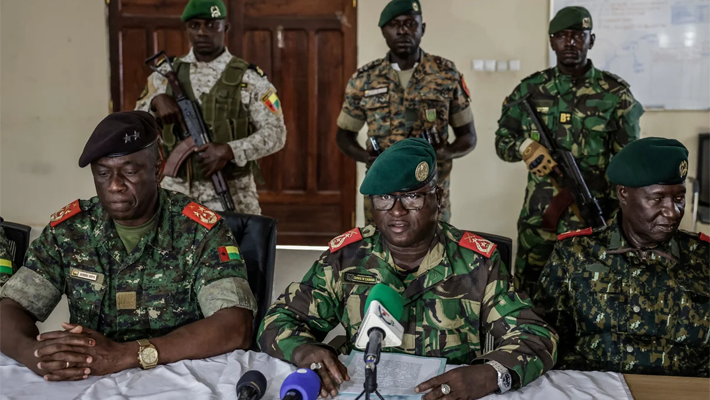
Guinea Bissau’s army named General Horta Nta Na Man as transitional president on Thursday in the wake of a rapid power grab that removed President Umaro Sissoco Embalo and interrupted a tense election cycle, according to a statement read on state television.
The takeover was carried out by officers calling themselves the High Military Command for the Restoration of Order. Their announcement late Wednesday confirmed Embalo had been pushed aside after days of political strain and rising suspicion over the still undisclosed vote results from Sunday’s presidential poll.
Radio France Internationale reported that Nta is expected to govern for one year as part of a transitional arrangement.
Gunfire echoed across Bissau on Wednesday evening near the electoral commission and the presidential palace before the army declared Embalo deposed. The capital fell quiet by the next morning, with soldiers positioned across key points and most residents staying indoors despite the curfew lifting.
Shops, banks and offices remained shut as the country tried to understand the speed and severity of the shift in power.
Embalo phoned French media outlets from an undisclosed location, saying he had been removed and did not know whether the soldiers had detained him. The officers behind the takeover gave no detail regarding his status.
Fernando Dias, Embalo’s main challenger in the election, said in a video statement that the president had staged a false coup attempt to stop the vote count because he feared defeat. Dias’ coalition told Reuters that it wants the electoral commission to release the tally from Sunday’s poll without interference.
Read Also: Guinea-Bissau President Seized By Soldiers In Suspected Coup
The bloc also demanded the release of former prime minister Domingos Simoes Pereira, who lost to Embalo in the 2019 election. Relatives and security sources said he had been detained on Wednesday. A Reuters reporter saw security forces use tear gas to disperse a small protest outside the building where he was believed to be held.
Guinea Bissau has endured repeated upheavals since independence in the nineteen seventies, with frequent coups, attempted coups and factional power struggles. The country sits between Guinea and Senegal on the Atlantic coast and has long been known as a major transit point for cocaine bound for Europe.
A report published in August by the Global Initiative Against Transnational Organized Crime said the narcotics economy had expanded sharply during Embalo’s tenure, with smugglers benefiting from weak institutions and political instability.
The army has not outlined its detailed timeline beyond the stated one year period, and regional bodies are expected to respond in the coming days. Neighbouring governments and international partners will likely pressure the new authorities to present a clearer roadmap as events continue to unfold.