
When Silence Becomes Complicity
A 7-Day Investigative Series by Prof. MarkAnthony Nze
The Collapse of the Center
Nigeria today stands at a precipice, its institutions hollowed out, its laws selectively applied, and its citizens increasingly alienated from the very government meant to protect them. The country’s collapse is not sudden; it is the slow consequence of decades of compromised justice, unrestrained corruption, and a political class that has mistaken survival for governance.
Reports from international development partners paint the same bleak portrait. Both the African Development Bank and the World Bank warn that Nigeria’s fiscal health has entered a red zone, with nearly all of its revenue swallowed by debt servicing. The IMF’s 2024 country assessment describes the state as “functionally insolvent,” a phrase that captures more than economic crisis. It captures moral bankruptcy.
But even more corrosive than inflation or debt is the erosion of law. The Nigerian Bar Association’s annual review notes that the courts have ceased to function as arbiters of justice; they have become extensions of political authority.
The Judiciary’s Descent
The case of Nnamdi Kanu remains the most haunting symbol of this collapse. When Justice James Omotosho’s bench delivered its verdict, the ruling echoed not with the language of law, but with the cadence of executive convenience. Observers in the legal community saw not a trial, but a performance, a well-scripted narrative where guilt was predetermined, and justice an afterthought.
Nigeria’s judiciary, once the last refuge of the citizen, is now the last defense of the state. Human rights organizations, including Amnesty International and Human Rights Watch, have documented how dissenters are prosecuted under vague charges and detained indefinitely in violation of Section 36 of the Constitution. Judges who should be the conscience of the republic now validate its repression.
Freedom House’s 2024 report ranked Nigeria among the “declining democracies,” a description earned through the judicial endorsement of executive excess. The courts, it seems, no longer serve the Constitution; they serve the convenience of those in power.
Read also: Nigeria’s Breaking Point: Why America Must Step In—Part 5
The Economic Abyss
The economy is no less fractured. Inflation has exceeded 35 percent, while the naira, once a symbol of national pride, has lost nearly all its value. The Central Bank’s own reports show that the government’s monetary policies—swinging wildly between deregulation and control—have only deepened volatility.
The consequence is devastating: poverty has become the national language. According to the National Bureau of Statistics, more than 133 million Nigerians live in multidimensional poverty. Youth unemployment exceeds 55 percent, and small businesses are collapsing under the weight of rising energy prices and disappearing credit.
As The Economist Intelligence Unit recently observed, “Nigeria’s governance crisis is no longer cyclical—it is structural.” Corruption has ceased to be an aberration; it is now the operational system. Transparency International’s 2024 index places Nigeria near the bottom of global rankings, confirming what citizens already know: that every transaction with the state comes with a price.
The Illusion of Security
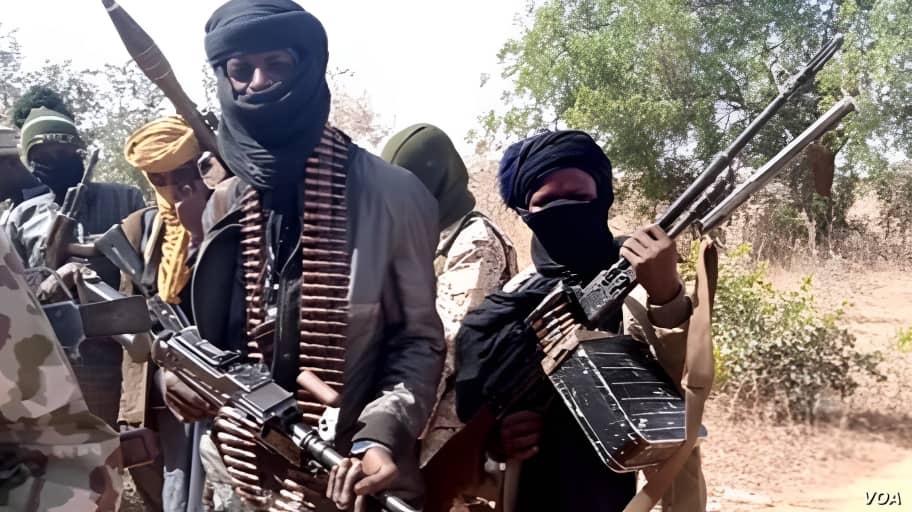
Insecurity has metastasized into every corner of the country. From Kaduna to Owerri, terror and banditry are daily realities. Entire communities are displaced, and forests have become the headquarters of militias and criminal cartels. The Nigerian government continues to insist that it is “winning the war,” but field reports from Amnesty International and Reuters tell a different story—of soldiers unpaid, villages razed, and insurgents regrouping under new flags.
The state’s response remains militarized, not strategic. Instead of reforming security structures or addressing the roots of discontent, the government floods troubled regions with troops and narratives. It is the illusion of control—force without justice, power without legitimacy.
The Role of America and the West
Washington can no longer afford the luxury of detachment. Nigeria is not just Africa’s most populous country; it is the continent’s fulcrum. A destabilized Nigeria destabilizes an entire region—from the Sahel to the Gulf of Guinea.
The United States, long Nigeria’s ally, must now redefine its engagement. It must stop mistaking access for influence and friendship for alignment. The U.S. Department of State’s own human rights report confirms what Nigerian civil society has been saying for years: the rule of law is deteriorating, press freedom is shrinking, and impunity is ascending.
America must act not as an occupier, but as a moral partner—through targeted sanctions, support for judicial reform, and expanded funding for local governance transparency. The BudgIT Foundation and Carnegie Endowment have both documented how foreign assistance, when tied to institutional benchmarks, produces measurable reform. It is this approach that must replace the current inertia of polite diplomacy.
The Moral Imperative
Nigeria’s tragedy is not that its people are poor or divided, it is that its leaders are unaccountable. In every collapsed democracy, the first casualty is truth. When courts become tools of suppression and budgets become scripts for corruption, governance becomes theater.
The United States once declared that “the survival of liberty anywhere depends upon the defense of liberty everywhere.” That dictum now faces its test in Nigeria. The question is whether America still believes in it.
To remain silent is to condone the erosion of a nation that once embodied African potential. To engage is to defend not Nigeria alone, but the global architecture of democratic accountability.
The Road Ahead
The solution does not lie in intervention, but in insistence; insistence that Nigeria’s rulers answer to law, that its judiciary rediscover courage, and that its partners demand transparency.
This is the hour for moral clarity. For if Nigeria falls, if its courts remain compromised, its youth abandoned, and its truth suppressed, it will not collapse alone. It will take with it the last illusion that democracy, once achieved, sustains itself.
America must therefore act not from pity, but from prudence. Nigeria’s stability is not just a regional concern; it is the hinge on which Africa’s future turns.
Professor MarkAnthony Ujunwa Nze is an acclaimed investigative journalist, public intellectual, and global governance analyst whose work shapes contemporary thinking at the intersection of health and social care management, media, law, and policy. Renowned for his incisive commentary and structural insight, he brings rigorous scholarship to questions of justice, power, and institutional integrity.
Based in New York, he serves as a full tenured professor and Academic Director at the New York Center for Advanced Research (NYCAR), where he leads high-impact research in governance innovation, strategic leadership, and geopolitical risk. He also oversees NYCAR’s free Health & Social Care professional certification programs, accessible worldwide at:
👉 https://www.newyorkresearch.org/professional-certification/
Professor Nze remains a defining voice in advancing ethical leadership and democratic accountability across global systems.
Bibliographies
African Development Bank. (2024). Nigeria Economic Outlook 2024 – Governance, Fiscal Stability, and Inclusive Growth. Abidjan: AfDB Macroeconomic Policy, Forecasting & Research Department.
Amnesty International. (2023). Nigeria 2023: Human Rights Violations and Security Forces Abuses. London: Amnesty International Publications.
BudgIT Foundation. (2025). State of States Report 2025 – Nigeria’s Fiscal Fragility and Debt Sustainability. Lagos: BudgIT Foundation.
Carnegie Endowment for International Peace. (2024). Nigeria’s Democratic Recession: Institutions under Siege. Washington, DC: Carnegie Africa Program.
Central Bank of Nigeria. (2024). Macroeconomic and Financial Stability Report – Fourth Quarter 2024. Abuja: CBN Research Department.
Freedom House. (2024). Freedom in the World 2024: Nigeria – Decline in Civil Liberties and Rule of Law. Washington, DC: Freedom House.
Human Rights Watch. (2024). Nigeria: Crackdown on Dissent and Protests – 2023–2024 Report. New York: Human Rights Watch.
International Monetary Fund. (2024). Nigeria Country Report No. 24/212 – Economic Outlook and Debt Assessment. Washington, DC: IMF African Department.
National Bureau of Statistics. (2024). Labour Force Survey Q2 2024 – Unemployment and Underemployment Report. Abuja: NBS.
Nigerian Bar Association. (2023). Judicial Accountability and the Rule of Law: Annual Review of Nigeria’s Courts 2023. Lagos: NBA Legal Policy Unit.
Reuters. (2024, December 18). Nigeria’s inflation climbs to 35% as naira plunges, worsening living costs. Retrieved from https://www.reuters.com
The Economist Intelligence Unit. (2024). Country Risk Report: Nigeria – Political Instability and Economic Headwinds. London: EIU.
Transparency International. (2024). Corruption Perceptions Index 2024 – Nigeria Country Profile. Berlin: Transparency International Secretariat.
United States Department of State. (2024). Nigeria 2023 Human Rights Report – Bureau of Democracy, Human Rights, and Labor. Washington, DC: U.S. Government Printing Office.
World Bank. (2024). Nigeria Development Update – Turning the Corner: From Reforms to Results. Washington, DC: World Bank Group.