
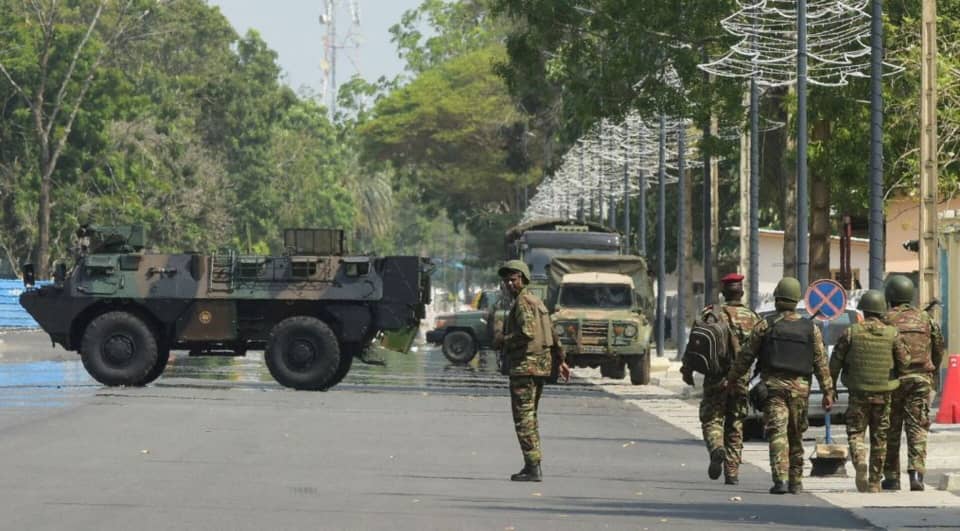
Nigeria has acknowledged sending fighter aircraft and later ground forces into neighbouring Benin after authorities in Cotonou requested urgent military assistance to stop a group of mutinous soldiers attempting to seize power.
A statement from President Bola Tinubu’s office on Sunday said Benin made two formal appeals for help, including a call for “immediate air support”, prompting Nigeria to deploy combat jets to secure the skies and push the renegade soldiers out of key installations. According to the presidency, the jets were instructed to take control of Benin’s airspace and force the coup plotters out of the state broadcaster and a military base where they had regrouped.
Nigerian ground forces moved in afterwards, following another request from President Patrice Talon’s government seeking help to protect core state institutions and contain armed elements loyal to the mutineers. Tinubu praised the joint response and said Nigerian officers “helped stabilise a neighbouring country at a critical moment”.
Talon later appeared on national television to announce that loyal forces had retaken strategic positions and broken the resistance of the coup group. He described the attempt as “treachery” and promised those responsible would face consequences. He also expressed concern for civilians harmed during the unrest and individuals kidnapped by the fleeing soldiers.
Authorities said at least 14 people had been arrested by Sunday afternoon, most of them active service members. It remained unclear whether the alleged ringleader, Lieutenant Colonel Pascal Tigri, had been captured.
Read also: Côte d’Ivoire Boosts Border Over Unusual Refugee Influx
Although gunfire rattled parts of Cotonou in the early hours of the crisis, residents reported that calm had largely returned by midday. Officials said the renegade soldiers only managed to briefly interfere with the state television station before being overwhelmed.
The coup attempt has heightened anxiety across West Africa, a region where military takeovers in Niger, Burkina Faso, Mali, Guinea and recently Guinea-Bissau have undermined democratic transitions. Benin has been considered relatively stable, with its last successful coup occurring more than five decades ago.
ECOWAS and the African Union condemned the plot. Later in the day, ECOWAS announced it had activated its standby force, ordering contingents from Nigeria, Sierra Leone, Ivory Coast and Ghana to deploy in Benin to reinforce constitutional authority and territorial safety.
The attempted takeover comes just months before Benin’s April presidential election, which will follow the country’s adoption of a new constitution that extends the presidential term to seven years and creates a Senate. Critics argue that the reforms favour the ruling coalition, which has put forward Economy Minister Romuald Wadagni as its candidate. The main opposition party, the Democrats, has seen its preferred aspirant disqualified on procedural grounds, a decision that has sparked concerns about political fairness.
Analysts warn that tensions around elections and governance reforms have contributed to instability across the region. Ibrahim Yahaya Ibrahim of the International Crisis Group noted that uncertainty over leaders’ willingness to respect democratic norms has increased the risk of political upheaval.