
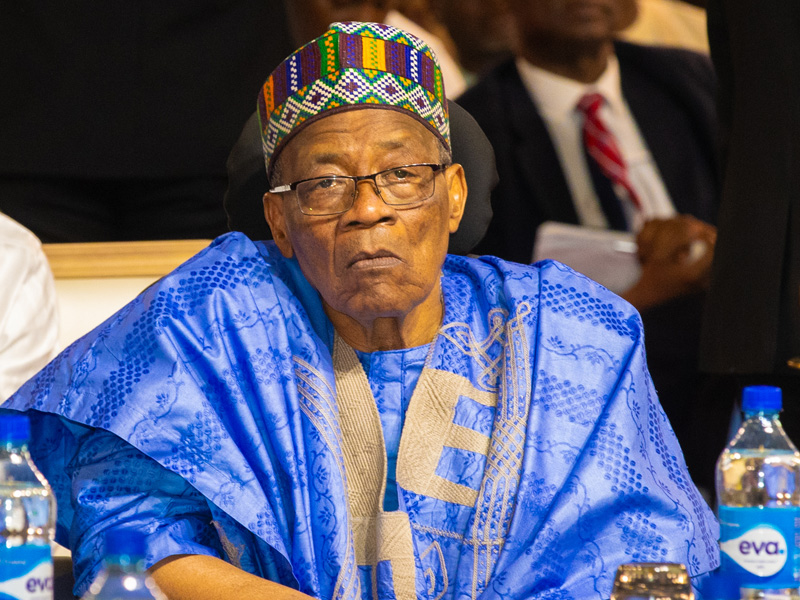
Former military President Ibrahim Babangida, at a memorial conference in Abuja, warns that insecurity and socio-economic decline threaten Northern Nigeria’s stability.
Former Military President General Ibrahim Badamasi Babangida has called on political, traditional, and community leaders across Northern Nigeria to revive the region’s core principles of humility, unity, and public service as insecurity and economic pressures continue to deepen. His remarks were delivered on his behalf by retired Colonel Lawal Gwadabe at the 2nd Hassan Katsina Memorial Conference, an event organized to reflect on the legacy of the late military officer and statesman.
In his address, Babangida warned that the region faces a pivotal moment marked by escalating violence, declining social cohesion, and widening economic disparity. He cautioned that without a collective effort to restore its guiding values, the North risks further instability and long-term developmental setbacks.
“The North must return to the foundational virtues that held it together—humility, unity, and a deep sense of service,” Babangida said through his representative. “These values shaped generations of leadership. If we abandon them, we lose not only our identity but also our ability to respond effectively to the challenges threatening our region.”
Read Also: How I Tried To Make Gani Fawehinmi My Friend But Failed – IBB
Northern Nigeria has struggled with persistent security challenges in recent years, including armed banditry, insurgent activity, and communal clashes. These problems have disrupted farming, displaced millions, and put strain on state and local governments grappling with overstretched security resources. Analysts say the instability has also hindered investment and slowed economic recovery across parts of the region.
Babangida emphasized that leadership at every level—traditional rulers, elected officials, religious authorities, and community influencers—must take responsibility for driving a renewed sense of purpose. He urged leaders to prioritize dialogue, justice, and equitable development, noting that sustainable peace depends on addressing the root causes of conflict, including poverty and marginalization.
The former President also underscored the importance of regional unity, warning against political fragmentation and narratives that inflame division. He described the late Hassan Katsina, in whose honor the conference was held, as an example of disciplined, inclusive leadership rooted in national service rather than personal ambition.
Participants at the conference echoed Babangida’s concerns, calling for a coordinated security strategy, stronger youth empowerment programs, and reforms aimed at improving governance in the North. Several speakers highlighted the need for collaboration between federal and state institutions to restore confidence among communities affected by persistent violence.
Babangida’s message concluded with an appeal for courage and introspection among Northern leaders. “This is a time for reawakening,” he said. “If we act with integrity and unity, the North can overcome its current challenges and reclaim its central role in Nigeria’s progress.”