
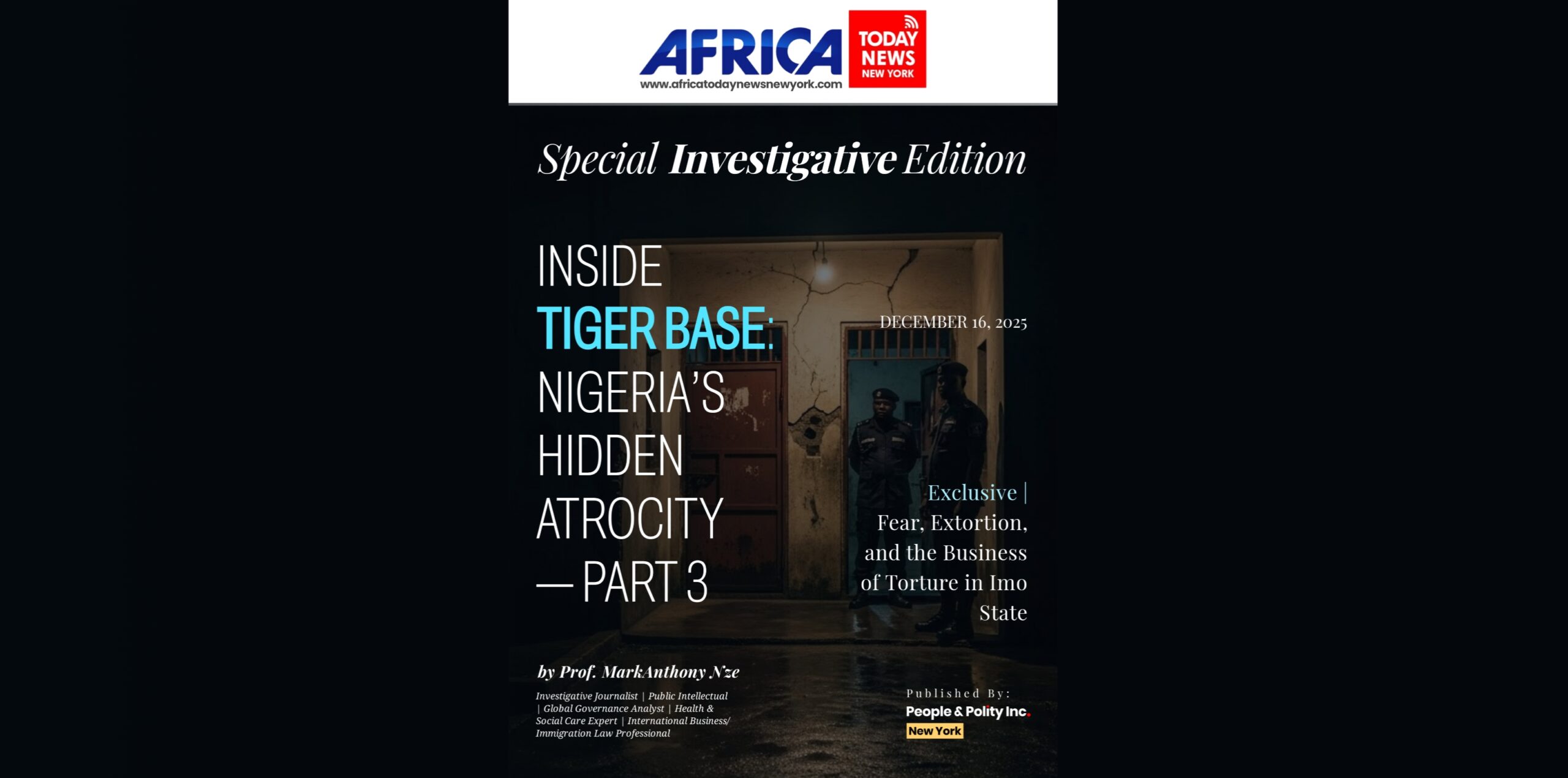
Within Tiger Base, one name has come to define an entire system of sanctioned brutality — a shadow officer whose legend survives every denial.
They do not speak his name loudly. It moves through the corridors like smoke — Kill and Bury. The syllables carry a weight that bends the air, half curse, half commandment. Inside Tiger Base, his presence is not announced; it is felt, a sudden stillness before the beating begins. No one knows who he is. Some call him tall, others say broad-shouldered, a shadow that never lingers long enough to be seen twice. What every survivor remembers is the voice — measured, almost gentle, the way a surgeon speaks before making the first cut. When that voice echoes through the cell block, confession ceases to be choice; it becomes survival.
In the machinery of fear that powers Tiger Base, Kill and Bury is both man and metaphor — the point where law collapses into ritual violence, and justice is replaced by precision cruelty delivered in uniform.
The Arrival
Every account begins with a sound. Boots on concrete. Keys against metal. The scraping of a door. Then a voice, flat and certain: “You will talk today.” There is no anger, only assurance, as if brutality were procedure.
A 27-year-old trader from Ohaji recalled the moment he first saw the man. “He didn’t shout. He looked at me like I was paperwork,” the trader said. “He asked, ‘Who paid you to kidnap?’ I said no one. He said, ‘Then you’ll pay with pain.’”
The beating lasted until dawn. The trader’s fingerprints were pressed on a blank sheet later labeled Confession Statement. His release came ten days later, after his family paid seven hundred thousand naira. He still cannot lift his left arm fully.
The Ritual
Interrogation at Tiger Base follows an order stripped of reason but heavy with routine. A detainee is dragged to a table in the courtyard. On it lie cables, sticks, and a half-filled jerrycan. Questions begin before the blows. Every answer becomes accusation.
“They already know what they want you to say,” said one survivor. “They beat until you repeat it back.”
When the body can no longer resist, the interrogation ends with a mark, a thumbprint, a signature, and sometimes a photograph to prove that the “confession” was achieved. For many, that document becomes the final trace of their existence.
Read also: Part 2: Cash Or Coffin
The Symbol of Power
Whether Kill and Bury is a single officer or a title rotated among several men no longer matters. What matters is what he represents: the face of unaccountable power. Within Tiger Base, his authority appears untouchable. Junior officers step aside when he enters. Detainees are told their fate depends on his mood.
A man detained during a land dispute said, “He decides who goes home, who disappears. He doesn’t argue with anyone. Even the others fear him.”
In the network of terror that governs the compound, Kill and Bury has become its ritual head — an executioner operating under the protection of bureaucratic silence. His invisibility is his weapon, and the institution’s denial is his shield.
The Politics of Fear
The endurance of Tiger Base rests on the myth of efficiency. Its brutality is marketed as necessity. Officers justify torture as speed, disappearance as deterrence. In that logic, Kill and Bury becomes an asset: a proof of strength in a system that mistakes fear for order.
Political insiders admit quietly that Tiger Base serves dual functions — crime control and political control. Dissenters are handled under the same protocols as kidnappers. The screams serve a purpose larger than punishment; they announce to the community that power remains unchallengeable.
A retired officer described the culture bluntly: “Results matter more than truth. A confession is a report. A dead suspect is closure. No one asks for evidence when there’s blood on the floor.”
The Vanishing
In several testimonies, detainees describe men who were taken from their cells and never returned. One was a university student accused of aiding a separatist. Another, a bus driver from Nempi, was beaten until motionless, then loaded into a truck before sunrise. Families were told they had been transferred. None were traced afterward.
At the Owerri morgue, attendants recall receiving bodies from police vehicles marked only “suspect.” Some bore rope marks around their wrists. No paperwork followed. “They come at night,” said one worker. “We don’t ask questions anymore.”
The Silence
When asked about Kill and Bury, the Imo State Police Command insists no such officer exists. There are no personnel files, no service numbers, no disciplinary records. Yet survivors from different towns, arrested months apart, describe the same man, the same voice, the same routine.
Either the state has produced identical ghosts across its command, or it has chosen to forget the faces behind its cruelty. Both explanations lead to the same truth — impunity has become policy.
The Architecture of Impunity
The legend of Kill and Bury thrives because the system around him needs him. His violence enforces silence among detainees, and his silence protects those who profit from it. Torture becomes institutional currency: it buys obedience, creates fear, and masks corruption under the language of discipline.
As one internal analyst observed, “He is not the disease; he is the symptom. The system breeds him, rewards him, hides him.”
The Name That Endures
Even if Kill and Bury were unmasked tomorrow, the name would persist. It has already become shorthand for the entire structure — a brand of terror stamped on the imagination of a state. In Owerri’s markets and villages, mothers warn sons not to provoke the police. They say, “Remember Kill and Bury.” The words carry more authority than any court decree.
A former detainee, his voice low, said, “You don’t need to see him twice. Once is enough to believe in hell.”
Closing Reflection
The story of Kill and Bury is less about one man than about the system that made him indispensable. Within Tiger Base, he is both cause and consequence — proof that when oversight dies, violence becomes administration.
He is the invisible signature at the bottom of every confession, the shadow in every silence, the echo that survives even after the cells are emptied.
In the republic of fear built on Port Harcourt Road, Kill and Bury is not merely a name. He is the language through which the state reminds its citizens who is allowed to speak, and who is not.
Professor MarkAnthony Ujunwa Nze is an internationally acclaimed investigative journalist, public intellectual, and global governance analyst whose work shapes contemporary thinking at the intersection of health and social care management, media, law, and policy. Renowned for his incisive commentary and structural insight, he brings rigorous scholarship to questions of justice, power, and institutional integrity.
Based in New York, he serves as a full tenured professor and Academic Director at the New York Center for Advanced Research (NYCAR), where he leads high-impact research in governance innovation, strategic leadership, and geopolitical risk. He also oversees NYCAR’s free Health & Social Care professional certification programs, accessible worldwide at:
👉 https://www.newyorkresearch.org/professional-certification/
Professor Nze remains a defining voice in advancing ethical leadership and democratic accountability across global systems.