
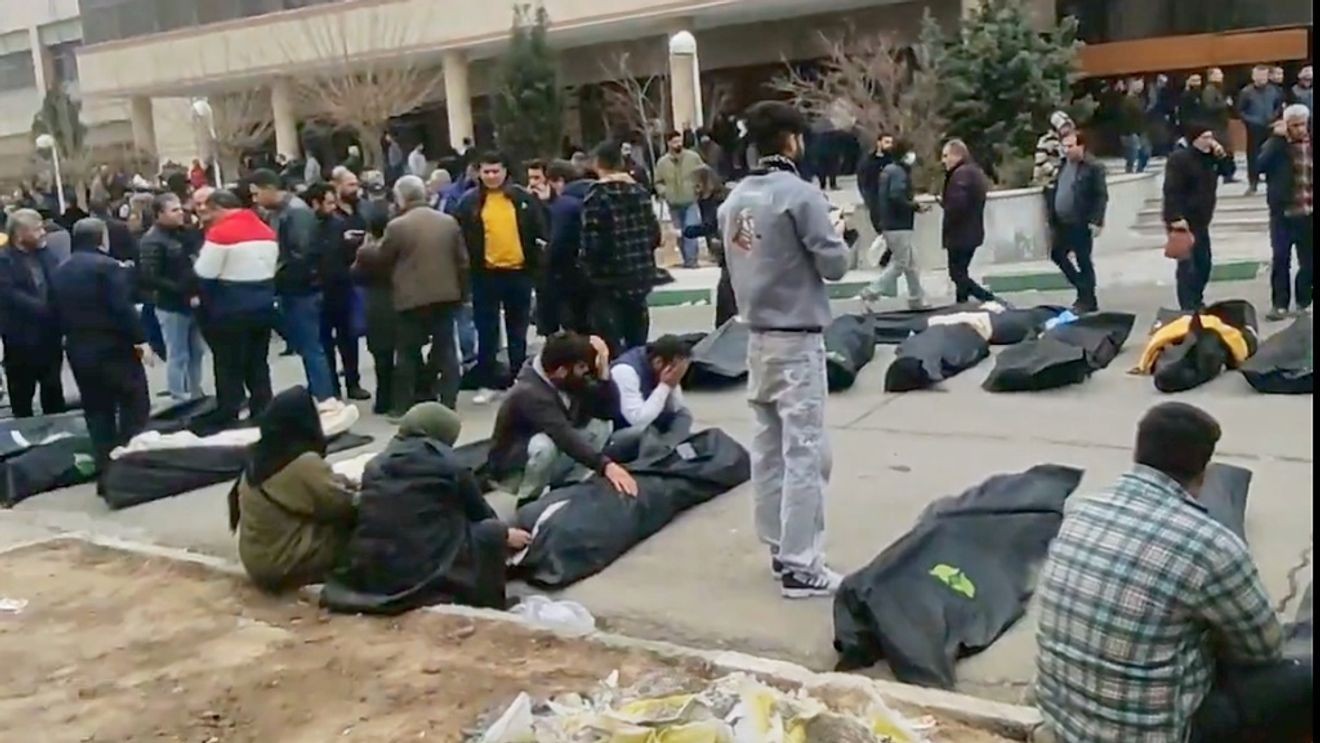
The death toll from weeks of unrest in Iran has risen to nearly 2,600, according to a U.S. based rights group, as Tehran ramps up diplomatic outreach to regional partners amid mounting warnings of possible U.S. involvement.
The violence, sparked by protests over soaring living costs, has become one of the gravest challenges to Iran’s ruling clerical system since the 1979 Islamic Revolution. The crisis has also drawn sharp rhetoric from U.S. President Donald Trump, who has openly threatened action if Iranian authorities escalate executions of protesters.
The HRANA rights group, which tracks arrests and fatalities, said it has verified the deaths of 2,403 protesters and 147 individuals linked to government forces. An Iranian official told Reuters earlier this week that roughly 2,000 people had been killed, offering one of the few official figures released so far.
Information from inside Iran has remained limited due to a sweeping internet shutdown. A U.S. organization that works to expand access to information in closed societies said satellite internet services were now being made available inside Iran, easing some communication barriers.
Meanwhile, concern has spread beyond Iran’s borders. An Israeli official told Reuters that President Trump had decided in principle to intervene, though the timing and scale of any action remain unclear. A second Israeli government source said Prime Minister Benjamin Netanyahu’s security cabinet had been briefed on scenarios ranging from regime instability to potential U.S. military involvement.
Speaking to CBS News on Tuesday, Trump warned Iran against executing detained protesters, saying any such move would trigger a strong response. “If they hang them, you’re going to see some things,” Trump said, without providing specifics.
In separate remarks, he urged Iranians to continue demonstrating and seize control of state institutions, declaring that “help is on the way,” again offering no details.
Iranian authorities have repeatedly accused the United States and Israel of fueling the unrest, describing violent acts as terrorism and blaming protesters for attacks on security forces, mosques, and public property.
As tensions escalated, Iran intensified diplomatic contacts with U.S. aligned countries in the region. State media reported that Ali Larijani, head of Iran’s top security body, spoke with Qatar’s foreign minister, while Foreign Minister Abbas Araqchi held separate calls with officials from the United Arab Emirates and Turkey.
Araqchi told UAE Foreign Minister Sheikh Abdullah bin Zayed that calm had returned to parts of the country and that Iran was determined to protect its sovereignty against any outside interference, according to state media.
The outreach appeared aimed at containing regional fallout as fears grow that instability inside Iran could spill across borders.
Read Also: Iran Protests Claim Over 500 Lives, Rights Group States
Inside Iran, the country’s chief justice signaled a hard line response. During a visit to a Tehran prison holding detained protesters, he called for rapid trials and punishment for those accused of extreme violence.
Speedy justice for those who “beheaded or burned people” was necessary to prevent future unrest, he said, according to Iranian media.
The remarks underscored the government’s intent to clamp down forcefully, even as international pressure mounts and diplomatic channels remain active.
As protests persist and global scrutiny intensifies, the coming days may determine whether the crisis remains contained or escalates into a wider regional confrontation.