
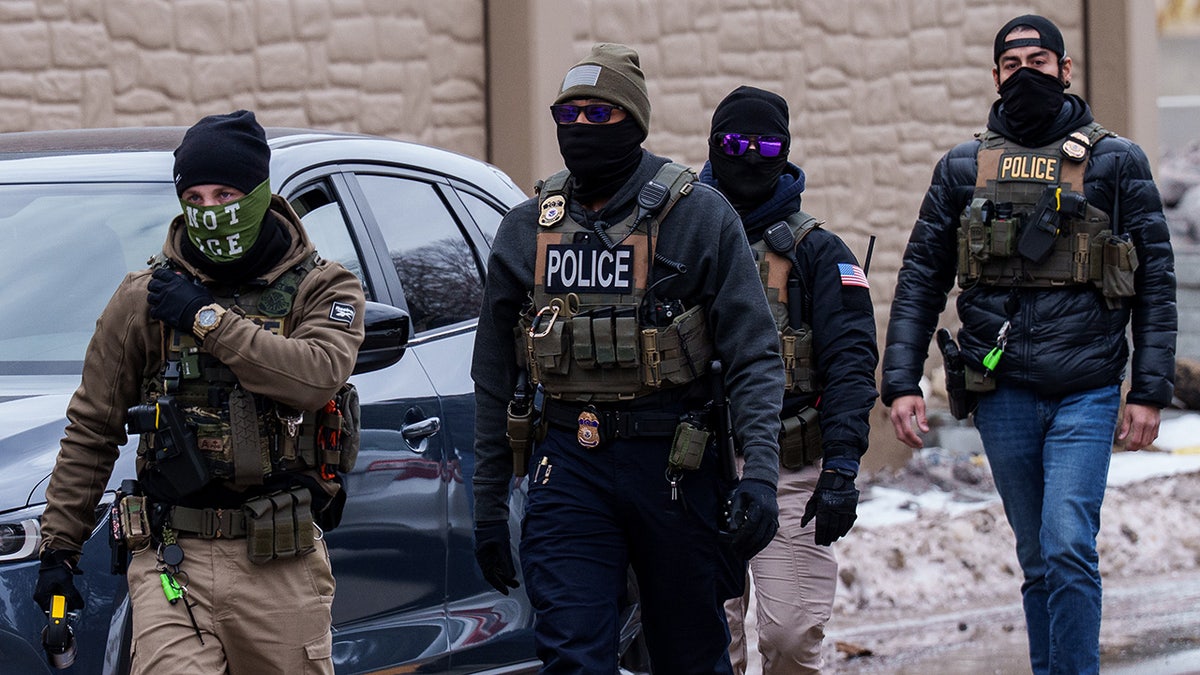
U.S. Immigration and Customs Enforcement (ICE) has confirmed it will deploy agents to support American security operations during the Winter Olympics in Italy, a move that has triggered political controversy and public criticism as the Games approach their Feb. 6 opening.
The confirmation came after reports in Italian media raised concerns about the presence of the U.S. immigration agency, whose officers have recently been linked to two fatal shootings in Minneapolis. Italian officials and opposition figures questioned whether ICE personnel should operate anywhere near Olympic venues in Milan and Cortina d’Ampezzo.
ICE said Tuesday that its involvement would be limited and conducted under Italian authority. “All security operations remain under Italian authority,” an agency spokesperson said, stressing that ICE would not carry out immigration enforcement outside the United States.
In a statement, ICE said its Homeland Security Investigations (HSI) unit would assist the U.S. State Department’s Diplomatic Security Service and Italian authorities by identifying and mitigating threats linked to transnational criminal organizations.
Read Also: Hundreds More Federal Officers Bound For Minnesota – Noem
The agency emphasized that its role was strictly supportive. It said it would “obviously” not engage in immigration enforcement or policing activities on Italian soil.
U.S. Embassy sources in Rome told Italian media that American federal agencies have assisted with security at past Olympic Games, though it remains unclear whether ICE itself participated previously.
Despite those assurances, the announcement sparked a sharp reaction in Italy, particularly in Milan, one of the main Olympic host cities.
Milan Mayor Beppe Sala said the agency’s presence was inappropriate given recent events in the United States. “This is a militia that kills,” Sala said in an interview with Italian radio. “Of course they’re not welcome in Milan.”
Read Also: Deportation Fears Drive US Migrants To Assign Child Guardian
Speaking later to RTL radio, Sala added that ICE agents “shouldn’t come to Italy because they don’t guarantee they conform to our democratic way of ensuring security.”
Italy’s Interior Minister Matteo Piantedosi initially appeared unaware of ICE’s involvement and said foreign delegations were generally allowed to arrange their own security. “I don’t see what the problem is, and it’s very normal,” he said at the time.
However, as public criticism intensified, Piantedosi adopted a firmer position. On Monday, he said ICE “will certainly not operate on Italian national territory,” adding that Italy had not received a formal list of U.S. security personnel and that overall security would be guaranteed by the Italian state.
The controversy intensified following the fatal shooting of Alex Pretti in Minneapolis on Saturday during an operation involving federal agents. In the aftermath, two journalists from Italian public broadcaster Rai reported being threatened by ICE officers while covering enforcement activity in the city.
Footage aired by Rai showed an agent warning the journalists that their car window would be smashed if they continued filming.
Images from Minneapolis circulated widely in Italy, amplifying public concern that officers from the same agency could appear on Italian streets during the Olympics.
Lombardy regional governor Attilio Fontana sought to defuse tensions, suggesting ICE agents would be in Italy solely to protect senior U.S. officials, including Vice President JD Vance and Secretary of State Marco Rubio.
Opposition politicians were unconvinced. Barbara Floridia, a senator from the Five Star Movement, said continued government silence would amount to “yet more evidence of cowardice and subservience toward Donald Trump.”
The issue has placed Prime Minister Giorgia Meloni’s government under pressure to clarify the extent of U.S. involvement in Olympic security planning.
Italian authorities insist that security for the Milan-Cortina Winter Olympics will remain firmly under national control, with any foreign personnel operating only in an advisory or protective capacity for their own officials.