
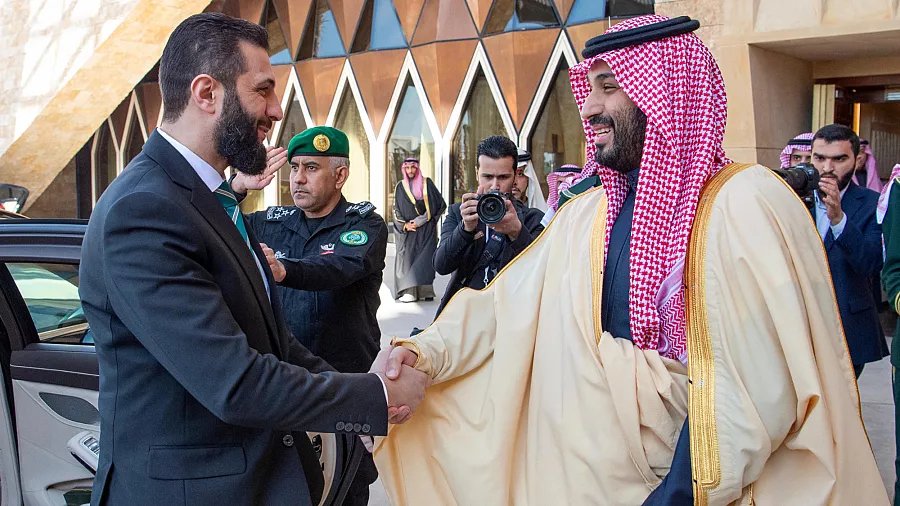
Syria and Saudi Arabia have signed a broad investment package covering aviation, energy, telecommunications and real estate, as Damascus’s new leadership moves to revive the economy after more than a decade of war.
The agreements were announced on Saturday by Talal al-Hilali, head of Syria’s Investment Authority, following meetings between senior Syrian officials and Saudi ministers. The package includes plans to build a new international airport in Aleppo, launch a joint low-cost airline, and develop a nationwide telecommunications project intended to improve Syria’s role as a regional transit hub.
The deals represent the largest foreign investment commitment to Syria since the United States lifted sanctions on the country in December, after the fall of longtime president Bashar al-Assad. Assad was removed from power in December 2024, and a new leadership took office promising to rebuild state institutions and restore economic links with neighbouring countries and the Gulf. Saudi Investment Minister Khalid al-Falih said the newly established Elaf fund would commit about $2 billion to airport development projects in Aleppo. The fund is designed to finance large-scale infrastructure with participation from Saudi private-sector investors.
“Two airports will be developed in Aleppo, one for international traffic and another for domestic and regional routes,” Falih said in remarks carried by Syrian state media. He added that the projects would be implemented in stages, beginning with technical studies and site preparation.
In aviation, Saudi budget carrier Flynas and Syria’s Civil Aviation Authority signed an agreement to establish a new airline, Flynas Syria. Officials said the carrier will be 51 percent owned by the Syrian side, with Flynas holding the remaining stake. The airline is expected to begin commercial operations in the fourth quarter of 2026. The new carrier will operate domestic and regional routes, with the aim of restoring air connectivity after years of disruption caused by the war and sanctions. Syrian airports, including those in Damascus and Aleppo, have seen limited international traffic since 2011.
Read also: Iran US Nuclear Talks: UAE Warns Region Cannot Face War
Syria’s Minister of Communications and Information Technology, Abdulsalam Haykal, said nearly $1 billion would be invested in the telecommunications sector under a project known as SilkLink. The plan includes laying thousands of kilometres of fibre-optic cable across Syria to connect networks in Asia, the Middle East and Europe.
“The goal is to turn Syria into a digital transit corridor linking continents,” Haykal said at the announcement ceremony. He said the project would also upgrade domestic internet and mobile services, which remain patchy in many parts of the country.
The Ministry of Energy signed a separate agreement with Saudi Arabia’s ACWA Power, a company involved in electricity generation and desalination projects across the Middle East, Africa and Asia. Syrian officials said the deal covers power and water infrastructure, including generation and supply systems.
Al-Hilali said the agreements target “vital sectors that directly affect people’s lives and form the pillars of rebuilding the Syrian economy”.
Saudi Arabia has been one of the most active regional supporters of Syria’s new authorities since Assad’s removal. Riyadh has backed Syria’s reintegration into Arab diplomatic and economic forums and has pushed for greater engagement with Damascus after years of isolation.
The investment package comes as Syria seeks to attract Gulf and international capital to rebuild infrastructure destroyed during 14 years of conflict. Large areas of Aleppo, Homs, Deir el-Zor and the outskirts of Damascus were heavily damaged by fighting, leaving transport networks, power plants and communications systems in disrepair.
Aleppo, once Syria’s commercial capital, is central to the government’s reconstruction plans. The city’s airport was badly damaged during the war and has operated at limited capacity. Officials say new airport facilities are intended to support trade, tourism and business travel.
U.S. Special Envoy for Syria Tom Barrack welcomed the agreements, saying on X that partnerships in aviation, infrastructure and telecommunications would support Syria’s reconstruction efforts. The lifting of U.S. sanctions in December cleared the way for international companies to explore projects in Syria, although many remain cautious about legal, financial and security risks. Syrian officials say they are working to revise investment laws and provide guarantees to foreign partners.
The government has pledged to prioritise housing, electricity, water and transport as it seeks to encourage the return of displaced Syrians. The United Nations estimates that more than half the population was displaced at some point during the war, with millions still living outside the country.
Read further: Why Prince William’s Saudi Visit Poses A Diplomatic Test
The authorities have previously announced a series of investment understandings with foreign companies over the past year. Some have moved slowly, but Syrian officials say the Saudi-backed projects are structured to move into implementation phases within the next two years.
Initial steps will include feasibility studies, land allocation, licensing and the establishment of joint operating companies, according to the Investment Authority.
Officials said further investment announcements are expected in coming months as talks continue with partners in energy, transport, housing and agriculture. The Saudi-Syrian package signals a new phase in Damascus’s push to rebuild economic ties with the region after more than a decade of conflict and international isolation.