
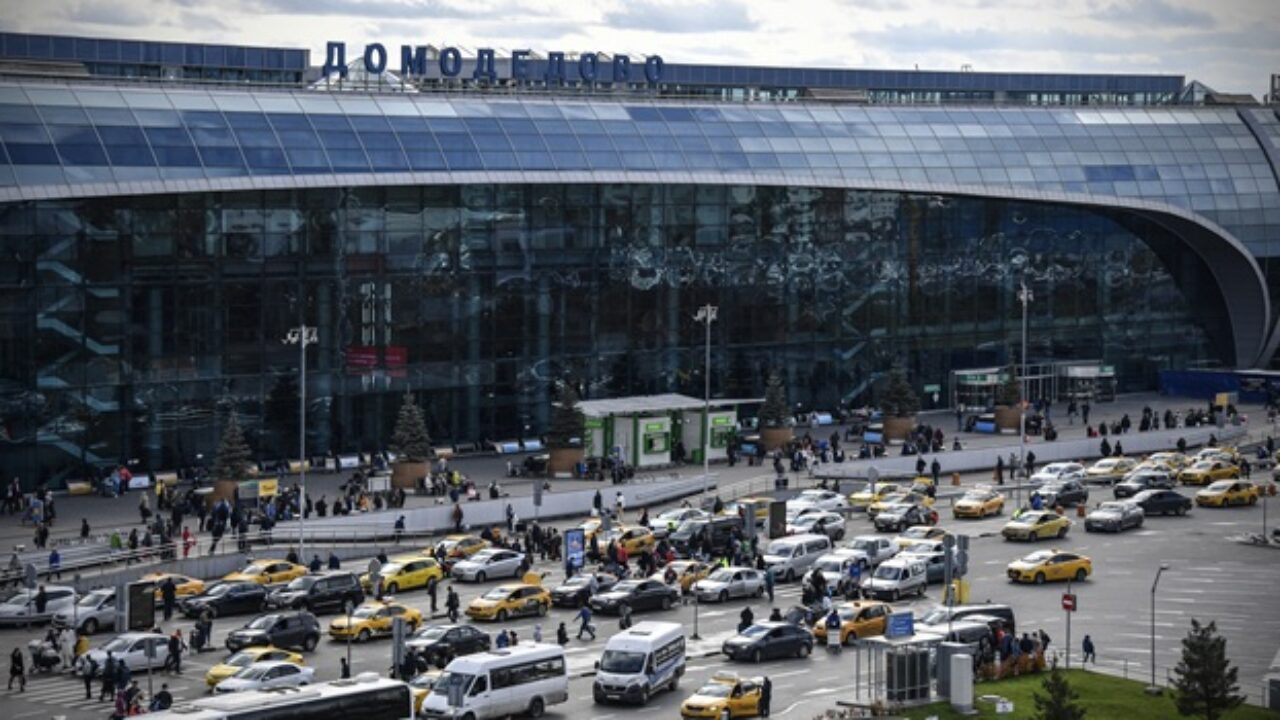
Moscow’s Domodedovo Airport, one of Russia’s busiest, has been re-privatised and sold to a company managing Sheremetyevo Airport, the buyer announced on Monday, nearly a year after a court nationalised the facility.
The sale was completed through Sheremetyevo’s wholly owned subsidiary, Perspektiva LLC, in partnership with Bank PSB PJSC. The airport was sold on the second attempt for approximately $850 million, less than half the $1.6 billion initially sought, according to the buyer’s statement.
In June, a Russian court ruled that Domodedovo’s previous owners, Dmitry Kamenshchik and Valery Kogan, were foreign residents ineligible to manage the airport and transferred ownership to the state. The court cited federal legislation restricting foreign control of critical infrastructure assets, including major airports.
Domodedovo, located about 22 kilometres southeast of central Moscow, is the country’s fourth-busiest airport, handling over 30 million passengers in 2019, prior to the COVID-19 pandemic. The airport serves as a key hub for domestic and international flights, connecting Moscow to destinations across Europe, Asia, and the Middle East.
Sheremetyevo, Russia’s largest airport, is majority-owned by TPS Avia Holding, a private company, with the Russian government holding a 30 percent stake, according to Russian business outlet RBC. TPS Avia Holding was re-registered from Cyprus to Russia in 2022, and Russian media have identified Arkady Rotenberg, a businessman closely associated with President Vladimir Putin, as among its shareholders.
Read more: Modi In Malaysia To Deepen Trade, Defense, And Tech Ties
The transaction follows a broader pattern of state interventions in Russian business since Moscow’s military intervention in Ukraine in February 2022. Russian authorities have seized or nationalised billions of dollars in assets, including holdings belonging to Western firms such as French dairy group Danone and German energy company Uniper.
Russian officials argue that these actions correct flawed privatisations that took place in the 1990s after the collapse of the Soviet Union. Critics, however, have said that the nationalisations have reduced foreign investment and created uncertainty in strategic sectors, including aviation and energy.
The court ruling in June explicitly cited Kamenshchik and Kogan’s foreign residency as grounds for the state takeover. Domodedovo had been privately managed since the 1990s and had previously undergone multiple ownership changes. The airport is equipped with two runways and handles a mix of passenger, cargo, and charter traffic, making it a key node in Moscow’s transportation infrastructure.
Perspektiva LLC has not disclosed the operational or investment plans for Domodedovo. Sheremetyevo’s management said the acquisition would allow the airports to coordinate operations and leverage combined resources, though no timeline or details regarding upgrades or staffing changes were provided.
Analysts have noted that consolidating Domodedovo under Sheremetyevo management could streamline logistics and air traffic coordination, but implementation will depend on regulatory approvals from the Russian Federal Air Transport Agency. The agency has not publicly commented on the transaction.
The sale was completed following a competitive bidding process. The initial offer, set at $1.6 billion, drew limited interest, prompting the second attempt at a lower valuation. Russian law permits state or state-affiliated entities to intervene when privately owned infrastructure assets are deemed strategically significant.
Read also: Russia Claims Ukraine Ordered Attack On Spy General
Russia’s aviation sector has faced additional challenges since 2022, including international sanctions, restricted access to Western aircraft components, and a decline in international carriers operating in and out of the country. Domodedovo’s reintegration under domestic management is expected to facilitate continued operations amid these constraints, though specific operational measures have not been announced.
The airport’s previous ownership structure included international investment through offshore entities. Following the nationalisation, these arrangements were dissolved, returning full control to state authorities pending sale. Russian courts have maintained that this process was legally compliant and necessary to protect national interests.
The acquisition by Sheremetyevo’s management aligns with ongoing efforts by Moscow to consolidate control over major transport hubs. The airport group has indicated that it will work with regulators to finalise integration, ensure compliance with aviation safety standards, and maintain passenger services without disruption.
The transaction also reflects a broader shift in Russian infrastructure policy, where key assets—including ports, energy facilities, and transportation hubs—have increasingly come under state-affiliated ownership. Russian authorities have argued this approach ensures security and stability, particularly amid geopolitical tensions and economic sanctions.
Officials from Sheremetyevo and Perspektiva LLC said follow-up actions will include operational planning, integration of administrative functions, and assessment of infrastructure investment needs. Regulators and industry observers will monitor the transition closely, given Domodedovo’s role in Moscow’s air transport network and its significance for both domestic and international travel.
The sale represents the latest chapter in the post-nationalisation period for Domodedovo, which will now operate under the combined oversight of Sheremetyevo management and state authorities. No further announcements regarding staff, flight schedules, or capital expenditure plans have been issued, and regulatory approval remains a pending step in the process.