
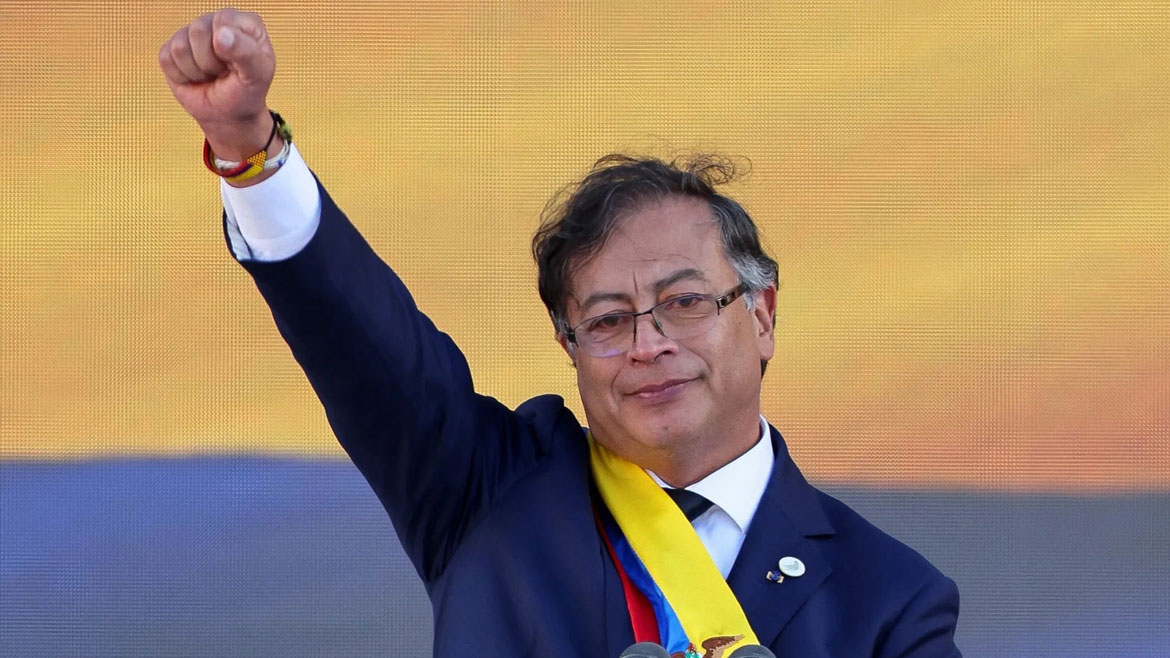
Colombian President Gustavo Petro said on Tuesday that he narrowly avoided an assassination attempt after his helicopter had to divert during a trip with his daughters, following warnings that armed attackers were targeting the aircraft.
The president told ministers that the episode occurred on Monday while he was en route to Colombia’s Caribbean coast. Security officials had advised him not to land at the intended site after receiving intelligence about potential gunfire.
“Last night I couldn’t land because I was informed that they were going to shoot at the helicopter I was travelling in with my daughters,” Petro said, according to public broadcaster Radio Nacional de Colombia. He added that the landing zone was left unlit, increasing the risk of an ambush.
The helicopter remained airborne for several hours over open water before, with assistance from the Colombian navy, it reached a safer landing point. Authorities then revised his travel plans and security routes.
“I’m trying to avoid being killed,” Petro told the cabinet in Cordoba department, a northern region grappling with heavy flooding. “That’s why I couldn’t arrive where I had planned.”
The presidency has not provided further details about the identities of the suspected assailants, and no arrests were reported. Defence ministry officials did not comment publicly on the intelligence that prompted the diversion.
Petro, who became Colombia’s first leftist president in August 2022, has repeatedly said criminal networks consider him a target. He previously reported an alleged assassination attempt in 2024 and has warned that drug trafficking groups have been plotting against him since taking office.
He linked the latest threat to a string of security challenges that have emerged since October last year, saying the situation keeps him on constant alert.
The helicopter incident came on a day marked by other security events. Senator Aida Quilcue, an Indigenous leader and human rights advocate, was briefly kidnapped in Cauca department in southwestern Colombia.
Quilcue, 53, was taken around midday while travelling in an SUV with two bodyguards, according to her daughter, Alejandra Legarda. Cauca is a coca-producing region where dissident factions of the demobilised FARC guerrilla movement operate alongside other armed groups.
Defence Minister Pedro Sanchez said on social media that an Indigenous guard unit later located Quilcue’s vehicle, which had been abandoned. Petro warned the kidnappers that they would cross “a red line” if they did not release her.
Read also: Aldrich Ames CIA Spy Who Betrayed U.S. Dies at 84
Within hours, the senator and her escorts were freed. Military personnel shared images on social media showing Quilcue at an army facility in Popayán after her return.
The kidnapping followed another attack last week in Arauca department, near the Venezuelan border, where gunmen ambushed a senator’s convoy, killing two bodyguards. The lawmaker was not in the vehicle at the time.
Despite the 2016 peace accord with FARC, Colombia continues to grapple with violence in rural areas. Armed factions that rejected the deal, the ELN guerrillas, and organised crime groups remain active in remote regions.
Petro has pursued a “total peace” policy, negotiating ceasefires and dialogue with multiple armed actors. Implementation has been uneven, and kidnappings, extortion, and clashes persist in several regions.
Elections next year are raising concerns. Legislative polls are scheduled for March 8, followed by a presidential vote on May 31. Last week, an election-monitoring group reported that more than 300 municipalities, roughly a third of the country, are at high risk of electoral violence. Many of these coincide with areas controlled by armed groups or critical drug trafficking routes.
Petro has criticised the lack of protection for politicians, social leaders, and Indigenous activists in remote territories, saying their safety is often ignored. His own security detail has been expanded multiple times since he assumed office after authorities received intelligence about possible threats.
The helicopter episode illustrates the ongoing danger to Colombia’s political class. “This keeps me in permanent alert,” Petro said. Authorities said military intelligence and national police are reviewing the information behind the diversion and adjusting protection measures for the president and other officials.
The Cordoba trip was part of a government effort to assess flooding and coordinate humanitarian relief. Petro’s visit had been planned to include meetings with local authorities and affected communities, but security concerns forced last-minute changes.
Read also: US Strikes Venezuela As Trump Claims Maduro Captured
Analysts note that threats tend to rise ahead of elections, particularly in remote areas where armed groups and criminal networks maintain influence. Colombia’s mountainous terrain, isolated towns, and porous borders complicate policing, despite increased coordination between military and police units.
Officials said that in response to the helicopter incident and the Quilcue kidnapping, additional preventive measures are being implemented, including route changes and closer monitoring of high-profile figures. Petro’s public engagements are expected to continue, but with enhanced security protocols.
The events underscore the persistent volatility in Colombia’s rural regions, where the influence of armed actors continues to shape political and social life. Authorities have said intelligence assessments will guide further adjustments as the country enters the sensitive pre-election period.