
Bangladesh’s main opposition force, the Bangladesh Nationalist Party (BNP), secured a decisive parliamentary majority in national elections held this week.
Official results showed on Friday, positioning party leader Tarique Rahman to assume the premiership after nearly two decades out of power and marking a political turning point following the country’s violent upheaval in 2024.
According to figures released by the Election Commission, the BNP-led alliance won 212 seats in the national parliament, comfortably surpassing the two-thirds threshold required to dominate legislative proceedings. The Islamist-led alliance headed by Jamaat-e-Islami secured 77 seats. Officials said voter turnout reached 59 percent, while a simultaneous referendum on constitutional reforms received approval from roughly 60 percent of participating voters.
The vote was the first nationwide election since a deadly uprising in August 2024 that ended the long tenure of former prime minister Sheikh Hasina and brought an interim administration to power.
The political transition followed months of protests, unrest, and allegations of authoritarian governance that had intensified after years of opposition repression.
Senior BNP figures described the outcome as a public mandate shaped by those events.
Salahuddin Ahmed, a member of the party’s standing committee, said voters had placed their trust in a movement aligned with the aspirations of young protesters who played a central role in the uprising. He cautioned, however, that the party faced significant challenges ahead, adding that the result should not be treated as an occasion for celebration but as the beginning of a demanding reconstruction effort.
Read Also: Bangladesh Holds Historic Poll After Youth-Led Uprising
Party leaders sought to limit public festivities despite early projections of victory. Senior BNP official Ruhul Kabir Rizvi urged supporters to gather for prayers rather than hold rallies, citing concerns about stability and national unity.
In a statement issued before final confirmation of results, he called on followers to observe special prayers after Friday congregational services instead of organizing street celebrations.
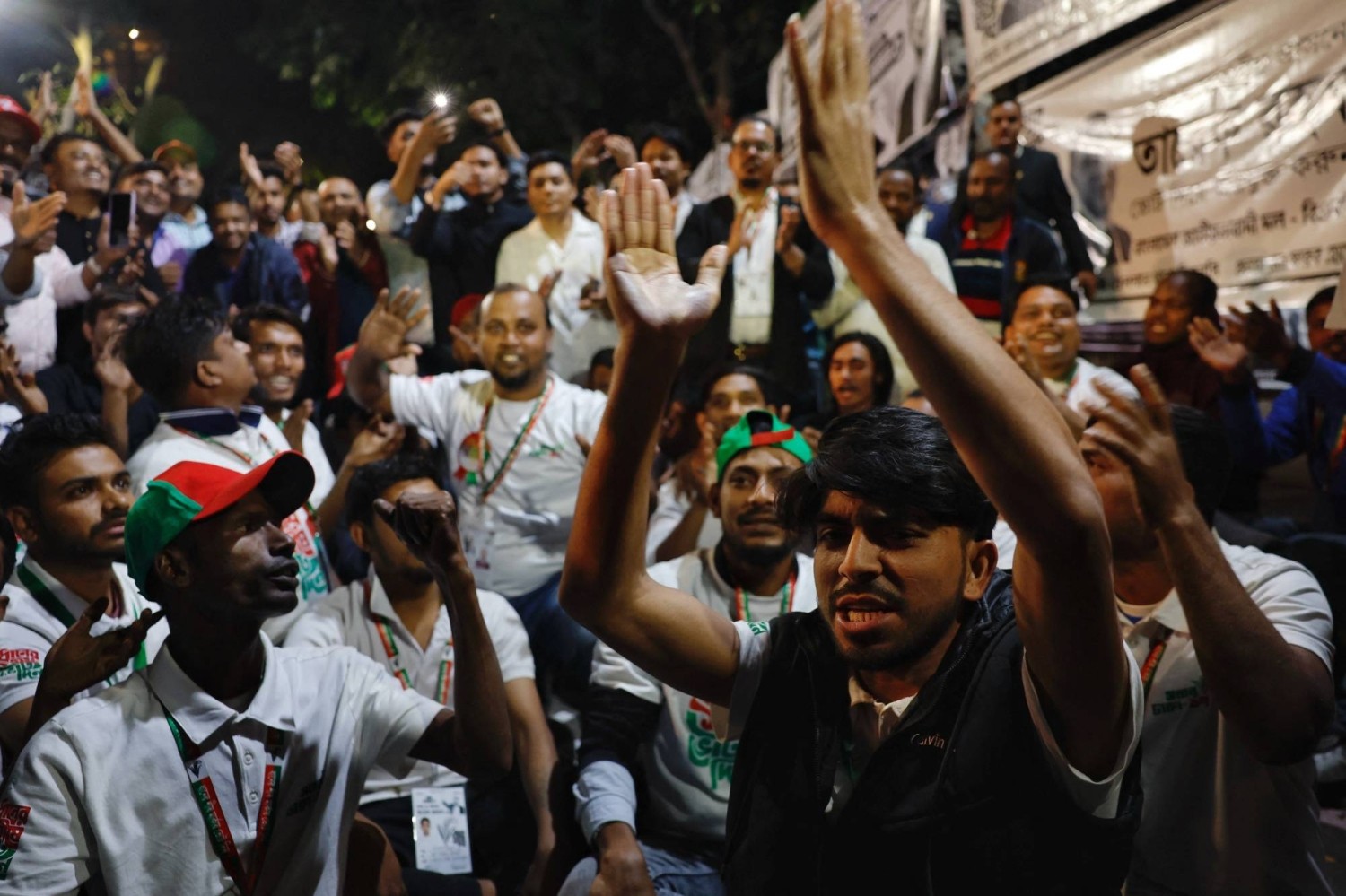
Outside BNP headquarters in Dhaka, supporters gathered overnight awaiting confirmation of the outcome. Some said they viewed the election as the end of a prolonged period of political hardship.
Md Fazlur Rahman, a businessman who said he had faced legal cases during previous administrations, told reporters he hoped the incoming government would focus on rebuilding institutions and economic opportunity.
The campaign period was marked by sporadic violence and rising political tension.
Police records indicated that clashes between rival groups during the run-up to polling left at least five people dead and more than 600 injured. United Nations human rights experts had warned ahead of the vote about increasing intolerance, threats against political actors, and widespread disinformation circulating online.
Despite those concerns, election authorities said voting day itself passed largely without major incidents. The Election Commission reported only minor disruptions at isolated polling stations, and security forces maintained a heavy nationwide presence intended to deter unrest.
The interim government led by Muhammad Yunus, the 85-year-old Nobel laureate who assumed leadership after the 2024 upheaval, is expected to hand over power once the new parliament is formally constituted.
Yunus had appealed repeatedly for restraint during the election period, urging political factions to prioritize national stability despite deep divisions.
“We may have differences of opinion, but we must remain united in the greater national interest,” he said earlier this week, according to remarks released by his office after he cast his ballot.
Read Also: Bangladesh Lynching Sparks Protests In India
Yunus, a recipient of the Nobel Peace Prize, oversaw an interim administration tasked with stabilizing the country and preparing institutional reforms following the collapse of the previous government.
His administration barred Hasina’s Awami League from contesting the election, a decision that remained contentious among her supporters and contributed to accusations from the former leader that the vote lacked legitimacy.
Hasina, who has been living in India since her removal from office, issued a statement rejecting the election results and describing the process as unconstitutional.
She was previously sentenced to death in absentia by Bangladeshi courts on charges of crimes against humanity, allegations she denies.
Independent verification of the claims surrounding the election’s legality remains disputed among political factions, though election authorities maintain that the process complied with national law.
Alongside parliamentary voting, citizens also decided on a proposed democratic reform charter championed by the interim administration. The package seeks to reshape governance structures by introducing limits on prime ministerial terms, establishing an upper chamber of parliament, strengthening presidential authority, and expanding judicial independence.
Election officials confirmed that a majority of voters endorsed the proposals, clearing the way for legislative implementation by the incoming parliament.
Analysts say the constitutional changes were designed to prevent the concentration of executive power that critics argued characterized previous administrations.