
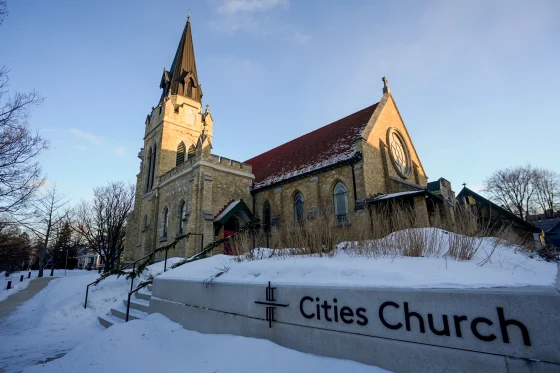
Federal prosecutors have charged 39 people over a January demonstration at a Minnesota church, including two journalists who say they were covering the protest rather than participating in it, escalating a case that has raised questions about the limits of free speech and press protections.
Africa Today News, New York, reports that Attorney General Pam Bondi announced the expanded indictment on Friday, saying 25 people had already been arrested with more arrests planned. The charges accuse defendants of conspiracy against the right to religious freedom and attempting to injure, intimidate or interfere with the exercise of that freedom.
“YOU CANNOT ATTACK A HOUSE OF WORSHIP,” Bondi wrote in a social media post. “If you do so, you cannot hide from us — we will find you, arrest you, and prosecute you.”
The January 18 gathering at Cities Church in St Paul, organized under the name “Operation Pullup,” was held in response to a violent federal immigration enforcement operation that had swept through the Minneapolis-St Paul area for weeks. Demonstrators targeted the church because its pastor, David Easterwood, serves as a local official for Immigration and Customs Enforcement.
Former CNN anchor Don Lemon and reporter Georgia Fort are among those charged. Both have pleaded not guilty and said they attended as journalists, not protesters. They have questioned publicly whether their prosecution represents an attempt to suppress press freedom.
The indictment, filed Thursday, alleges that protesters physically occupied the main aisle and rows of chairs near the front of the church, “engaging in menacing and threatening behavior” by chanting and yelling loudly and obstructing exits. It says the actions oppressed, threatened and intimidated the congregation and pastors.
A magistrate judge initially rejected the Justice Department’s attempt to charge nine people connected to the protest on January 22. Prosecutors then sought a grand jury indictment instead, which was filed January 29 and made public the following day. The superseding indictment now covers 39 individuals.
The protest occurred less than two weeks after an ICE agent shot and killed 37-year-old Renee Good while she sat in her vehicle. Video of the shooting, which took place January 7, circulated widely and triggered demonstrations across the country.
Good’s death came during what the Trump administration called Operation Metro Surge, an immigration enforcement campaign that deployed as many as 3,000 federal agents to the Minneapolis-St Paul area.
Read also: Nuclear Pledge From Iran Makes Peace ‘Reachable,’ Says Oman
President Donald Trump had blamed the region’s large Somali American population for a welfare fraud scandal involving Medicaid and school lunch programs.
The operation, launched in December, was marked by reports of excessive force against detainees and protesters.
Videos showed officers breaking car windows of legal observers, pepper-spraying demonstrators and beating people. Agents also entered homes without judicial warrants, which advocates described as violations of the Fourth Amendment. Cases of unlawful arrests were reported.
Trump administration officials announced in mid-February that Operation Metro Surge was winding down.
Several defendants have said they plan to fight the charges by invoking their First Amendment rights to free speech and assembly. Some have indicated they will continue monitoring government immigration operations despite the prosecutions.
“This is not the time to be Minnesota Nice,” civil rights lawyer Nekima Levy Armstrong, one of the protesters, wrote on social media last week. “It’s time for truth, justice, and freedom to prevail.”
Since taking office for his second term, Trump has sought to appeal to Christian conservatives through initiatives aimed at rooting out what he describes as anti-Christian bias and preventing alleged acts of Christian persecution both domestically and abroad, including in countries like Nigeria.
Read also: U.S. Charges 30 More In Minnesota Anti-ICE Church Protest
Critics say the administration is using the Minnesota prosecutions to stifle dissent and deter future protests against its immigration policies. The case has drawn attention to tensions between religious freedom protections, free speech rights and the government’s authority to enforce immigration law.
The Justice Department has defended the charges as necessary to protect houses of worship from disruption, framing the demonstration as an attack on religious liberty rather than a political protest.
Bondi’s statement emphasized that the department “STANDS for Christians and all Americans of faith.”