
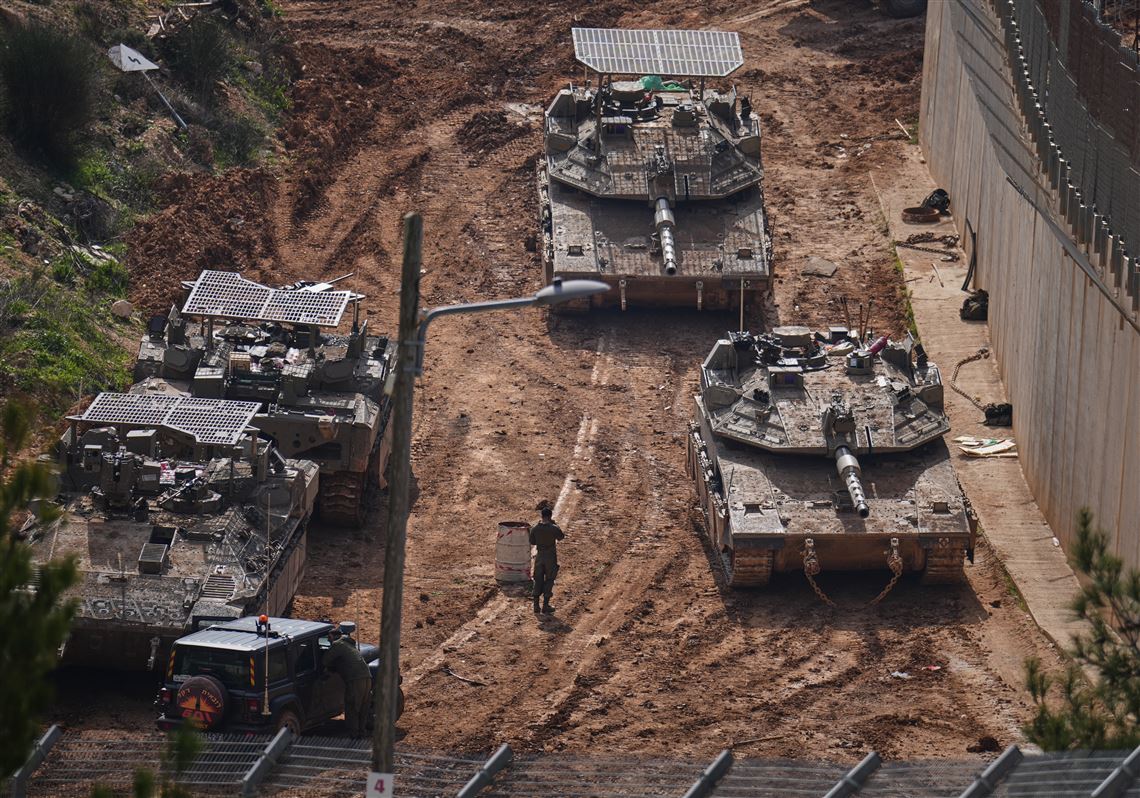
Israel ordered residents of Beirut’s southern suburbs to evacuate on Thursday and extended a mass displacement order across the entire area south of the Litani River, as ground forces pushed deeper into southern Lebanon on the fourth day of full-scale hostilities between Israel and Hezbollah, a front that opened Monday when the Iran-backed group began firing rockets and drones into northern Israel in response to the killing of Supreme Leader Ali Khamenei.
Israeli military Arabic-language spokesperson Avichay Adraee posted evacuation orders on X covering four sprawling districts of Beirut’s southern suburbs, known as Dahiyeh, home to a dense, predominantly Shia population and the geographic and administrative centre of Hezbollah’s civilian and military infrastructure in the capital.
“Save your lives, evacuate your homes immediately,” Adraee posted, warning that any movement southward could endanger lives and instructing residents to move east and north. Roads out of the suburbs became choked with vehicles within minutes, television footage showed. Gunfire was heard in the area as warnings were broadcast across the districts.
The broader evacuation order covering the area south of the Litani River, a region spanning hundreds of square kilometres and constituting approximately 8 per cent of Lebanon’s territory, was the most expansive forced displacement order issued since the fighting began. The Lebanese government has stated it cleared the area of Hezbollah’s military presence in the months following the November 2024 ceasefire. Lebanese state media reported that Israeli forces entered the southern town of Khiam, roughly six kilometres from the border, their deepest advance since fighting resumed on Monday. The United Nations peacekeeping force in Lebanon, UNIFIL, reported Israeli soldiers entering several towns and villages in southern Lebanon, including Kfar Kila, Houla, Kfar Shouba, Yaroun, and Khiam.
The Lebanese Health Ministry confirmed at least 72 people, including seven children, had been killed and 437 wounded since Israeli strikes began Monday, before overnight strikes that killed at least 11 more. At least 83,000 people had been displaced from their homes across Lebanon as of Wednesday, according to Lebanon’s Ministry of Social Affairs. Lebanon’s social affairs minister told Al Jazeera that about 65,000 people had registered at shelters, with an additional 10,000 to 20,000 still travelling or staying temporarily with others.
Overnight strikes widened the geographic scope of the assault. Airstrikes on the predominantly Christian southeastern suburb of Hazmieh, the first reported Israeli strike on a non-Shia area of greater Beirut, hit a hotel, with other strikes landing on Aramoun and Saadiyat south of Rafik Hariri International Airport, killing six and wounding eight. A strike on the eastern city of Baalbek killed six and wounded 15. One strike in the Haret Hreik neighbourhood of Dahiyeh caused significant structural damage to the neighbouring Bahman Hospital and injured several health workers, the Lebanese health ministry confirmed.
Read Also: Pope Leo And Vatican Condemn Iran War As Illegal, Urge Dialogue
Hezbollah claimed several attacks on Israel on Wednesday, including two using precision-guided missiles. Hezbollah targeted the Haifa naval base, an aerospace and defence firm near Ben Gurion Airport, and military infrastructure in northern Israel. Hezbollah said it was ready for open war. “The era of patience has ended,” the group said.
Lebanon’s government has found itself in the most acute version of a contradiction that has defined Lebanese politics for decades, criticising Israeli strikes while possessing neither the authority nor the institutional capacity to control Hezbollah. Lebanese Prime Minister Nawaf Salam condemned Hezbollah’s rocket and drone strikes as “irresponsible acts outside the authority of the Lebanese state that endanger national security,” adding that all military action must fall under government control. President Joseph Aoun’s office said the cabinet’s ruling obliged Hezbollah to hand over weapons to the state, underlining that the authority to decide war and peace rested solely with Beirut. The Lebanese military arrested 27 people for illegally possessing weapons and munitions and redeployed forces in the south and east along the Syrian border, withdrawing from at least seven forward operating positions along the Israeli frontier.
Anxieties in Lebanon were also elevated by a buildup of Syrian military forces on the Lebanese border. A high-ranking Syrian official told the Associated Press that the deployment was “purely defensive” and aimed at preventing smuggling and countering unforeseen scenarios. The current Syrian government under Ahmed al-Sharaa is hostile to both Iran and Hezbollah, having been on opposing sides of Syria’s civil war.
Read Also: What We Know About The US–Israel Strike And Iran’s Response
UNHCR spokesman Babar Baloch said tens of thousands of displaced people had sought shelter across Lebanon since Monday, with many sleeping in cars on the sides of roads or stuck in traffic jams. Maggie Shibli, wife of the owner of the Hotel Comfort in Hazmieh, told reporters after the overnight strike destroyed several rooms of her building: “We live in a country where a missile can fall on your head at any moment.”