
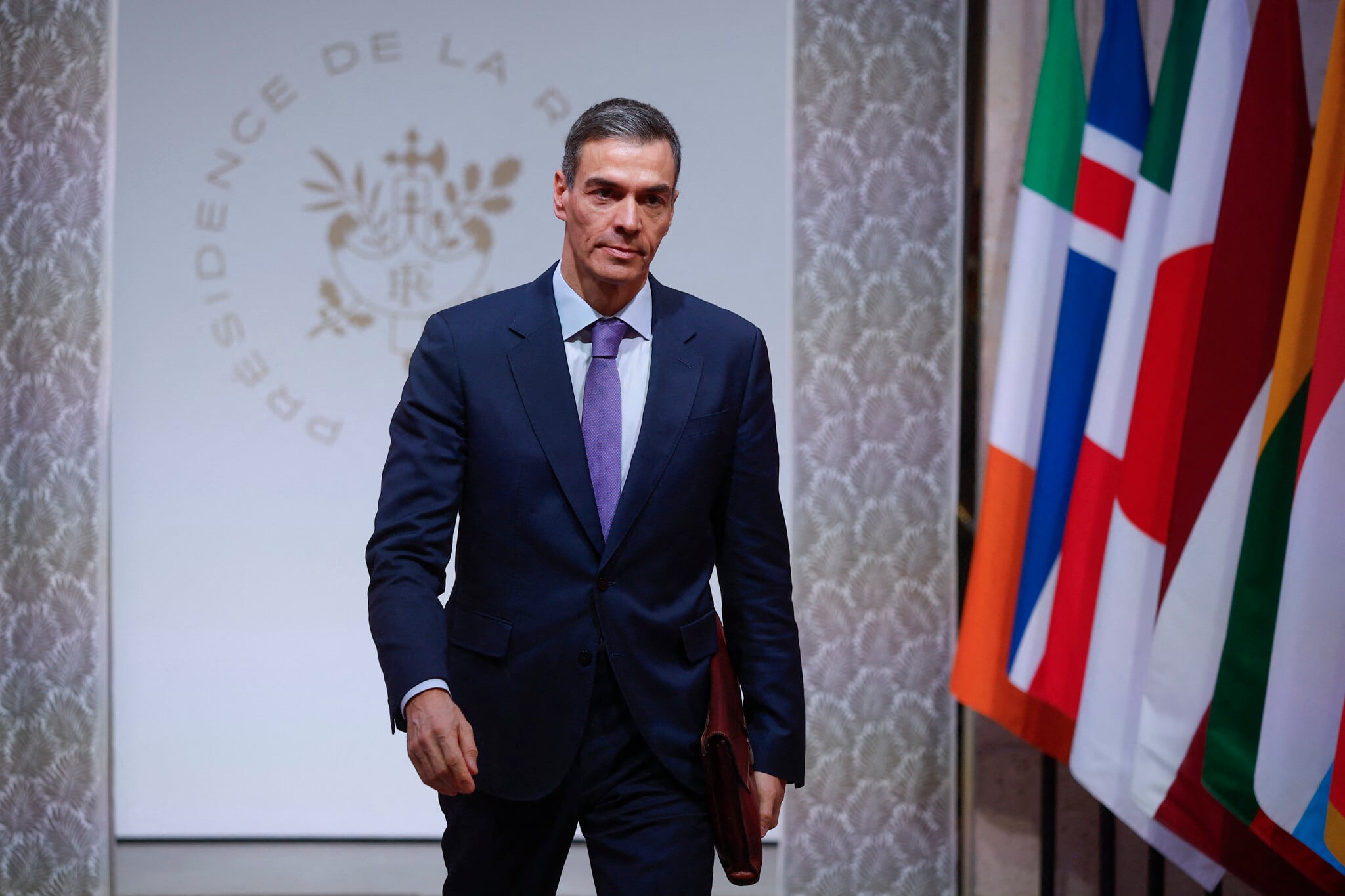
Spain formally terminated the appointment of its ambassador to Israel on Wednesday, publishing a royal decree in the Boletín Oficial del Estado that removes Ana María Salomón Pérez from her post and reduces Madrid’s diplomatic representation in Tel Aviv to the level of chargé d’affaires. The decision, approved by the Council of Ministers on March 10 and signed by King Felipe VI and Foreign Minister José Manuel Albares, formalises a rupture that has been building for more than eighteen months and places Spain among the most assertive critics of Israeli military conduct within the European Union.
The decree orders the dismissal of Salomón Pérez from her position as Ambassador of Spain to the State of Israel.
The decision leaves the head of the diplomatic mission vacant and downgrades representation to chargé d’affaires level, the same tier at which Israel’s embassy in Madrid has operated since the Netanyahu government recalled its own ambassador, Rodica Radian-Gordón, in May 2024. The two countries now maintain an equivalent and reduced diplomatic presence in each other’s capitals.
Salomón Pérez had initially been recalled to Madrid for consultations in September 2025, following a diplomatic row over Spanish measures banning aircraft and ships carrying weapons to Israel from using its ports or airspace. Israeli Foreign Minister Gideon Sa’ar at the time denounced those measures as antisemitic, a characterisation the Spanish government rejected. Wednesday’s gazette notice makes her removal permanent, converting what had been described as a temporary recall into a full severance.
The timing of the announcement, during the twelfth day of the US-Israeli military campaign against Iran — gives the withdrawal significance beyond the bilateral relationship with Israel. Prime Minister Pedro Sánchez has emerged since the war began on February 28 as one of the most vocal opponents of the campaign among European heads of government.
He condemned the strikes on Iran as an “unjustifiable” and “dangerous military intervention” outside the bounds of international law, and has consistently refused to align Madrid’s position with those of European allies who have offered more qualified support for the campaign.
The dispute reached its most acute phase when Sánchez refused to allow the United States to use two jointly operated military bases in southern Spain — the naval installation at Rota and the air base at Morón de la Frontera — for any operations connected to strikes on Iran. Trump, speaking from the White House, said the US could use the bases regardless of Madrid’s position.
“We could just fly in and use it. Nobody’s going to tell us not to use it,” Trump said. He separately threatened to cut off all trade with Spain. Trump told Treasury Secretary Scott Bessent to “cut off all dealings with Spain,” a move that was widely assessed as legally difficult to execute given that Spain, as a member of the European Union, does not conduct an autonomous trade policy, the EU negotiates collectively on behalf of all 27 member states.
Read Also: Europe Splits Over Iran War’s Legality
White House press secretary Karoline Leavitt subsequently claimed that Spain had “heard the president’s message loud and clear” and had agreed to cooperate with the US military. Spain flatly denied the claim.
“I can refute that,” Foreign Minister Albares told Cadena Ser. “The position of the Spanish government regarding the war in the Middle East, the bombing of Iran and the use of our bases has not changed one iota.” Defence Minister Margarita Robles separately confirmed the unchanged position, contradicting the White House publicly.
Sánchez has framed Spain’s posture in explicitly historical terms, drawing a direct parallel with the 2003 US-led invasion of Iraq, which Spain’s then-government supported under José María Aznar — a decision that proved deeply unpopular domestically and contributed to his electoral defeat in 2004.
“The world, Europe, and Spain have faced this critical moment before. In 2003, a few irresponsible leaders dragged us into an illegal war in the Middle East that brought nothing but insecurity and pain,” Sánchez said in a post on social media. His centre-left Socialist-led coalition government has so far held a unified position on the war, though Spain’s main opposition, the conservative Partido Popular, has publicly backed the US and Israeli campaign.
Read Also: White House Says Spain Agrees To Cooperate, But Spain Denies
The ambassador’s withdrawal is the latest in a sequence of measures Spain has taken against Israel since the outbreak of fighting in Gaza in October 2023. In October 2025, the Spanish parliament formally enshrined a comprehensive arms embargo on Israel in law, permanently banning the export of weapons, dual-use technology, and military equipment. Spain had in 2024 refused to allow vessels transporting weapons to Israel to dock in its ports — a measure that drew sharp condemnation from Jerusalem and contributed to the recall of Israel’s own ambassador.
Spain has also sent its most advanced warship, the Cristóbal Colón frigate, to the Mediterranean to join French and Greek naval forces in the region, framing the deployment as a defensive measure in response to the regional security deterioration.
European Council President António Costa expressed solidarity with Madrid following Trump’s trade threats, posting that he had spoken with Sánchez to reaffirm the EU’s “full solidarity” and its “firm commitment to the principles of international law and the rules-based order.” EU foreign policy chief Kaja Kallas has taken a more cautious position than Sánchez, warning of unpredictable consequences from escalation without endorsing Madrid’s outright opposition to the military campaign.
Iranian President Masoud Pezeshkian separately praised Spain’s conduct, writing on social media that Madrid’s stance “shows that ethics and awakened consciences still exist in the West.” Sánchez’s government declined to comment on the endorsement.
No date has been set for the appointment of a new ambassador, and the Spanish foreign ministry has not indicated a timeline for any reassessment of the bilateral relationship with Israel. A chargé d’affaires will assume responsibility for the Tel Aviv mission with immediate effect.