
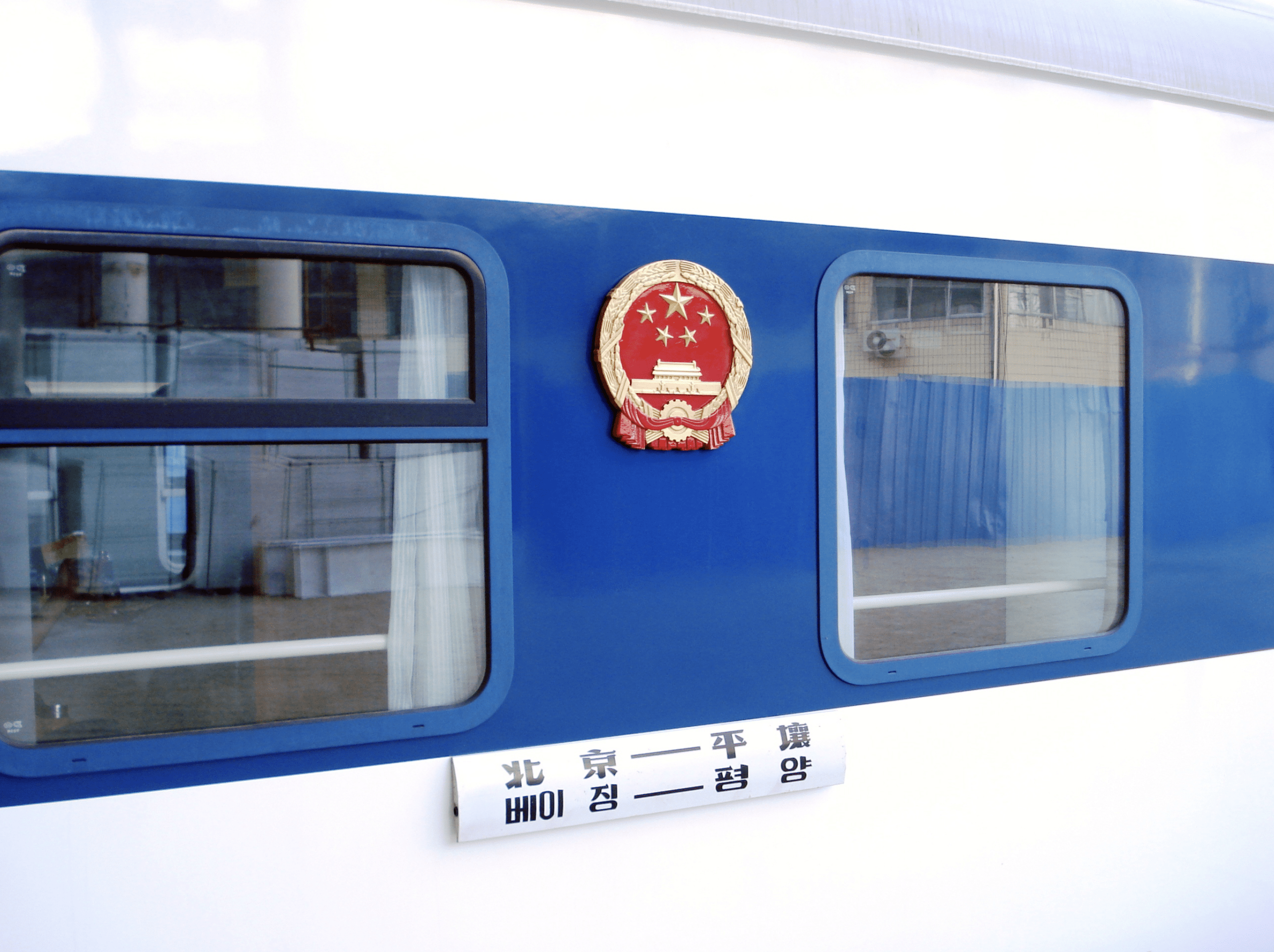
The first passenger train connecting Beijing and Pyongyang in six years departed from Beijing Railway Station on Thursday morning and was scheduled to arrive in the North Korean capital at 6:07 p.m. local time on Friday, ending a hiatus that had severed one of East Asia’s most politically significant land transport corridors since the onset of the Covid-19 pandemic in early 2020.
Train K27 will complete its 24-hour and 41-minute journey skirting the northern rim of the Bohai Sea, stopping at the Chinese border city of Dandong before crossing into North Korea, where it connects through the industrial gateway of Sinuiju and continues south to Pyongyang.
AFP journalists who boarded the departure at Beijing confirmed that carriages had been designated exclusively for passengers with Pyongyang-bound documentation, and that curious onlookers gathered at the station to photograph the platform departures board displaying the “Beijing to Pyongyang” listing — a destination absent from Chinese railway schedules since the border sealed. Tickets for the first Beijing departure sold out, with a Beijing ticketing agent telling Reuters that confirmed passengers included entrepreneurs, government officials, and journalists.
A separate and shorter Dandong-to-Pyongyang service, operated with a five-car train, also departed on Thursday morning. South Korea’s Yonhap News Agency reported a nine-car train crossing the Amnok River bridge, also known as the Yalu River bridge, the Sino-Korean Friendship Bridge — at approximately 4:23 p.m. Korean time, with some carriages carrying visible passengers and others with curtains drawn. The Dandong service will run daily in both directions. The longer Beijing-Pyongyang route will operate four times weekly — Mondays, Wednesdays, Thursdays, and Saturdays — in each direction.
The logistics of the journey involve a train change at Dandong. Rowan Beard, tours manager at Young Pioneer Tours, a company specialising in North Korea travel, explained that Beijing-origin wagons carrying Pyongyang-bound passengers are detached at Dandong and coupled to a separate locomotive for the cross-border leg.
Those wagons, along with North Korean domestic carriages, are then reattached to a new train for the remaining journey to the capital. Entry and exit procedures are conducted at the Dandong border crossing on the Chinese side and at Sinuiju in North Korea.
Access to tickets is currently restricted to visa holders with authorised purposes. Ticketing booths in Beijing and Dandong confirmed to AFP that eligible travellers include Chinese nationals living, working, or studying in North Korea, North Koreans employed or enrolled abroad, and those visiting family across the border. Tourists are not yet eligible to purchase tickets, a Dandong ticketing agent confirmed. In the initial phase, seats have been filling primarily with government personnel, business travellers, accredited press, and other authorised categories. Offline ticket sales are available at designated railway counters across several Chinese cities.
Read Also: China’s NPC Ends With Reduced Economic Growth Target
The train’s resumption follows North Korea’s much slower path out of pandemic-era isolation compared with China, which fully reopened its international borders in 2023. Pyongyang, which imposed some of the world’s most stringent border controls in January 2020, has proceeded in stages. Air Koryo, North Korea’s state carrier, resumed twice-weekly flights between Pyongyang and Beijing in 2023, operating on Tuesdays and Saturdays. A direct train and air service connecting North Korea with Russia also resumed last year, part of what analysts have described as Pyongyang’s deliberate sequencing of reconnections — Russia first, China following at a measured pace.
Chinese exports to North Korea rose 25 percent year-on-year to reach $2.3 billion in 2025, indicating that goods trade has already recovered substantially through land border crossings even while passenger movement remained restricted. The rail resumption is expected to accelerate both the commercial and people-to-people dimensions of a relationship that remains indispensable to North Korea’s economic survival.
China’s Foreign Ministry spokesman Guo Jiakun said Thursday that “maintaining regular passenger train services is of great significance in facilitating people-to-people exchanges between the two sides.” China Railway described the reconnected corridor in its official statement as “a dynamic link strengthening the friendship between these two nations,” framing the resumption as a natural normalisation after a period of pandemic necessity rather than a deliberate political gesture.
Read Also: China Widens BHP Iron Ore Curbs To Flagship Pilbara Products
Academic observers have cautioned against over-reading the move’s strategic significance. Chong Ja Ian, associate professor at the National University of Singapore, told AFP that much of the previous limit on contact appeared to have stemmed from Pyongyang’s own apprehensions rather than from Beijing’s preferences. “A lot of the previous limit on contact seems to be due to Pyongyang’s apprehensions about broader contact, which have diminished,” he said, adding that the resumption did not necessarily signal increased Chinese support for North Korea beyond a return to pre-pandemic patterns. Lim Tai Wei, professor of East Asian studies at Soka University in Japan, offered a broader reading, saying the reopening gave North Korea expanded access to “the largest trading nation on Earth” and served China’s broader periphery diplomacy — maintaining stable, managed relationships with immediate neighbours regardless of fluctuations in the wider regional environment.
The timing coincides with a period of unusual activity in North Korea’s external relations. North Korea cancelled an international marathon in Pyongyang that had been scheduled for early April, citing no official reason, a move that tourism operators said introduced fresh uncertainty into plans for visitor access. The country has simultaneously been marketing resort facilities on its coast primarily toward Russian holidaymakers, a continuation of the Russia-first opening that preceded Thursday’s reconnection with China.
South Korea’s Unification Ministry said ahead of Thursday’s departure that it had anticipated the service’s resumption and would “continue to closely monitor related developments,” a formulation that reflects Seoul’s standard position of watchful observation toward any development that alters the contours of North Korea’s external engagements. No South Korean reaction to the confirmed arrival of the train in Pyongyang had been issued at the time of publication.
China Railway has not specified a timeline for expanding eligibility beyond authorised visa holders to include general tourism. The daily Dandong-Pyongyang service and the four-weekly Beijing-Pyongyang timetable represent the full scope of the resumed operations as of Thursday.