
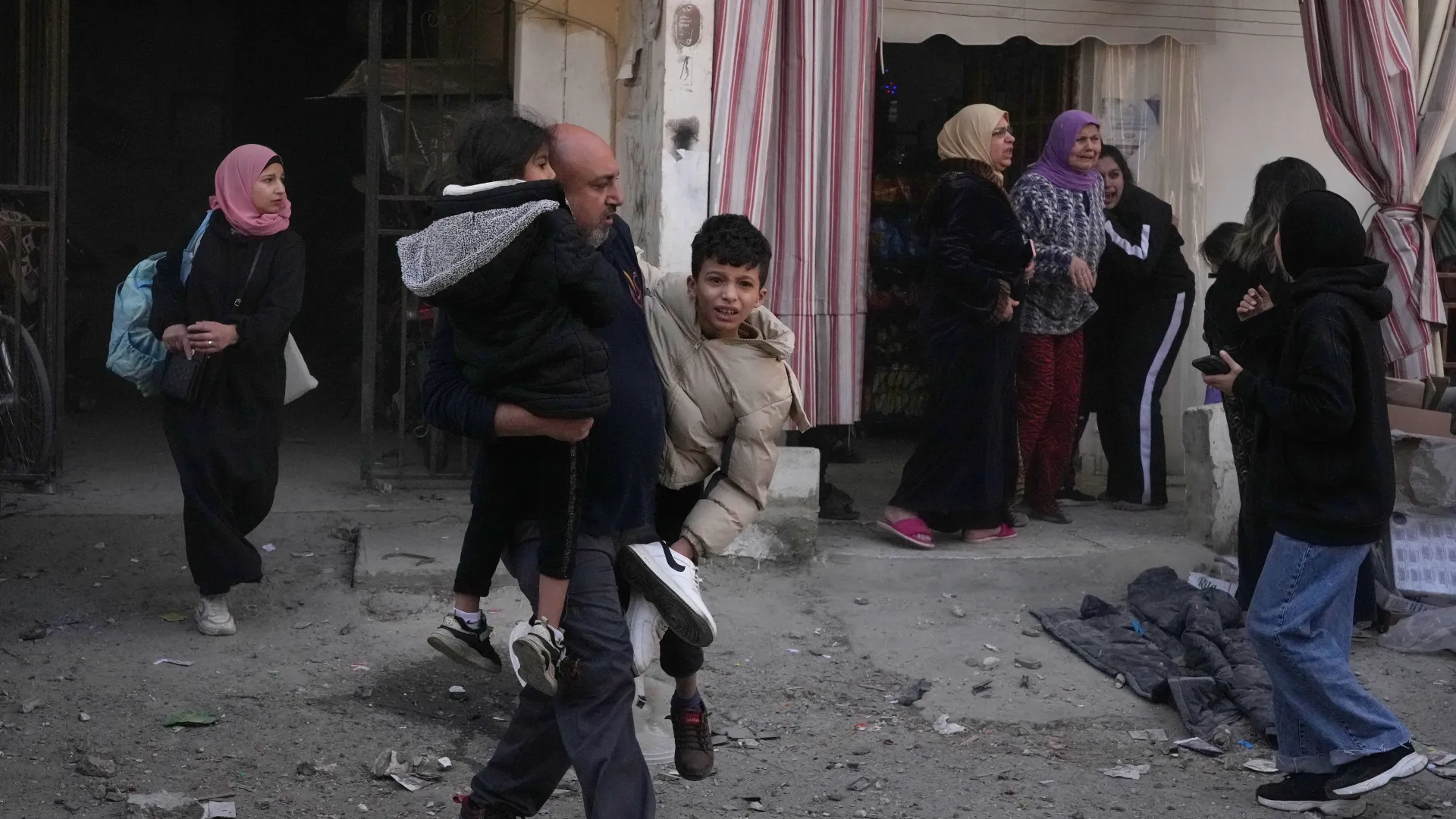
Eighteen days into the US-Israeli war on Iran, the conflict’s next crisis is taking shape not on the battlefield but along the country’s borders, where aid agencies and neighbouring governments are bracing for a refugee emergency that analysts warn could dwarf anything the modern world has seen.
More than 3.2 million people have already been displaced inside Iran since strikes began on February 28, according to the United Nations refugee agency UNHCR. The death toll has passed 1,400. Over 10,000 civilian sites have been damaged, among them 65 schools and 32 medical facilities, the country’s Red Crescent Society reports. Commercial flights have been suspended as Iranian airspace remains closed. Cross-border movement is still modest by the standards of what could come — but the conditions for something far larger are assembling.
Iran is a country of roughly 90 million people. That number sits at the heart of every serious analysis of what a mass displacement scenario would mean. Syria had about 21 million people when its civil war began in 2011. That conflict ultimately displaced more than 13 million, including six million who fled the country entirely. A proportionate crisis in Iran would push nearly 56 million people from their homes and send roughly 26 million across international borders — a figure that exceeds the entire current global refugee population and would overwhelm every mechanism the international humanitarian system has built over the past decade.
“The scale of displacement and the capacity of international aid agencies is fundamentally mismatched,” said Eldaniz Gusseinov, head of research at the geopolitical advisory firm Nightingale International.
For now, the movement is internal. US and Israeli strikes have been concentrated largely on Tehran and western and southwestern Iran, pushing displaced civilians toward provinces bordering Turkmenistan, Afghanistan and Pakistan. Gusseinov, based in Almaty, told Al Jazeera that this geographic pattern is itself a warning. “If the strike pattern remains the same, internally displaced people inside Iran will increasingly concentrate in provinces located near those states, creating the preconditions for cross-border movement,” he said.
The trigger for a sudden mass exodus could be infrastructure. Tehran is a city of about 10 million people. Should US-Israeli strikes take out its electricity grid or water supply, Gusseinov warned, the resulting displacement would bear no resemblance to the slow, manageable early flows that characterised the Syrian crisis. “Infrastructure destruction produces sudden, massive displacement, driven by the collapse of basic urban services,” he said.
Read also: Europe Rejects Trump’s Hormuz Naval Coalition, Warns On NATO
No neighbour faces greater political exposure than Turkiye. The country already hosts the world’s largest refugee population — roughly 3.6 million Syrians — and anti-immigrant sentiment has become one of the defining fault lines of Turkish domestic politics. A fresh wave of Iranians would land in a society where the tolerance for further burden has been stretched close to its limit.
Turkish authorities have not waited to see which way events break. Interior Minister Mustafa Ciftci disclosed earlier this month that Ankara has prepared three contingency plans: intercepting migration flows within Iranian territory before they reach the border; establishing buffer zones along the frontier; and, as a last resort, allowing controlled refugee entry. The government has already added 380 kilometres of concrete wall to the Iranian border, along with 203 optical towers and 43 observation posts — construction that, according to a Turkish Defence Ministry statement issued in January, was begun as the United States was assembling its Gulf armada late last year.
So far, the numbers crossing into Turkiye remain within normal ranges. Turkish government data recorded 5,010 entries from Iran between March 1 and 3, against 5,495 exits. The border is busy, but not breached. Turkiye has, however, already felt the war’s spillover in a different and alarming way: on March 9, NATO confirmed it had intercepted an Iranian ballistic missile over Turkish airspace, with debris landing near Gaziantep, roughly 50 kilometres from the Syrian border. Iran denied responsibility.
Read also: Azerbaijan Jails Frenchman For 10 Years In Espionage Case
Iraq, which shares Iran’s longest land border — stretching nearly 1,600 kilometres — occupies a uniquely complicated position. It is a potential destination for Iranian refugees while simultaneously being a theatre of the wider conflict. US forces have struck armed groups operating from Iraqi soil; Iran and its proxy forces have targeted American military and diplomatic positions inside the country in response. The UN’s International Organisation for Migration says disruptions on the Iranian side have already forced several border crossing points to close, though Iraqi crossings technically remain open. UNHCR said it is monitoring developments closely, and that Baghdad would lead any emergency refugee response on its territory.
The crisis carries a dimension that rarely surfaces in coverage of the war. Iran itself hosts one of the world’s largest refugee populations — approximately 3.7 million people, most of them Afghans who fled their own country’s successive conflicts. Any large-scale outward displacement from Iran does not simply produce a single refugee flow. It produces two simultaneously: Iranians fleeing the bombing, and Afghan and Iraqi refugees already living in Iran being uprooted a second time and pushed toward countries with neither the capacity nor the political will to receive them.
“Iran’s neighbouring countries are already dealing with their own crises,” Gusseinov said. “These internal pressures make it difficult for them to accommodate a large influx of refugees.”
The war has killed more than 1,400 Iranians, sent oil prices above $100 a barrel, and closed the Strait of Hormuz to most commercial shipping. Those consequences are visible and measurable. The refugee crisis building along Iran’s borders is still largely prospective — but the analysts watching it most closely say the question is no longer whether it arrives, only how fast.