
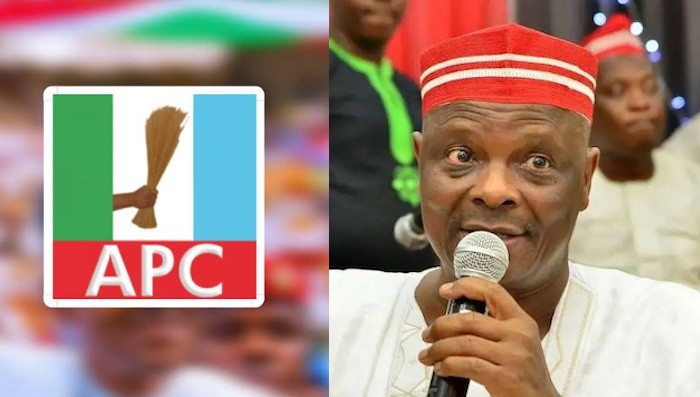
Recently, US Congressman Riley Moore’s tweet on X (formerly Twitter) mentioned former Governor of Kano State and presidential candidate of the New Nigeria Peoples’ Party (NNPP) in the 2023 elections Rabiu Musa Kwankwaso as among those included in a US Congress’ Bill for possible sanctions over alleged terror financing in Nigeria. The Bill was seeking to leverage the Global Magnitsky Human Rights Accountability Act 2016 to sanction alleged terror financiers in Nigeria following Congressmen Riley Moore and Chris Smith’s conclusion of ‘investigations’ regarding allegations of Christian genocide in Nigeria. Since the announcement, there has been an avalanche of reactions many of which have taken partisan dimensions. The mostly partisan reactions to Moore’s tweet are understandable given the fact of its emergence on the eve of the 2027 general elections in Nigeria, in which Rabiu Musa Kwankwaso is expected to play a significant role.
There are also reactions which suggest that Kwankwaso’s designation as an alleged terror financier by Moore’s tweet could stem from the former’s open disagreement with President Trump’s designation of Nigeria as a country of particular concern, which resulted in an argument between him and Moore. However, more fingers, especially those of former Kaduna State Governor Mallam Nasir El-Rufai, are pointing at the APC-led Federal Government of Nigeria as being behind Kwankwaso’s ordeal, given his apparent rejection of overtures by the ruling All Progressives’ Congress (APC) for him to join the Party.
Prior to Moore’s tweet, successive reports and speculations portrayed the APC as making moves to persuade Rabiu Musa Kwankwaso to join the Party. However, these moves appeared to have hit a snag. Instead, the APC had succeeded in getting Kwankwaso’s protégé and Governor of Kano State, Abba Yusuf, to join the Party in the possible expectation that such defection would weaken the cohesion of Kwankwaso’s Kwankwasiyya Movement which holds the ace in Kano politics, thus, enabling the APC to make seamless electoral inroads into the state in 2027.
As it would appear, things have not been at ease between the APC and the NNPP, with the latter’s continuous insistence that Rabiu Musa Kwankwaso has no formal intentions to join the APC, whilst also accusing the former of wanting to break its ranks in an alleged desperation to stifle opposition in the build-up to the elections. The African Democratic Congress (ADC) is also said to be wooing Kwankwaso but the latter is yet to take a definite decision on the matter. Some analysts believe that the ADC’s move appears to have been woven partly around the permutation that if former Vice President Atiku Abubakar fails to clinch the Party’s presidential ticket or decides to step down his presidential ambition, then, a joint presidential ticket between former Anambra State Governor Peter Obi and Rabiu Musa Kwankwaso could still give the APC a run for her money. These were some of the subsisting calculations in the build-up to the 2027 elections before Moore’s tweet appeared.
Read also: Obasi’s Luminary Insight Into Nigeria’s Democracy
Since the tweet, a lot of Kwankwaso’s supporters have been resolute in their attempt to restore what now appears to constitute a tainted reputation for Kwankwaso while critics seem to maintain the view that a combination of the adverse effects of Riley Moore’s tweet on Kwankwaso’s personal reputation and Governor Abba Yusuf’s defection to the APC could take the wind off Kwankwaso’s political sails, at least, as far as the 2027 general elections are concerned. Additional reactions also seem to suggest that the greatest beneficiary of the bad optics which Moore’s announcement has cast on Kwankwaso’s reputation would be the APC which should feel relieved that a major pillar of the opposition to her aspirations to retain tenancy of the Aso Villa in 2027 is currently being vilified. However, while this feeling may be good for the APC in the interim, it could backfire in the long run due to a number of factors:
The first factor is the possibility that Kwankwaso’s inclusion in the US Congress’ Bill as an alleged terror financier could cause increased hostility towards the APC by the Muslim-dominated North. As stated earlier, there are growing allegations that Kwankwaso’s designation as a terror financier was orchestrated from within, especially by forces within the APC who are hell-bent on reducing his influence as an opposition figure in the build-up to the 2027 general elections.
These allegations appear to have been largely supported by the recent intensification of rapport between the Nigerian government and her US counterpart, following the latter’s allegations of Christian genocide in Nigeria, and the former’s spirited attempts to pacify the latter. Accordingly, it is possible that those who allege foul play in Kwankwaso’s ordeal suspect that at some point in the discussions bordering on improving security in Nigeria, some anti-Kwankwaso forces within the Nigerian establishment may have leveraged the opportunity to smear Kwankwaso.
This allegation seems to have been given more credence by the fact that Moore’s tweet did not disclose any evidence directly linking Kwankwaso to terror financing, neither has the ‘report’ of the ‘investigation’ on Christian genocide been disclosed to the Nigerian public. At best, Nigerians have been left to grapple with the conjecture that Kwankwaso was linked to terror financing because of his enactment of Sharia Law in Kano State while serving as Governor. However, this excuse has been considered by many to be lame, given the fact that Kwankwaso was neither the first Governor to implement Sharia law in the North nor the most fundamentalist of all the governors that did so.
Read more: Prioritize Security Of Lives, Properties, Kwankwaso Urges FG
In any case, 12 governors implemented Sharia law in the North but none of the remaining 11 was mentioned alongside Kwankwaso as linked to terror or terror financing. The point in issue here is that for most of its sociopolitical existence, the North seems to have been operating on the unwritten code that an attack on one Northerner is an attack on all. Therefore, Kwankwaso’s singular vilification for alleged terror financing could draw the ire of Muslim-dominated Northern Nigeria against the APC especially when the allegation of terror financing appears to be epiphenomenal to an underlying allegation of Christian genocide.
The second factor is dependent on the political behavior of the Fulani-dominated nomadic cattle-rearing groups mentioned alongside Kwankwaso as terror financiers in Moore’s tweet, specifically the Miyetti Allah Cattle Breeders Association of Nigeria (MACBAN) and the more radical and vocal Miyetti Allah Kautal Hore. This factor is very critical because those who are very familiar with the workings of the sagacious Fulani political machinery understand that MACBAN and the Miyetti Allah Kautal Hore constitute some of the deadliest political forces in the North. These groups are rarely mentioned as political power brokers in the North, yet, to simply dismiss them as mere nomadic associations is to do so at one’s political peril. The associations are not just unsung power blocs; they are among the most formidable foot soldiers for implementing any Northern agenda. As a matter of fact, their significance in Northern political affairs seems to have gained more traction since the occurrence of what is now considered in many quarters as the ‘Middle Belt rebellion’ against the Northern Hausa-Fulani oligarchy (which is basically a Fulani oligarchy).
Since Othman dan Fodio’s 19th Century establishment of the Sokoto Caliphate, the trado-theocratic institutions of Northern Nigeria have been greatly influenced by the inputs of these nomadic groups albeit that the processes leading to their formal coalescence into recognizable unionist associations concretized sometime in the 70s. These cattle-rearing political forces could unite behind Kwankwaso or any other Northern presidential candidate to whittle down the APC’s 2027 electoral prospects in the North through a number of ways – first, they could convince Kwankwaso to swallow his pride in the interest of the Northern cause and move to the ADC to try to become Peter Obi’s running mate.
Once the Obi-Kwankwaso ticket becomes a reality, these groups could insist on an Obi-Kwankwaso Presidency or nothing, especially since Peter Obi has given his word on a single term of 4 years. Consequently, in the South East, a reenactment of the 2023 experience where much of the zone voted for Peter Obi could follow, forcing the newly-decamped APC governors in the zone to watch helplessly, even as the North is summarily delivered to Kwankwaso. This is more so because, in the event of an Obi-Kwankwaso ticket, Kwankwaso would likely retain his block votes in Kano, with the cattle-breeding associations working in cahoots with other forces to increase his national spread. This could force the APC to rely heavily on votes from the South West, as well as a few ‘crumbs’ left behind by the Obi-Kwankwaso ticket in the North and South-South geopolitical zones for its electoral survival. One unintended outcome of this political situation is that an Obi-Kwankwaso victory at the presidential elections could forestall Governor Abba Yusuf’s second term ambition.
Second, even if Kwankwaso does not move to the ADC, he could still work quietly to ensure the emergence of former Vice President Atiku Abubakar as ADC’s presidential flag-bearer. Then, the next step could be for him to direct the Kwankwasiyya Movement to vote massively for Atiku while the cattle-breeding associations and their allies are left to do the dirty work of improving Atiku’s southern spread.
This second strategy is even more potentially devastating to the APC because whether Peter Obi becomes Atiku’s running mate or not, the Igbos of the South-East and much of the South-South would most likely vote for Atiku whom they consider to be friendlier to them. This is more so because, the South-East and South-South geopolitical zones which have long been the old strongholds of Atiku’s former Peoples’ Democratic Party (PDP) could choose to demonstrate that though loyalty to the party may shift, loyalty to the person could remain. It is therefore conceivable that in any of the abovementioned electoral scenarios, the APC is in trouble.
The third factor that could make Kwankwaso’s designation as an alleged terror financier electorally counterproductive to the APC is the behaviour of the United States. Since Trump’s designation of Nigeria as a country of particular concern amidst Christian genocidal allegations, the Nigerian government has intensified efforts to diplomatically pacify the world power. Accordingly, there have been a number of meetings between representatives and agents of both countries, culminating in the conviction – especially by the Nigerian government – that the diplomatic situation and general rapport between both countries may have significantly improved, particularly in view of President Trump’s public bestowal of encomia on Nigeria’s First Lady at the US’ National Prayer Breakfast held in Washington DC.
Unfortunately, while the feeling and optics may be good for the Nigerian government at the moment, she needs to understand that the US is playing her own game, with no other potential beneficiary in mind but the US herself. Since the US allegations of Christian genocide in Nigeria and the threat of military intervention to ostensibly end the menace began, there have been suggestions in certain quarters that the whole drama is a political fiasco staged by the US to obtain some concessions from an APC government which appears deeply committed to retaining power in 2027, especially at the center.
This seems to explain the sudden escalation of such threats and allegations on the eve of an election year, together with the attendant maelstrom of frenetic activities like the US’ bombing of terrorists in Sokoto which now seems more political than military, coupled with the deployment of about 200 troops in Nigeria who have been unable to stem the tide of rising terrorist attacks in Nigeria’s Northeast since the Sokoto bombing.
Analysts further suspect that these concessions have become necessary in view of China and Russia’s increasing access to the Nigerian economy in recent times, which have tended to shrink US ‘spheres of interest’ and those of her staunch ally Britain. Furthermore, the timing of Moore’s tweet on the eve of an election year in Nigeria also comes handy to confirm the suspicion of US’ positioning for additional concessions because the adverse impacts of the tweet on the APC’s chances of reelection especially in the North may place Nigeria’s APC Federal government at a very precarious electoral position, necessitating her possible ‘request’ for US assistance in the area of regime survival, leading to further concessions.
Notwithstanding the aforementioned, there are a number of options which the ruling APC could pursue to avert the looming electoral disaster that could come with Moore’s designation of Rabiu Musa Kwankwaso as an alleged terror financier in Nigeria.
The first option is for the APC-led Federal Government of Nigeria to deescalate or disengage from the current rapport with the US regarding the allegation of Christian genocide which continues to polarize the country around issues of religion and concentrate on the pursuance of internal mechanisms for dealing with the problem of insecurity just like former President Goodluck Jonathan did in the build-up to the 2015 elections. In this regard, it is hoped that declining insecurity especially in the North, alone or in combination with the de-escalation of the Christian genocide rhetoric would improve the image and standing of the Government in the Muslim-dominated Northern Nigeria leading to more promising electoral outcomes. Even the cattle-breeding associations would appreciate a situation of declining insecurity given their consistent claims about a lot of their members being victims of cattle rustling.
The second option would be to checkmate Peter Obi’s popularity in the South-East by granting presidential pardon to the detained leader of the Indigenous People of Biafra (IPOB) Mazi Nnamdi Kanu. It is expected that Kanu’s release from prison would immediately solve two problems. First, it would immediately abate the spate of insecurity in the South-East thereby giving the military and other security agencies the latitude to focus on other regions where the menace has continued to fester. Second, Kanu’s release would definitely counter the activities of the Obidient Movement in the South-East. Many Igbos who vote for Peter Obi do not do so because they love the man. They do so mainly to express their resentment for the APC government’s continued detention of the separatist leader. To many Igbos, Peter Obi is just one of the usual South-East politicians whose activities have tended to worsen the political and socioeconomic fortunes of the geopolitical zone in Nigeria.
Therefore, he is just lucky enough to have emerged on the political scene at a point when the Igbo ethnic nationality is seeking ways to ‘punish’ the APC-led Federal Government of Nigeria for the continued incarceration of their son despite all local and international entreaties to the contrary. In this regard, the usual argument that not every Igbo man believes in ‘Biafra’ or Nnamdi Kanu and therefore, that not every Igbo man is opposed to Kanu’s continued detention has become anachronistic, deceptive and erroneous because, since the APC-led Federal Government’s refusal to grant requests of notable Igbo leaders like the late First Republic Aviation Minister Mbazulike Amaechi and ‘Okwadike Igboukwu’ Chief Chukwuemeka Ezeife for Kanu’s release, a lot of Igbos have now come to see Kanu’s predicament as a direct affront on the Igbo ethnic nationality, and not just the person of Kanu or the group he represents.
Therefore, if Nnamdi Kanu is suddenly released in the build-up to the 2027 elections, one of two things could happen: The Igbos could make the jobs of the newly-decamped APC governors in the South-East much easier by voting overwhelmingly for the APC in 2027 as a show of appreciation for the APC-controlled Federal Government of Nigeria’s magnanimity to release their son or, they could reactivate their pre-IPOB political apathies by simply returning to their homes to strategize about the success of their businesses and the future of ‘Biafra,’ leaving Nigeria to sort out her political headaches. In the latter case, the APC may not possibly secure the majority votes from the region but the ADC would not do so either.
The worst case scenario is that the votes from the region would be shared among the political parties. However, if jeopardizing the votes from the South-East would enable the APC restore security to the region, then, it would be a major achievement for the Party because economists seem to agree that persistent insecurity in the zone has been impacting negatively on the country’s GDP. Thus, with the Obi factor effectively subdued by the release of Nnamdi Kanu, and with the North effectively placated by rapidly declining insecurity which bolsters food production and induces the reduction in prices of staple foodstuff across the country, there is no way that the APC’s chances of retaining power in 2027 would not become brighter.
The third option is for the APC to aggressively provide the dividends of democracy to Nigerians through massive employment opportunities and mass provision of social services like free or subsidized transportation which impact directly on the life of the average Nigerian. The idea here is that once Nigerians are happy with their government, no external machination would be sufficient to jeopardize her continued existence – late Fidel Castro’s Cuba and Captain Ibrahim Traore’s Burkina Faso are shining examples in this regard. More emphatically, the APC government must do something about the issue of unemployment, especially youth unemployment.
A government that creates employment empowers the people. A government that empowers the people hardly loses elections.
Christopher Uchenna Obasi is a retired military officer, public affairs analyst, and Lecturer, Department of Political Science, Coal City University, Enugu.