
By Prof. MarkAnthony Nze
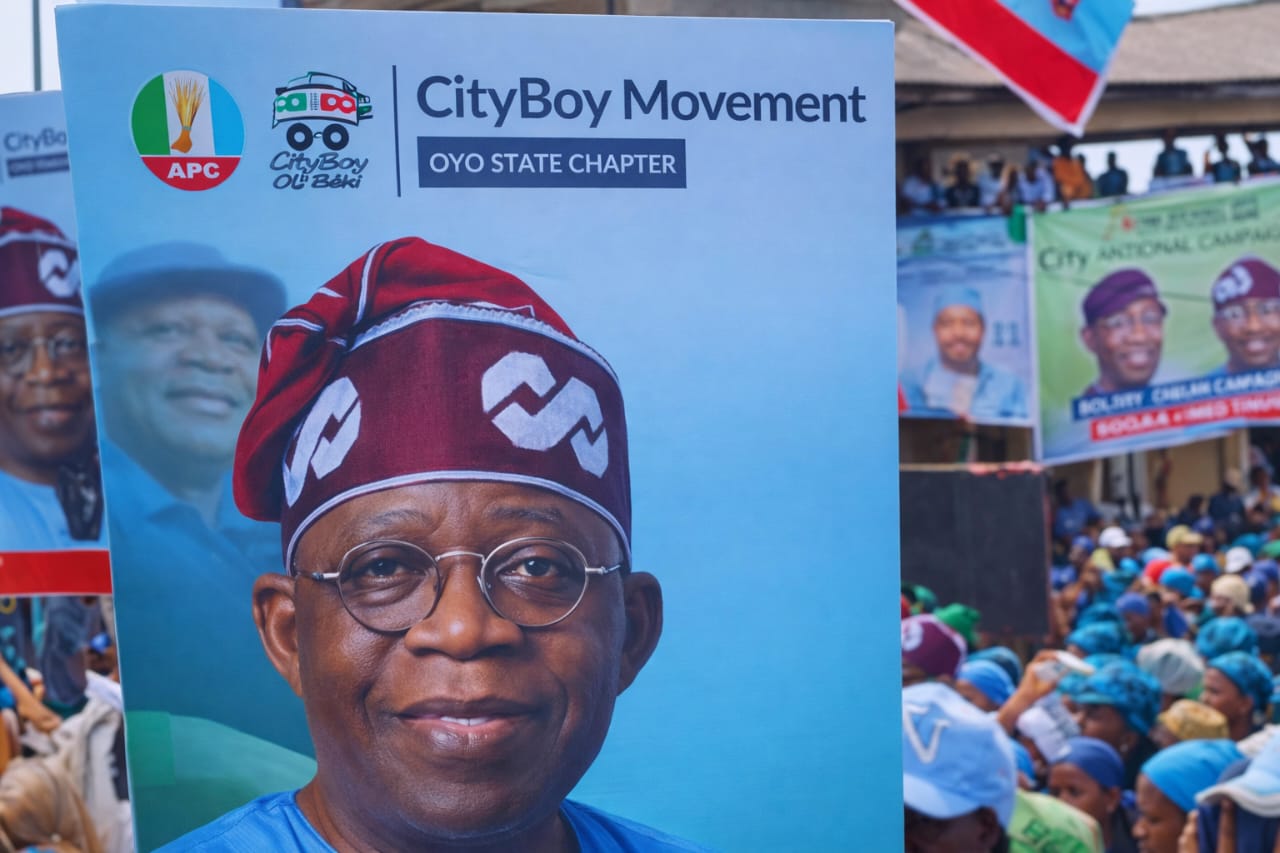
“City Boy politics” has become one of the more memorable phrases in Nigeria’s public conversation, but its meaning is often left vague. Used carefully, it describes a style of politics built around image, access, elite familiarity, and performative confidence. It is a politics that prizes proximity to power, mastery of political theater, and the ability to dominate the narrative. In itself, style is not a crime. Every political system has symbolism, branding, and stagecraft. The problem begins when presentation starts to displace measurable public outcomes. In a country facing inflation, poverty, fragile security, and deep mistrust in institutions, appearances cannot be treated as evidence of success.
A fair assessment of President Bola Tinubu’s administration has to begin with a basic distinction: macroeconomic movement is not the same thing as social improvement. On the macro side, there have been visible gains. Nigeria’s real GDP grew by 4.07 per cent year on year in the fourth quarter of 2025, according to the National Bureau of Statistics. The World Bank’s October 2025 Nigeria Development Update also reported a current-account surplus of 6.1 per cent of GDP in early 2025 and noted that reserves had risen above US$42 billion. These are serious indicators, not propaganda lines, and they suggest that stabilization efforts have had some effect.
But those gains sit beside a harder social reality. Reuters reported on 16 March 2026 that Nigeria’s headline inflation rate for February 2026 was still 15.06 per cent, only slightly lower than January’s 15.10 per cent. More troublingly, food inflation rose to 12.12 per cent from 8.89 per cent. In practical terms, that means the area of life that matters most to low-income households, feeding themselves, remained under intense pressure. The central economic question, therefore, is not whether some indicators have improved. It is whether those improvements have become tangible enough in daily life to justify the pain many households have absorbed since the removal of fuel subsidies, exchange-rate reforms, and wider fiscal adjustments.
This is where the critique of “City Boy politics” becomes more than a slogan. It points to a familiar gap in Nigerian governance: the distance between elite narration and popular experience. Governments often speak in the language of reform, investor confidence, reserves, and market signals. Citizens, by contrast, measure government in the price of rice, transport fares, school fees, rent, medicine, and whether income still stretches to the end of the month. That gap does not make reform illegitimate. It does mean that political celebration can quickly look insulated, even callous, when those carrying the burden of adjustment do not yet feel the promised gains.
The oil sector illustrates this tension clearly. Recent reporting by the Financial Times suggests that parts of Tinubu’s reform program have helped revive investor sentiment. Nigeria’s oil production rebounded to about 1.5 million barrels per day in 2025, up from periods below 1 million barrels per day in earlier years. The same report noted roughly US$5.3 billion in upstream investment commitments and renewed activity from majors such as Shell and ExxonMobil. Those are important developments because oil remains central to Nigeria’s fiscal health and foreign exchange position. Yet even here, the lesson is not that recovery is complete. The same reporting stressed that corruption, theft, weak implementation, and institutional friction remain major obstacles. Progress, in other words, is real but partial.
A factual analysis, then, has to resist two temptations. The first is blind celebration, where any positive macroeconomic movement is treated as proof that the administration is succeeding overall. The second is total dismissal, where every reform is written off as failure regardless of evidence. The more honest conclusion is that Tinubu’s government has produced some macroeconomic stabilization while still failing to deliver broad social reassurance at the speed many Nigerians need. That is precisely why political performance matters so much in the current debate: when governments are unable to produce quick, visible relief, they often lean more heavily on symbolism, alliance-building, and narrative management.
Security makes the limits of narrative even clearer. Economic reform, however necessary, cannot compensate for a state that appears unable to protect life consistently. The Financial Times reported on 18 March 2026 that nearly 30,000 people had been killed in Nigeria since Tinubu took office in 2023 through insurgent attacks, banditry, and communal violence, while warning that the real total may be higher because of underreporting. The same report described the military as overstretched and highlighted criticism that the state still lacks a coherent long-term strategy. That is not a minor governance defect. Security is the first obligation of the state. When it remains fragile, every other achievement becomes harder to defend politically and morally.
Events from this week underline that fragility. Associated Press reported that suspected suicide bombings in Maiduguri killed 23 people and injured 108 others. AP also reported a separate ambush in Plateau State in which security personnel were killed while on patrol. These are not isolated symbols; they are reminders that insecurity in Nigeria is geographically varied and structurally persistent. It appears in jihadist violence in the northeast, armed attacks in the north-central region, kidnapping and banditry elsewhere, and repeated signs that coercive capacity is stretched thin.
Read also: The Judas Kiss: Kanu, Cowardice, And Nigeria’s Fraud
Broader conflict data points in the same direction. The 2026 Global Terrorism Index recorded a 46 per cent increase in terrorism deaths in Nigeria in 2025, rising from 513 to 750, and ranked the country fourth globally on that measure. Terrorism is not the only form of violence Nigeria faces, and it would be analytically sloppy to reduce every security problem to terrorism. Even so, this increase matters because it shows that one of the most visible categories of organized violence has worsened rather than receded. A government seeking credit for economic courage must also answer for deteriorating security conditions.
Civil liberty concerns sharpen the picture further. Amnesty International Nigeria stated in February 2025 that President Tinubu should direct the DSS to stop intimidating media houses, journalists, and civil society actors. Whether one agrees with every advocacy claim or not, the significance of such warnings is clear: criticism of the administration is not coming only from party rivals or online polemicists. It is also coming from rights-based actors worried about the shrinking of civic space. In a democracy, reform should widen the legitimacy of government, not increase anxiety about dissent.
Seen in this light, “City Boy politics” is best understood not simply as a reference to one politician’s brand but as a broader civic problem. It names a political culture in which shrewdness is often admired more than accountability, networking more than competence, and visibility more than evidence. In such a culture, endorsement by elites can begin to stand in for public reasoning. The citizen is invited to trust the aura of power rather than its outcomes. That is a dangerous habit in any democracy, but especially in one where state capacity is uneven and social suffering is extensive.
One point worth stating clearly is that the “City Boy” agitation by some Igbo social media influencers in eastern Nigeria should not be mistaken for genuine grassroots legitimacy. Much of it is noise without depth, volume without public weight. Ndigbo have a republican political culture, one shaped less by blind loyalty than by dignity, debate, and earned conviction. They are not a people easily purchased or permanently moved by patronage. The fact that a handful of opportunists have chosen visibility over principle does not mean they speak for the East. Their performance is personal, not representative; loud, yes, but thin.
The educational lesson here is straightforward. Good governance should be judged through layered evidence. First, macroeconomic indicators matter: growth, reserves, inflation trends, current-account performance, oil production, and investment flows. Second, household realities matter just as much: food prices, transport costs, wages, access to healthcare, and job security. Third, security and liberty matter because prosperity without safety, and reform without civic confidence, will not produce durable legitimacy. A presidency that improves only one of these layers cannot credibly claim full success.
Read also: Philippians 3:10 And The Crisis Of Faithful Living
That is why the real cost of governance today cannot be measured by political branding. It must be measured by whether ordinary Nigerians are living more secure, more affordable, and more dignified lives. By that standard, the current record is mixed at best. There is evidence of economic stabilization. There is also evidence of continued hardship, persistent insecurity, and unease over civic freedoms. The central analytical mistake would be to pretend that one set of facts cancels the other. It does not. Both are true, and any honest public assessment must hold them together.
In the end, the strongest critique of “City Boy politics” is not that it is stylish, urban, or media-savvy. It is that it can encourage a politics of impression at the very moment Nigeria needs a politics of proof. A state this large, this unequal, and this vulnerable cannot be governed by performance alone. It requires evidence, restraint, security, institutional credibility, and an unembarrassed focus on the material conditions of ordinary life. Until those conditions improve more broadly, the rhetoric of political mastery will remain less convincing than the testimony of the public itself.
References (Harvard style)
Amnesty International Nigeria (2025) ‘Direct DSS to Stop Intimidating the Media’ – Amnesty, SERAP Tell President Tinubu’, 26 February. Available at: https://www.amnesty.org.ng/2025/02/26/direct-dss-to-stop-intimidating-the-media-amnesty-serap-tell-president-tinubu/ (Accessed: 19 March 2026).
Associated Press (2026a) ‘23 killed, 108 wounded in suspected suicide bombings in northeast Nigeria’, 17 March. Available at: https://apnews.com/article/nigeria-suicide-bombings-borno-maiduguri-3eaeb7f126866ab3c8b1d927a8bc7168 (Accessed: 19 March 2026).
Associated Press (2026b) ‘Armed group killed security personnel in an ambush in north-central Nigeria, authorities say’, 15 March. Available at: https://apnews.com/article/nigeria-armed-attack-3493e7c6793a5787fd7bef6d8c36af7b (Accessed: 19 March 2026).
Financial Times (2026a) ‘Move to unblock Nigeria’s oil sector hints at progress’, 18 March. Available at: https://www.ft.com/content/a51c010c-8086-46a0-929f-339636f21e57 (Accessed: 19 March 2026).
Financial Times (2026b) ‘Nigeria struggles to contain spreading security crisis’, 18 March. Available at: https://www.ft.com/content/0736a60c-09d3-4c39-bb18-c04c5eba5e49 (Accessed: 19 March 2026).
Institute for Economics & Peace (2026) Global Terrorism Index 2026. Sydney: Institute for Economics & Peace. Available at: https://www.visionofhumanity.org/wp-content/uploads/2026/03/Global-Terrorism-Index-2026-Report.pdf (Accessed: 19 March 2026).
National Bureau of Statistics (2026) ‘Gross Domestic Product (GDP) grew by 4.07% (year-on-year) in real terms in the fourth quarter of 2025’. Available at: https://www.nigerianstat.gov.ng/ (Accessed: 19 March 2026).
Reuters (2026) ‘Nigeria inflation eases marginally in February after central bank trims rates’, 16 March. Available at: https://www.reuters.com/world/africa/nigeria-inflation-eases-marginally-february-after-central-bank-trims-rates-2026-03-16/ (Accessed: 19 March 2026).
World Bank (2025) Nigeria Development Update, October 2025: From Policy to People: Bringing the Reform Gains Home. Washington, DC: World Bank. Available at: https://documents1.worldbank.org/curated/en/099100825010038474/pdf/P513192-b0cb6210-6cdc-423f-b0eb-834a44a28494.pdf (Accessed: 19 March 2026).