
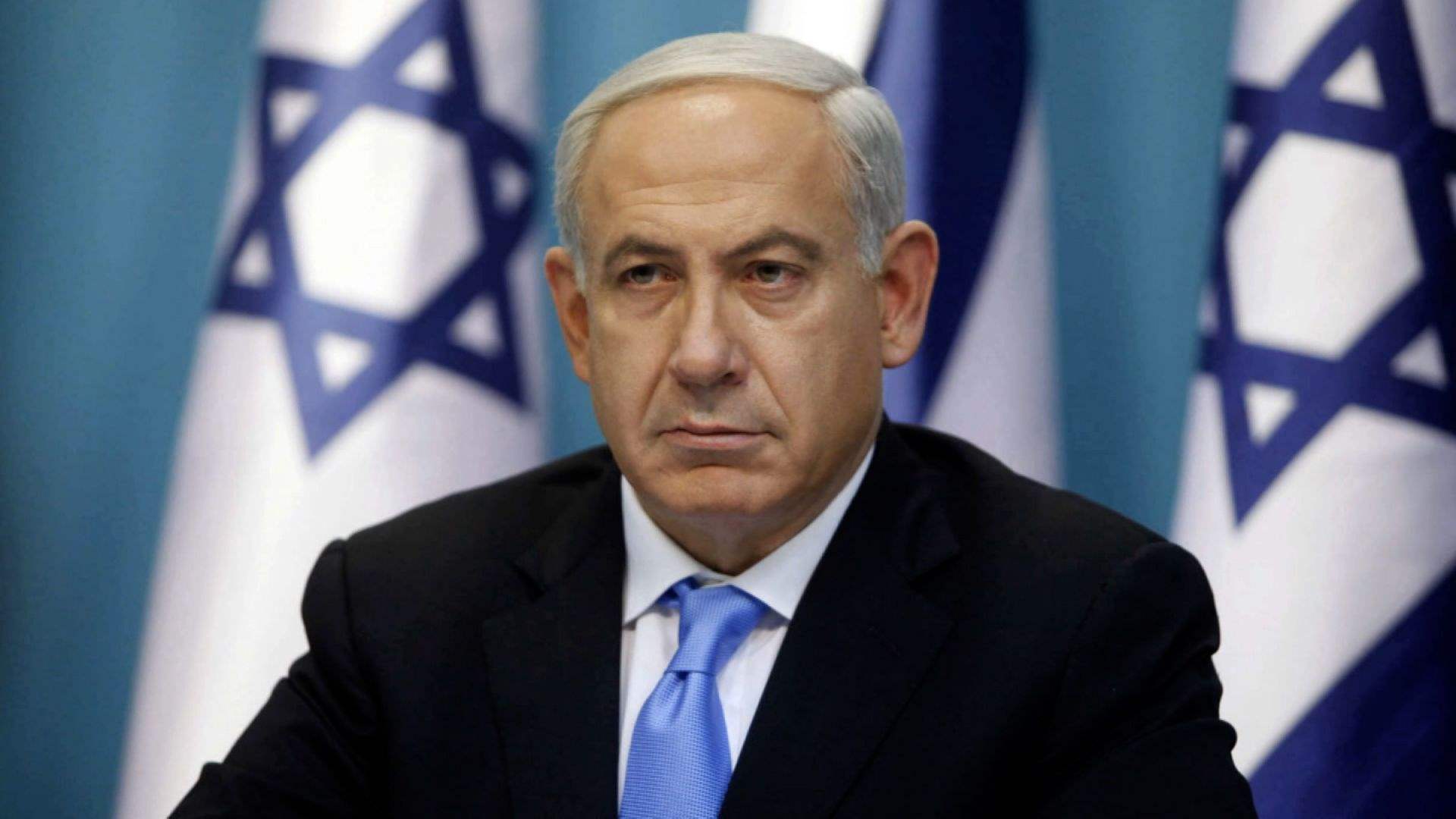
Benjamin Netanyahu declared Thursday that Iran has been stripped of its ability to enrich uranium or build ballistic missiles, casting the three-week-old war as a campaign already approaching its objectives — while confirming that Donald Trump had asked Israel to stop striking Iranian energy infrastructure and that the order had been obeyed.
Speaking at an English-language press conference, the Israeli prime minister said Iran was being “decimated” and that the two allies were winning a conflict he insisted had been conducted as a genuine partnership rather than a case of Israel pulling the United States into a war not of Washington’s choosing. The question of who drove whom into the conflict has shadowed the alliance since strikes began, with critics accusing Netanyahu of leveraging American power for Israeli strategic ends.
He dismissed the characterisation with a bluntness that left little room for ambiguity. “Does anyone really think that someone can tell President Trump what to do?” Netanyahu said. “He didn’t need any convincing.”
The remarks were carefully calibrated to address two audiences simultaneously. To a sceptical international press, Netanyahu was defending the war’s legitimacy and direction. To Washington, he was publicly subordinating Israel’s operational tempo to American preferences — confirming that Trump’s request to halt attacks on South Pars, Iran’s massive gas field struck by Israeli forces earlier this week, had been accepted.
“President Trump asked us to hold off on future attacks and we’re holding off,” Netanyahu said.
Trump had made his displeasure with the South Pars strike visible in the Oval Office on Thursday, saying simply: “We’re not doing that anymore.” The statement followed days of market turbulence triggered by the Israeli attack on the field, which supplies the fuel for roughly 80 percent of Iran’s electricity generation. Oil prices have spiked above $110 a barrel since the strike, and Trump had separately threatened to destroy South Pars entirely if Iran attacked Qatar again — a threat he now appears to be pulling back from, at least as it applies to Israeli action.
Read also: Israel Claims Ali Larijani Killed; Khamenei Rejects Talks
Netanyahu’s insistence that Israel acted alone on South Pars sat in tension with earlier reporting from American and Israeli officials who told journalists the operation had been coordinated with and approved by the White House. He did not address that contradiction directly. Instead, he framed the episode as evidence of a partnership so close that distinctions between coordinated and unilateral action had become somewhat academic. “I don’t think any two leaders have been as coordinated as President Trump and I,” he said. “He’s the leader. I’m, you know, his ally.”
On the broader military picture, Netanyahu offered an assessment of damage to Iran’s strategic capabilities that, if accurate, would represent one of the most consequential shifts in Middle Eastern security in decades. He said Iran no longer possessed the industrial capacity to enrich uranium or manufacture ballistic missiles — claims that independent verification of is currently impossible given the state of the conflict and restrictions on access inside Iran.
The political situation inside the Islamic Republic, he suggested, is deteriorating as rapidly as the military one. Supreme leader Ayatollah Ali Khamenei was killed in an Israeli airstrike on the first day of the war. His son Mojtaba has been appointed as replacement but has not appeared publicly.
“I’m not sure who’s running Iran right now,” Netanyahu said. “Mojtaba, the replacement ayatollah, has not shown his face.”
He said Israel was actively working to exploit divisions it was observing both in Iran’s top command and among fighters in the field. “We’re seeing cracks, and we’re trying to propagate them as fast as we can,” he said — a statement that describes something closer to a regime-change strategy than a limited military campaign, though Netanyahu stopped short of framing his objectives in those terms explicitly.
Read more: Israel-Lebanon Direct Talks Set, Kushner To Lead US Role
Iran’s closure of the Strait of Hormuz, which has sent energy prices soaring and triggered the largest emergency release of strategic oil reserves in the history of the International Energy Agency, drew a single word from Netanyahu: “blackmail.” He said it would not work, without specifying what combination of military pressure and international coordination he believed would reopen the waterway.
Despite the confident tone, Netanyahu acknowledged the campaign was not finished. “There’s still more work to do, and we’re gonna do it,” he said. In the same breath, he offered a forecast that departed from the prevailing sense of a conflict with no visible end point. “I also see this war ending a lot faster than people think.”
He offered no timeline, no definition of the conditions that would constitute an acceptable conclusion, and no account of what post-war Iran would look like under whatever leadership emerges from the cracks he described. The press conference was an exercise in projecting momentum and control — a leader insisting, with some force, that the chaos of the past three weeks is moving in a direction he can still shape.