
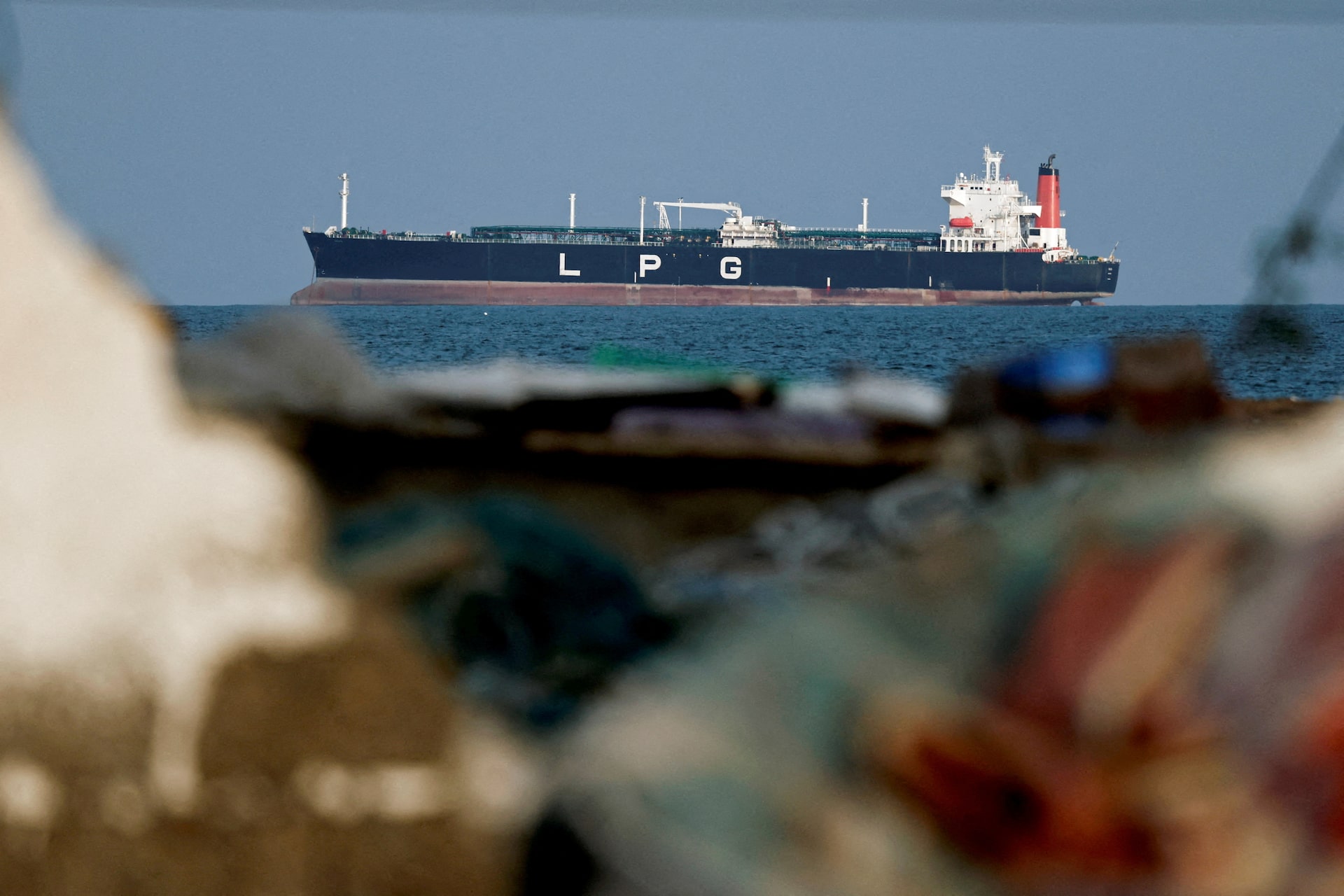
Iran’s representative to the United Nations’ maritime agency said Sunday that the Strait of Hormuz remains navigable for all countries except those it considers enemies, offering a qualified and conditional position on freedom of passage that falls considerably short of the unconditional reopening demanded by President Donald Trump’s 48-hour ultimatum, and that the practical reality of the waterway, largely empty of commercial traffic since the war’s second week, makes effectively moot regardless of how Tehran frames it.
Ali Mousavi, who serves as both Iran’s permanent representative to the International Maritime Organization and as Iran’s ambassador to the United Kingdom, told the Chinese state news agency Xinhua that ships not linked to “Iran’s enemies” could transit the strait by coordinating security and safety arrangements directly with Tehran. Mousavi said Tehran was prepared to cooperate with the IMO to enhance maritime safety and protect seafarers, and added that its territorial integrity and sovereignty must be respected as any such coordination develops.
“Diplomacy remains Iran’s priority. However, a complete cessation of aggression as well as mutual trust and confidence are more important,” he said, attributing the current state of the waterway directly to American and Israeli military actions.
The statement’s internal logic, that the strait is available to neutral parties who apply to Tehran for clearance, does not address the fundamental obstacle: as of March 12, Iran had made 21 confirmed attacks on merchant ships since the war began, and tanker traffic had dropped by approximately 70 percent.
Protection and indemnity insurance war risk provisions were removed on March 5, making the economic risk prohibitive for the vast majority of ship owners regardless of what Iran says publicly about formal access.
Iran’s Foreign Minister Abbas Araghchi had acknowledged the week prior that a number of countries had approached Tehran seeking safe passage for their vessels, and that some groups of ships had been allowed through, but declined to provide specifics, saying the military retained final authority over any clearance.
The gap between Iran’s declared policy and commercial reality is precisely what Trump’s ultimatum is designed to close, though the mechanism he has chosen to close it is itself deeply contested.
Al Jazeera’s Washington correspondent noted a visible contradiction at the center of the American position: CENTCOM chief Admiral Brad Cooper had asserted on Saturday that the U.S. had already significantly degraded Iran’s ability to attack vessels in the strait, describing strikes on underground coastal facilities storing anti-ship cruise missiles and mobile launchers.
If that degradation were accurate, it was unclear why an additional 48-hour ultimatum threatening power plants was necessary to restore passage that the military had already said it was securing.
Read Also: Trump To Iran: Open Hormuz In 48hrs Or Lose Power Grid
Iran’s military response to the ultimatum has not been confined to Mousavi’s measured diplomatic language. Iran’s Khatam al-Anbiya military command warned Sunday that any U.S. strike on Iranian energy facilities would trigger retaliatory attacks on American and Israeli energy infrastructure, information technology systems, and desalination facilities across the region. Iran’s parliament speaker, Mohammad Bagher Ghalibaf, added that regional infrastructure would become “legitimate targets” if Iran’s own facilities were struck, predicting the resulting disruption would drive oil prices significantly higher for a sustained period.
Israel’s Defense Minister Israel Katz said Sunday he and Netanyahu had instructed the military to accelerate the demolition of Lebanese homes in what he called “frontline villages” to eliminate threats to Israeli communities, and that all bridges over Lebanon’s Litani River used for what he described as “terrorist activity” were to be immediately destroyed. The announcements reflected a broader posture of intensification rather than the wind-down language Trump had employed less than 24 hours before his ultimatum post.
The human and physical dimensions of the war’s current phase added further weight to the diplomatic standoff. Residents of Arad in southern Israel woke Sunday to scenes of mass destruction across multiple residential blocks following Saturday night’s Iranian missile strikes. Israel’s hard-line National Security Minister Itamar Ben-Gvir visited the town and declared Israel was in “a historic battle” that “must continue until victory.” Morning sirens warned of new incoming barrages across southern and central Israel as Iranian missiles continued to be tracked.
Iran’s internet blackout, in force since the war began on February 28, entered its 23rd day on Sunday. The Irish Times reported that the measure, imposed by the Iranian government, adds to the wartime distress of millions of civilians who lack independent sources of information.
Read Also: Trump Eyes Wind-Down In Iran War But Israel Warns Of Surge
“Those without access to Starlink or alternative ways to communicate — which are often expensive — are cut off, not only from the outside world but the blackout also severely curtails Iranians’ ability to communicate with each other,” the newspaper reported.
The IAEA confirmed Sunday that the bulk of Iran’s estimated 441 kilograms of enriched uranium is located beneath rubble at its Isfahan facility rather than at Natanz, complicating both the narrative of nuclear infrastructure destruction and the strategic calculus around continued strikes on nuclear-related sites. The IAEA’s director-general has repeatedly called for military restraint to prevent any risk of a nuclear accident, a call that neither party to the conflict has formally acknowledged.
The Trump administration’s 48-hour deadline expires at 7:44 p.m. Eastern time Monday. Iran has given no indication it will meet the unconditional terms required to prevent the threatened strikes on its power infrastructure. No diplomatic intermediary — not France, Qatar, Oman, nor the United Nations — has announced a mediation framework capable of bridging the two positions before that deadline expires.