
A routine hospital visit in northern England became the unlikely setting for one of the most narrowly averted terrorist incidents in recent British history, underscoring both the persistent threat of self-radicalised actors and the unpredictable role of individual intervention in crisis moments.
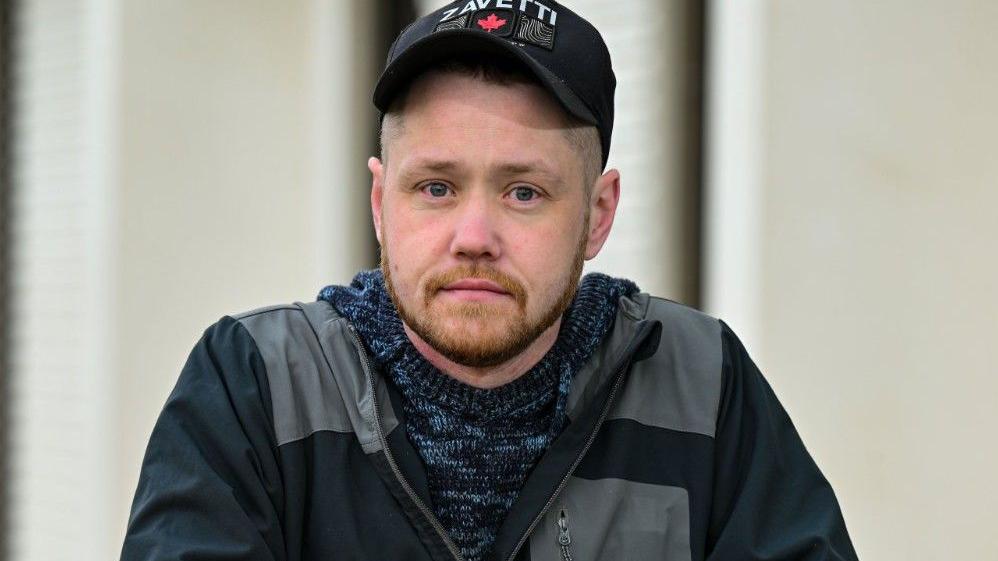
In January 2023, at St James’ Hospital in Leeds, a patient receiving treatment for a chest infection found himself confronting a situation far removed from his own medical concerns. Nathan Newby, 35, encountered Mohammad Farooq, a hospital employee whose behaviour raised immediate suspicion. What followed was not a security-led interception or intelligence operation, but a prolonged, deeply human exchange that ultimately prevented what authorities later described as a potentially catastrophic attack.
Farooq, a nursing assistant at the hospital, had arrived at the facility in the early hours with a pressure cooker bomb containing approximately 10 kilograms of explosives. Evidence presented in court would later indicate that the device exceeded the scale of the explosive used in the 2013 Boston Marathon bombing. His intention, shaped by personal grievances and exposure to extremist material, was to target healthcare workers—specifically nurses—within a setting that offered minimal resistance.
Newby’s encounter with Farooq began outside the hospital’s maternity ward. Stepping out for fresh air, he noticed a man who appeared visibly distressed and out of place. Rather than disengage, Newby initiated a conversation. That decision would evolve into a two-hour effort to de-escalate a volatile situation.
According to his later account, Farooq’s anxiety was evident, particularly in his fixation on a nearby bag. Through careful conversation, Newby persuaded him to reveal its contents. Inside was the improvised explosive device. At that point, the situation shifted from suspicion to immediate danger.
Faced with the reality of the threat, Newby made a critical judgment. Instead of attempting to flee—an action that could have triggered panic or detonation—he chose to remain. His approach was neither tactical nor trained; it relied on maintaining calm, building rapport, and redirecting Farooq’s focus away from violence.
This interaction unfolded without the presence of other civilians or staff, a factor that both increased the risk and simplified the dynamics of engagement. Newby later noted the absence of bystanders as both isolating and clarifying: there was no one to alert, no immediate external intervention to rely upon.
Throughout the exchange, Newby engaged Farooq in conversation that extended beyond the immediate situation. He spoke about personal struggles, encouraging a sense of shared humanity. This strategy appeared to have a stabilising effect. At one point, Farooq requested a hug—an unusual but telling moment that suggested a shift in his psychological state.
Read Also: UK Launches Social Media Ban Trial For 300 Teenagers
It was during this interaction that Farooq expressed a desire for the police to be contacted before he reconsidered his decision. Seizing the opportunity, Newby facilitated the call to emergency services, using his own initiative to ensure that authorities were alerted without escalating the situation. During the call, he also gathered further information, prompting Farooq to disclose additional weapons, including knives and an imitation firearm.
By the time armed police arrived, the immediate threat had been contained. Farooq was arrested without incident, and the explosive device was secured before it could be deployed.
Subsequent investigations revealed a trajectory consistent with lone-actor radicalisation. Farooq had consumed extremist propaganda online and downloaded instructional materials related to bomb-making. Initially, he had considered targeting a high-security military installation—RAF Menwith Hill—but abandoned the plan due to logistical challenges. The shift to St James’ Hospital reflected a move toward what prosecutors described as a “softer target,” highlighting a pattern seen in similar cases where accessibility becomes a decisive factor.
At trial, Farooq was convicted of preparing acts of terrorism and sentenced to a minimum of 37 years’ imprisonment. The court heard detailed accounts of his planning and intent, as well as the sequence of events that led to his arrest.
Judicial and law enforcement officials were unequivocal in their assessment of Newby’s actions. The presiding judge characterised his conduct as extraordinary, noting the rarity of such composure under extreme pressure. Prosecutors emphasised that the intervention likely prevented significant loss of life, while counter-terrorism investigators described the incident as one of the closest near-misses they had encountered.
From a broader security perspective, the case illustrates several critical dynamics. First, it reinforces the ongoing challenge posed by self-radicalised individuals who operate outside formal networks, often leaving limited intelligence footprints. Second, it highlights the vulnerability of public institutions—particularly healthcare facilities—that prioritise accessibility over security fortification.
Equally significant, however, is the role of human agency. Newby’s actions were not guided by protocol or training but by instinct and empathy. In counter-terrorism discourse, such interventions are difficult to anticipate or replicate, yet they can prove निर्णtive in moments where formal systems have yet to engage.
In recognition of his actions, Newby was awarded the George Medal, one of the United Kingdom’s highest civilian honours for bravery. The award, presented at St James’s Palace, is reserved for acts of exceptional courage outside direct combat situations.
Reflecting on the experience, Newby has described the aftermath as surreal. Only after returning to his hospital bed did the full weight of the situation become apparent. The randomness of circumstance—his presence at the hospital due to illness—underscored the fragile interplay between chance and consequence.
His account also raises broader questions about public response in crisis scenarios. While officials have acknowledged that most individuals would not have acted in a similar manner, the incident nonetheless challenges assumptions about capability and responsibility in moments of acute risk.
Read Also: Turkey Shuttles Messages Between U.S. & Iran To End War
In an era marked by evolving security threats, the Leeds hospital incident serves as a reminder that prevention does not always originate from institutional frameworks. Sometimes, it emerges from unanticipated quarters—shaped by presence of mind, interpersonal connection, and the willingness to engage when disengagement would seem the safer choice.
As governments continue to refine strategies for identifying and mitigating extremist threats, the events at St James’ Hospital will likely remain a reference point—not only for the dangers they revealed, but for the unconventional means by which they were ultimately contained.