
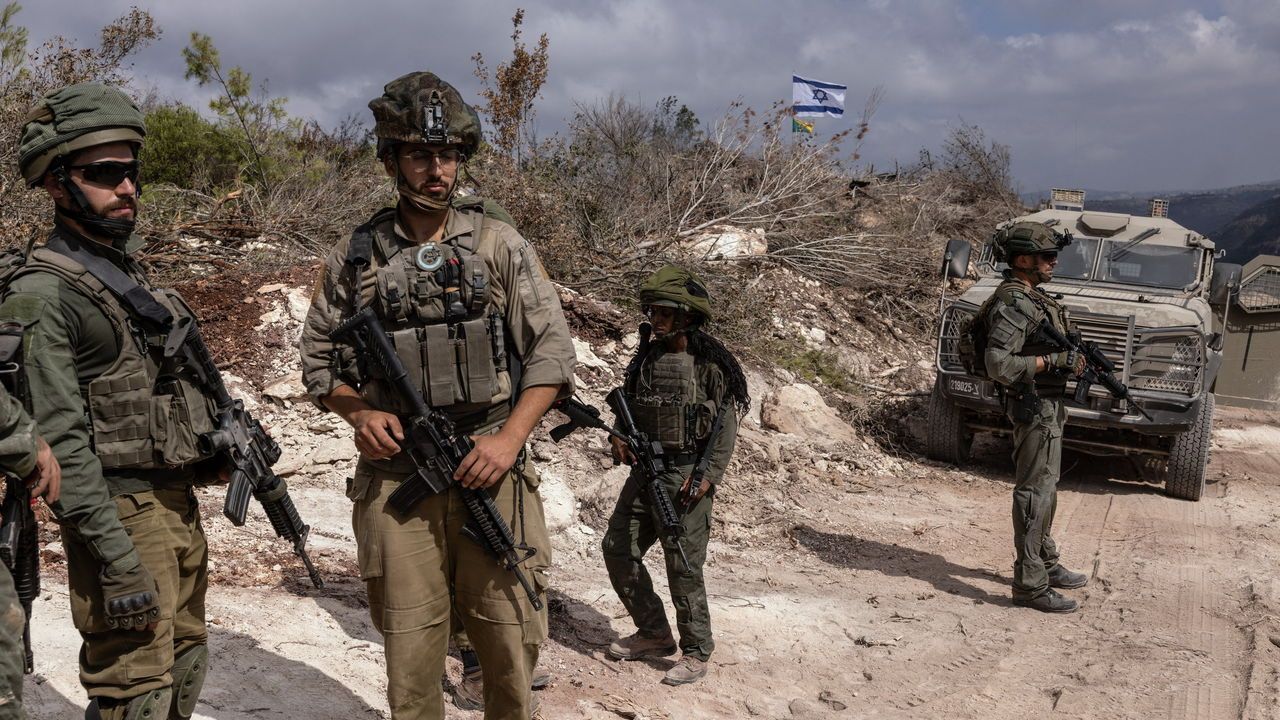
Israel’s Defence Minister Israel Katz announced Tuesday that all homes in Lebanese villages near the border with Israel would be demolished and more than 600,000 displaced residents barred from returning to their communities south of the Litani River until northern Israel’s security was guaranteed, drawing immediate condemnation from the United Nations and deepening international concern over the scope of Israeli operations in Lebanon.
“At the end of the operation, the IDF will establish a security zone inside Lebanon and maintain control over the entire area up to the Litani River, including the remaining Litani bridges, while eliminating Radwan forces that infiltrated the area and destroying all weapons there,” Katz said in a statement following a security assessment. He said all homes in villages near the Lebanese border would be destroyed “according to the model of Rafah and Beit Hanoun in Gaza, in order to permanently remove threats near the border to northern residents” in Israel.
The Litani River meets the Mediterranean approximately 30 kilometers north of Israel’s border, meaning the proposed security zone would encompass nearly a tenth of Lebanon’s territory. Israeli military evacuation orders have progressively pushed displacement boundaries northward since March 4 and 5, when residents of all areas south of the Litani and of Beirut’s southern suburbs were ordered to leave. By March 12, the IDF had expanded those orders to cover areas north of the Zahrani River, 15 kilometers above the Litani, effectively pushing the displacement zone 40 kilometers from the Israeli border.
Israel has destroyed five bridges over the Litani River since March 13 and accelerated the demolition of homes in villages near the border. Senior Hezbollah lawmaker Hassan Fadlallah said any Israeli occupation south of the Litani would be met with resistance.
Read Also: Reeves To Caution G7 Against Solo Trade Moves Amid Iran War
“We have no choice but to confront this aggression and cling to the land,” he told reporters. The Lebanese military said it would not fire on Israeli forces unless directly attacked. Lebanese Prime Minister Nawaf Salam has warned the United Nations of the risk of annexation, a concern given additional political weight on Monday when Finance Minister Bezalel Smotrich said publicly that Israel’s new border must be the Litani. “The new Israeli border must be the Litani,” Smotrich said, a position that exceeds what Katz described as a security buffer and which Prime Minister Benjamin Netanyahu has not formally endorsed.
UN spokesperson Stephane Dujarric said Katz’s announcement was “very much concerning.” “This is the last thing we would want to see. This is the last thing the Lebanese people in the south would want to see,” he said. Human Rights Watch, in a statement published last week, said Israeli officials had signaled “stepped-up atrocities in Lebanon,” warning that displacement orders combined with the destruction of civilian infrastructure appeared designed to make return permanently impossible rather than to address temporary military threats. “Civilians who do not evacuate following orders are still fully protected by international humanitarian law,” the group said, adding that forced displacement is prohibited under the laws of war except in cases of genuine civilian security or imperative military necessity.
Read Also: Pentagon Refutes Hegseth Broker’s Pre-War Investment Hunt
The military operation has so far killed more than 1,200 people in Lebanon, including more than 120 children, 80 women, and 40 medical workers, according to Lebanon’s Health Ministry, which does not distinguish between civilian and combatant deaths in its published figures. More than 1.2 million people have been displaced. The Israeli military’s Lebanese Arabic-language spokesperson has told residents the IDF would not “hesitate to target anyone who is present near Hezbollah members, facilities, or means of combat.”
Israeli military spokesperson Lieutenant Colonel Nadav Shoshani said Hezbollah had fired approximately 5,000 drones, rockets, and missiles at Israel since hostilities resumed on March 2. Despite those volleys, Israeli civilian casualties have remained relatively limited due to the country’s air defense architecture. The military announced a new wave of strikes on Hezbollah infrastructure in Beirut’s southern suburbs on Tuesday.
Israel’s history in southern Lebanon casts a long shadow over the current campaign. Israel invaded in 1978, maintained a security zone from 1985, and sustained a full occupation until 2000, when sustained Hezbollah resistance made the position militarily untenable. That 18-year occupation, which Lebanese analysts say the country never fully recovered from, gave rise to Hezbollah itself as an organized armed resistance movement. One senior analyst at the International Crisis Group said that while Israel was unlikely to push to Beirut as it did in 1982, the direction of the current campaign was reshaping the south in ways that could make return permanently impossible.
No international mechanism capable of compelling Israeli withdrawal or civilian return had been established as of Tuesday evening. The next UN Security Council session on Lebanon was expected to address Katz’s statement, though the United States holds veto power over any binding resolution.