
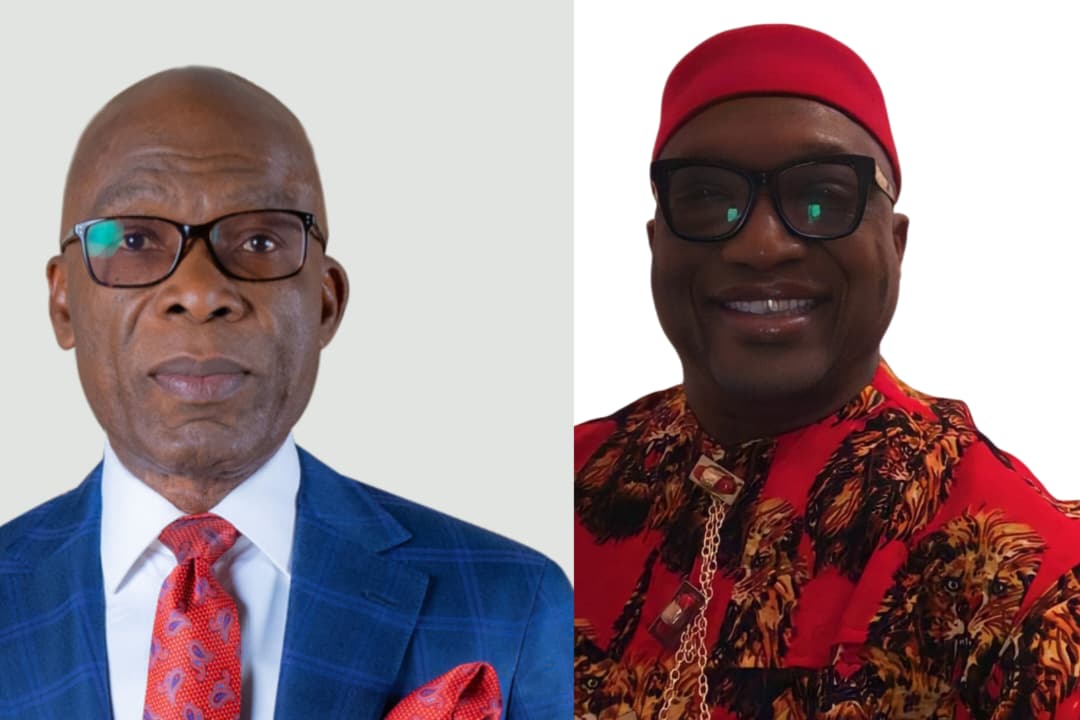
In a far-reaching and frank interview with our correspondent, Chief Better Joseph Ekeh Oniniwu, Alaowerri, shared his thoughts on the future of Imo State, the politics of succession, and the leadership qualities he believes are most urgently required in the next phase of governance. Africa Today News, New York, presents this exclusive interview from his London office.
Chief Better Joseph Ekeh Oniniwu, affectionately called, Alaowerri, comes across as a rare blend of cultural legitimacy, diaspora sophistication, and strategic political instinct. As Oputu-Obia of Emekeukwu Ancient Kingdom, and as a voice linked to Owerri Zone’s socio-political conversation, he occupies a credible vantage point in debates about Imo’s future, Mr. Leonard Stanley Nnamdi Ekeh for his part, is not just a businessman; he is widely known as the founder and chairman of Zinox Group and chairman of Konga, with a long-standing reputation in technology, enterprise-building, and institutional scale. Public debate around Imo 2027 has also increasingly centered on Owerri Zone succession and whether technocratic competence should weigh more heavily in the next governorship choice.
Mr. Leo Stan Ekeh is no ordinary figure. He is celebrated as a visionary entrepreneur, and one of Africa’s most prominent technology and business leaders. To many, he represents discipline, innovation, systems thinking, and institution-building capacity. His profile suggests not merely success in business, but the kind of structured executive competence that many believe is urgently needed in public governance.
Yet admiration alone does not settle politics.
Why should a successful businessman be considered for the highest office in Imo State? What makes him the best option at this moment? Is this an argument rooted in zoning, competence, strategy, or all three? And what of other respected contenders, including Sir Jude Ejiogu?
These are the hard questions.
In this interview, Chief Oniniwu speaks with clarity, tact, and conviction on why he considers Leo Stan Ekeh the most strategic and technically suitable option for the governorship of Imo State in the coming dispensation.
Leo Stan Ekeh is not an ordinary name in Nigerian public life. He is celebrated as a visionary entrepreneur, a globally respected business leader, a technology pioneer, and a man whose record in institution-building has earned admiration far beyond Imo State. To many, he represents discipline, innovation, administrative intelligence, and the kind of executive capacity often said to be missing in public office.
But admiration alone does not settle the political argument.
Why Leo Stan Ekeh? Why now? Why not others? And why has Chief Alaowerri shifted ground from previous alignments, especially regarding Sir Jude Ejiogu?
Tonight, we ask the hard questions.
Chief Alaowerri, thank you for joining us.
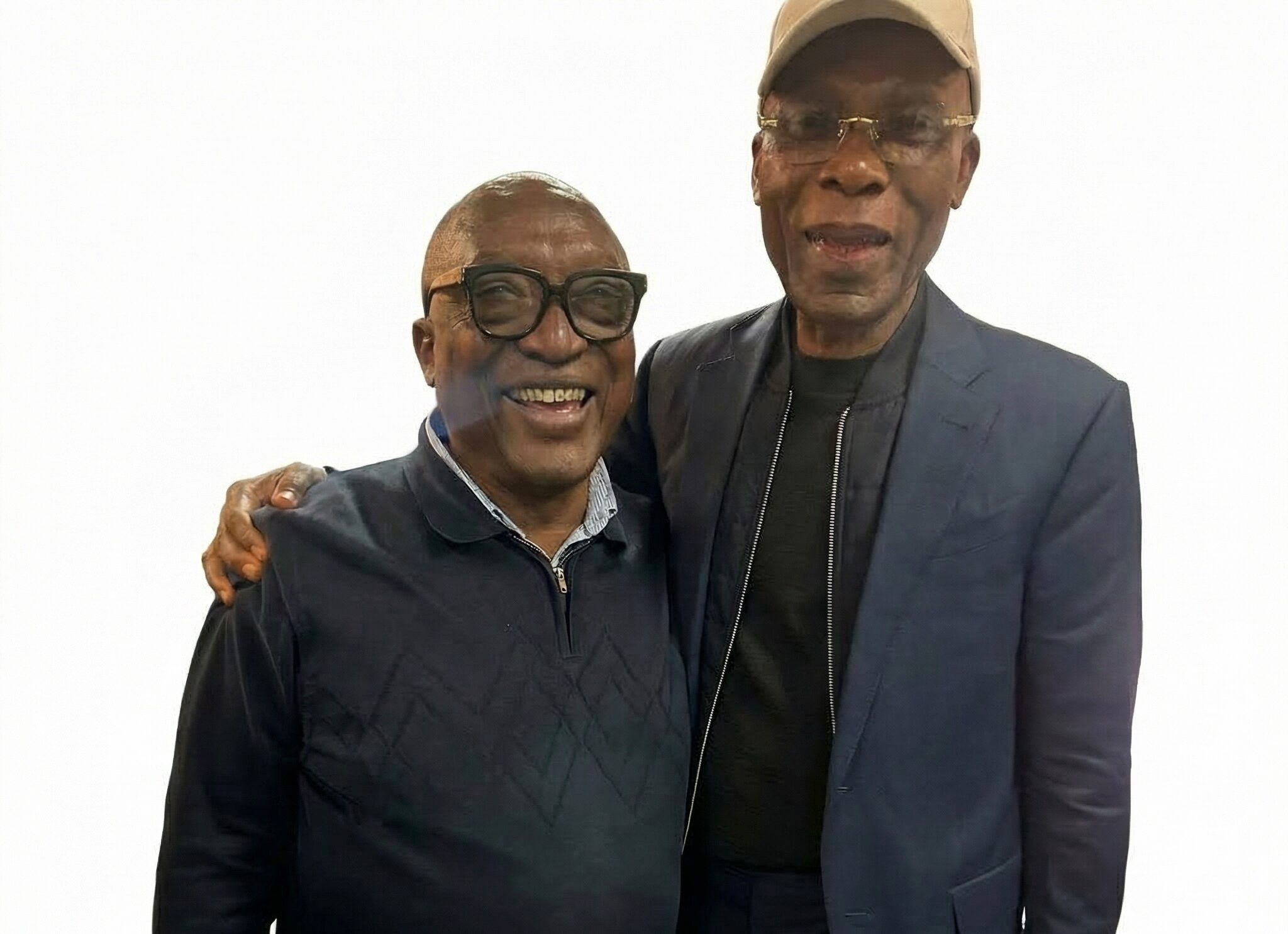
The full exclusive interview is as follows:
Chief, let us go straight to the heart of the matter. You have thrown your weight behind Leo Stan Ekeh as a strong option for the governorship of Imo State after Governor Hope Uzodinma. That is no casual endorsement. So tell us plainly: what specific leadership criteria did you apply in arriving at Leo Stan Ekeh, and why do you consider him the best strategic choice for Imo rather than merely a prominent name?
Thank you very much.
Let me say this clearly and without ambiguity: my support for Leo Stan Ekeh is not based on sentiment, noise, or mere admiration for wealth. It is based on capacity, systems thinking, execution discipline, and the kind of technocratic intelligence that Imo State will need in the next phase of its development.
We are entering a very serious era in governance. Imo can no longer be run with slogans, emotions, or the old style of politics where visibility is mistaken for competence. The scale of governance is changing. By official reports, Imo’s 2025 budget stood at about ₦807 billion, and the 2026 budget proposal rose to about ₦1.44 trillion, while the state also reported over ₦43 billion in internally generated revenue in 2025, surpassing its target. That tells you immediately that the next governor must understand not just politics, but scale, systems, compliance, revenue architecture, institutional controls, and performance management.
Now, when I look at Leo Stan Ekeh, I do not just see a successful businessman. I see a man who has spent decades building and managing complex institutions. He founded Zinox Group, built it into a major technology enterprise, and is publicly credited with helping deliver major ICT infrastructure in Nigeria, including technology support for the 2007 and 2011 voter registration exercises. He is also chairman of Konga, one of the country’s most recognized e-commerce platforms. That is not ordinary experience. That is evidence of someone who understands systems, logistics, data, scale, and disciplined execution.
And let us be honest with ourselves: the challenge before Imo today is not merely political balancing. It is structural modernization. Nigeria’s labor market remains deeply fragile. The National Bureau of Statistics reported that in Q2 2024, informal employment was 93%, which means the overwhelming majority of our people are surviving outside secure, formal, productivity-driven economic structures. If Imo is serious about the future, then we need leadership that can move us from survival economics to organized prosperity. That requires someone who understands enterprise formalization, technology, digital ecosystems, job creation, and investment confidence. That is where Leo Stan has a natural advantage.
So for me, the criteria are very clear.
First, executive competence.
Second, institution-building capacity.
Third, global exposure with local roots.
Fourth, credibility that can attract investors and serious partners.
Fifth, the mental discipline to govern beyond patronage.
Leo Stan Ekeh scores strongly on all five.
Now, on the matter of Sir Jude Ejiogu, let me also speak with maturity and sincerity. Sir Jude is a good man, my elder brother, and someone from the same community with whom I have a very good relationship. There is no quarrel, no hostility, no personal issue at all. This should not be reduced to bitterness or division. Politics must rise above that.
But when you are making a decision as consequential as who should lead Imo State in the coming dispensation, you must ask one hard question: who is the better candidate for this moment? And in my considered view, Leo Stan is more of a technocrat. He is better suited to the demands of the time. This is not emotion. It is judgment.
Leadership selection should not be a popularity contest among friends. It should be a sober assessment of who can best manage the complexity of the office ahead. I believe that when Sir Jude sees the depth of the reasoning, he will understand that this is not a rejection of his person. It is simply a commitment to ensuring that Imo gets the best available option. And I believe we are mature enough to continue working together in pursuit of the larger Owerri Zone and Imo interest.
So, to answer your question directly: I support Leo Stan Ekeh because he represents competence over theatrics, systems over improvisation, and strategic governance over routine politics. In a state that needs the next level of leadership, I believe he is the most defensible choice.
One of the strongest arguments in Leo Stan Ekeh’s favor is that he has built institutions, managed complexity, and operated at a high executive level. But politics is not a boardroom, and government is not a private company. Public office demands patience with disorder, negotiation with competing interests, and accountability to citizens who cannot be managed like staff.
What convinces you that Leo Stan Ekeh can successfully cross the difficult bridge from corporate excellence to democratic governance?
That is a very important question, and frankly, it is one of the most intelligent objections anybody can raise. I agree completely that government is not the same as business. In business, authority can be more direct. In government, legitimacy is negotiated daily through institutions, public trust, political balancing, and social patience.
But let me say this: while business and government are not identical, they do overlap in one crucial area — the ability to build systems that work.
What has damaged many states in Nigeria, including Imo, is not merely a lack of politics. In fact, we have had plenty of politics. The problem is that politics has often not been matched by managerial sophistication. We have produced too many leaders who know how to win office, but not enough who know how to structure delivery, monitor performance, digitize processes, optimize revenue, and create institutions that survive beyond one man.
That is why Leo Stan Ekeh interests me.
He is not simply a wealthy man. He is a builder of institutions. There is a difference between making money and building systems. Many people make money. Very few create institutions with standards, continuity, and national relevance. Leo Stan has demonstrated that he understands how to build at scale and how to maintain standards under pressure. That matters in governance.
Secondly, technology leadership itself is a school of complexity. In technology, you are dealing with data, risk, timing, logistics, infrastructure, people, regulation, and public trust. Those are not small matters. They are governance-like realities. So when I hear people say, “he is from business,” my response is this: yes, but not from transactional business — from systems business. And that distinction is important.
Thirdly, public leadership today is changing all over the world. Citizens are no longer impressed by noise. They want results. They want roads that are completed, hospitals that function, schools that produce quality, digital records that reduce corruption, and an economy that gives hope. The future belongs to leaders who can combine human sensitivity with administrative intelligence.
From what I know, Leo Stan has the calm temperament, the strategic depth, and the disciplined mind that can work with different interests without losing the bigger picture. Nobody is saying governance will be easy. It will not. But if the question is whether he has the intellectual architecture to govern effectively, my answer is yes.
And let me also add this: public office should not be monopolized by career politicians alone. A state progresses when it is willing to draw from its best minds — whether they emerged from academia, civil service, law, medicine, engineering, or enterprise. What matters is not where you came from, but whether you can govern with seriousness, fairness, and a systems mindset.
That is why I believe Leo Stan can make that transition successfully.
Read also: High Chief Title: Chief Ekeh Congratulates Barr. Amadi
You are a known stakeholder in the Owerri Zone project, and the question of equity remains central to the Imo succession debate. But let me press you here: are you supporting Leo Stan Ekeh because he is an Owerri son, or because you believe he is, in objective terms, the most competent and most prepared for the office?
The honest answer is this: it is both justice and competence, but if competence were absent, justice alone would not be enough for me.
Yes, I am committed to the Owerri Zone cause. I make no apology for that. Equity matters in politics. Inclusion matters. Belonging matters. A state is stronger when every zone feels seen, respected, and carried along in the power equation. So yes, the Owerri argument is legitimate. It is a moral and political argument.
But let us not reduce the conversation to zoning alone. Zoning, by itself, does not automatically produce quality leadership. You can rotate power and still rotate mediocrity. That is not progress. The real challenge is to ensure that within the justice of rotation, you still identify the best available mind.
That is exactly where Leo Stan comes in.
If all we wanted was “just any Owerri son,” then the conversation would be shallow. But the reason many of us are projecting Leo Stan is because he gives us both: the justice of Owerri and the substance of competence. That combination is rare, and when you find it, you must not waste it.
So, no, my support is not sentimental. It is not based on geography alone. It is based on a broader assessment: Who has the exposure? Who has the discipline? Who has the executive mindset? Who can speak to investors, institutions, development partners, and ordinary citizens with credibility? Who can think beyond the next political rally and design systems for the next generation?
If zoning did not even exist as a factor, Leo Stan would still be a compelling figure because of what he represents in terms of intellectual weight and administrative possibility.
So yes, I stand for Owerri. But I also stand for merit. In Leo Stan Ekeh, I believe the two meet in a very strong and strategic way.
Imo is not short of ambitious politicians. So what exactly sets Leo Stan Ekeh apart from the wider field? Which governance failures in Imo do you believe his background best equips him to tackle more effectively than the traditional political class?
Three things immediately come to mind: economic restructuring, digital governance, and institutional discipline.
First, economic restructuring. Imo needs more than allocation politics. We need a government that understands how to unlock productivity, formalize opportunity, encourage entrepreneurship, attract investment, and create an enabling environment where small businesses can grow into medium and large enterprises. Leo Stan comes from a world where value creation is central. He understands how economies grow not by speeches, but by systems.
Second, digital governance. The future of public administration is digital. Revenue collection, land records, personnel systems, procurement, health data, school administration, business registration, and citizen feedback mechanisms must all move into modern, trackable systems. One of the biggest problems in Nigerian governance is opacity. Digital systems reduce leakages, improve visibility, and raise accountability. Few people in the Imo political space are as naturally equipped for that kind of transformation as Leo Stan.
Third, institutional discipline. This is perhaps the most important. Many governments depend too heavily on personalities. But the real test of leadership is whether you can build a structure that functions beyond your personal mood. Leo Stan has spent a lifetime around systems, standards, and institutional continuity. That matters greatly.
The traditional political class often knows how to manage networks, but not always how to modernize institutions. Imo cannot continue with improvisation. We need a leadership model that is more deliberate, more measurable, and more future-facing.
That is why I believe his background is uniquely relevant to this moment.
Read also: 2023: APC Not Interested In Igbo Presidency – Uzodinma
Some observers may say that elite endorsements in Imo often produce elegant rhetoric but weak voter conversion. Beyond closed-door persuasion and stakeholder consensus, what practical political framework is being built around Leo Stan Ekeh to ensure this does not remain a project of admiration rather than an executable electoral movement?
That concern is very valid. Nigerian politics has suffered too much from beautiful conversations that never mature into organized structures. Endorsement is not enough. Reputation is not enough. Elite admiration is not enough. Politics majorly requires organization, persuasion, grassroots legitimacy, and disciplined coalition-building.
So the task before us is very clear: this project must move from profile to platform, from goodwill to structure, and from silent consensus to active mobilization.
That means several things.
Finally, Chief, history is unkind to men who misread their moment. If Leo Stan Ekeh eventually emerges and fails to embody the reformist promise his supporters now project onto him, what would you hold him accountable for, and what personal political risk are you willing to bear for having presented him to Imo people as the best option?
That is a profound question, and every honest political stakeholder must be willing to answer it.
If I support a man publicly, especially at this level, then I must also accept that my name becomes tied to the credibility of that choice. That is the burden of leadership. Endorsement must not be casual. It must be moral.
So yes, if Leo Stan emerges and fails to live up to the standards that many of us believe he represents, I would hold him accountable in three areas.
There must be serious stakeholder engagement across communities, political blocs, professional constituencies, youth populations, women’s networks, traditional institutions, and diaspora influencers. Nobody wins a governorship election by speaking only to elites. The message has to reach the grassroots in language that is credible, relatable, and concrete.
The campaign around Leo Stan, when it fully crystallizes, must be driven by issues. It cannot rest on his name alone. It has to rest on a persuasive case: what exactly will he do differently in governance? How will he improve jobs, infrastructure, education, revenue, and service delivery? The ordinary voter must see not just a respected man, but a believable program.
Organizational depth will also be essential. Politics is not poetry. It is structure. Ward presence matters. Local alliances matter. Voter education matters. Message discipline matters. The effort must be supported by people who understand the terrain, the emotions, the fears, and the hopes of the electorate.
Bridge-building must remain central throughout. No serious candidate should be projected as a sectional figure. The moment has to be managed in a way that reassures every constituency that this is a project of competence and inclusion, not exclusion.
My own role, and the role of others who believe in this direction, is to help build the intellectual, moral, and political case in a way that can be translated into public trust.
So yes, I agree that admiration must become machinery. That is exactly why this conversation matters now. Serious political outcomes are not improvised at the last minute. They are prepared through patient, strategic work.
Governance seriousness must come first in practice, whatever language is used in campaign season. If a leader arrives speaking the vocabulary of reform but governs carelessly, then public trust has been betrayed.
Institutional delivery is equally non-negotiable. If the promise is modernization, then the evidence must be visible — in systems, transparency, service delivery, and measurable improvement.
Ethical responsibility must also define the entire project. If a candidate is presented as a disciplined and strategic leader, then he must not fall into the same old pattern of patronage without purpose, symbolism without substance, and power without accountability.
As for my own risk, I accept it. Political credibility should be spent only where conviction exists. I am not presenting Leo Stan as a perfect man. No human being is perfect. I am presenting him as, in my considered judgment, the best available option for the seriousness of the time.
And if the future proves that judgment wrong, then history will also judge those of us who made that case. I understand that fully.
But leadership is not about hiding from risk. It is about making the best judgment possible in the interest of the people, and standing by it with integrity.
That is what I am doing.
Chief Better Joseph Ekeh Oniniwu, Alaowerri, thank you for speaking with clarity, maturity, and conviction.
What we have heard tonight is more than an endorsement. It is a carefully reasoned political argument — one that places competence, systems thinking, equity, and the future of Imo State at the center of the succession conversation.
Whether the political class agrees or disagrees, one thing is now clear: this is not a casual alignment. It is a strategic case for a different kind of leadership.
Thank you for joining us.
Thank you very much.
I receive your words with humility, gratitude, and a deep sense of responsibility.
What I have expressed is not driven by sentiment, personal convenience, or political excitement. It comes from reflection, from experience, and from a sincere concern for the future of Imo State. At a time like this, I believe our people deserve more than noise, slogans, and familiar political routines. They deserve seriousness. They deserve leadership that understands governance not as performance, but as duty.
My position is simple. Imo State cannot continue to treat leadership as an experiment in improvisation. The times demand discipline, competence, balance, and strategic thinking. They demand someone who can see beyond personal ambition and understand the deeper work of institution-building, public trust, and inclusive development.
That is why my intervention should be understood in its proper context. It is not merely an endorsement of a person. It is an argument for a direction. It is a call for a higher standard in how we think about succession, equity, and the future of governance in our state.
If that position provokes debate, that is welcome. Serious societies grow through serious argument. But I believe history will favor those who speak honestly when it matters, not those who remain silent for comfort.
So I thank you for the opportunity to speak. And I thank all those who are listening with open minds. The future of Imo State is too important to be left to habit. It must be approached with courage, clarity, and conviction.
Thank you.
Africa Today News, New York