
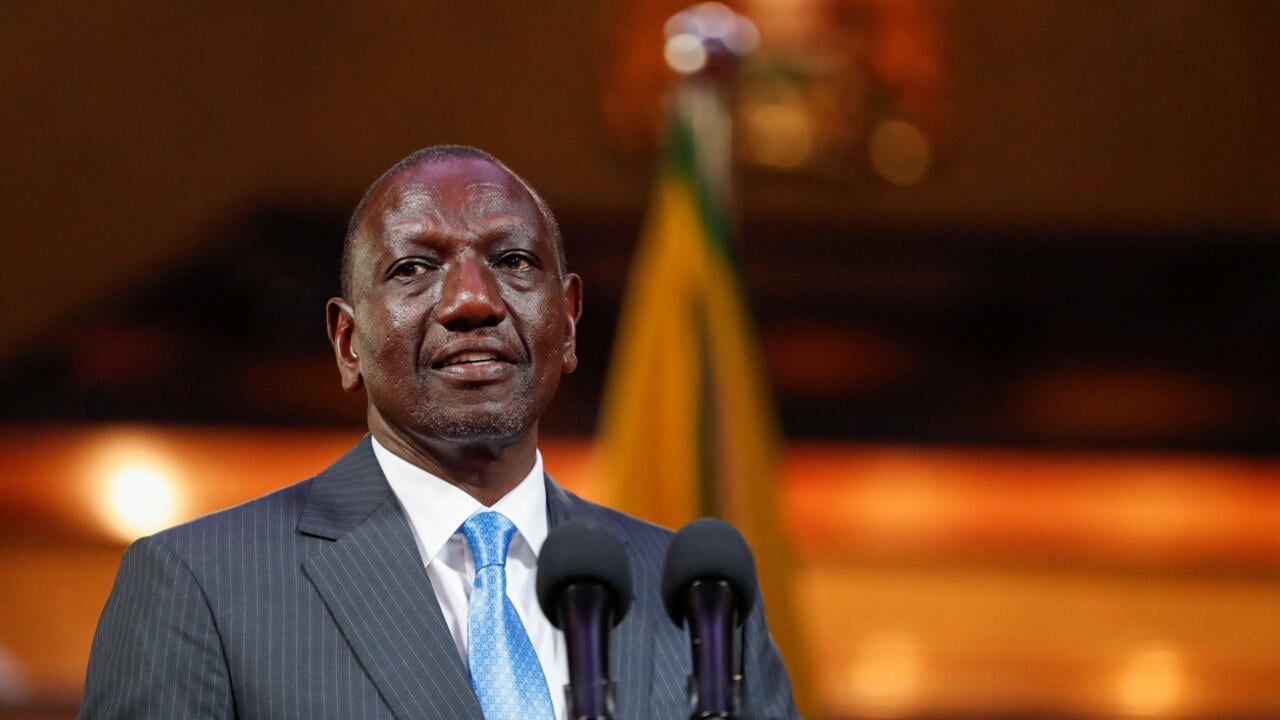
Kenya’s President William Ruto declared the African Union unfit for purpose on Saturday, delivering his most direct public assessment yet of the continental body’s shortcomings as he outlined a reform mandate his fellow heads of state have assigned to him.
Ruto made the remarks at the Mashariki Cooperation Conference in Mombasa, addressing intelligence chiefs gathered from across the continent. Speaking without qualification, he said the AU in its current form lacks the institutional capacity to provide the leadership Africa needs in the years ahead.
“I can tell you without an iota of doubt that the African Union, as it is today, is not fit for purpose,” he said. “It is not fit to provide the leadership that this continent needs going into the future. And therefore, there is need for reform of the African Union.”
Read more: Hungarians Cast Ballots In High-Stakes Vote Watched Globally
The Kenyan president said African leaders have collectively tasked him with driving that reform process, positioning the effort as a continental mandate rather than a unilateral Kenyan initiative. “My colleagues, heads of state, gave me the assignment to work on the reform of the African Union institutions and organs to make them fit for purpose for a time such as this,” he said.
Read also: Stampede At Haiti’s Laferriere Citadel Leaves 30 Dead
Ruto called for a comprehensive structural overhaul of the AU’s institutions and organs, and unusually, directed the intelligence officials in the room to contribute to defining what a reformed AU should look like. “I am asking you as intelligence leaders to assist us to figure out what kind of African Union we need to unlock the opportunities that exist in our continent,” he said — an appeal that drew the security and intelligence community directly into a conversation typically reserved for heads of state and diplomatic channels.
The president paired his institutional critique with a warning about the consequences of inaction. Africa’s rapidly growing population, he said, positions the continent to become the world’s largest market — but that potential carries equal risk if it is not properly harnessed through effective governance and continental coordination. The scale of what is at stake, he implied, is precisely why the AU cannot be allowed to remain as it is.
Ruto has been among the more vocal African leaders on questions of continental institutional reform, and his comments in Mombasa represent the sharpest public formulation of a critique that has circulated in African diplomatic circles for years. The AU has faced persistent questions about its effectiveness in responding to conflicts, its financial dependence on external donors, and the gap between the ambitions of its founding frameworks and its operational reality on the ground.
Whether the reform mandate Ruto described translates into a formal process with timelines, deliverables and the sustained political will of member states is the question his Mombasa declaration now invites.