
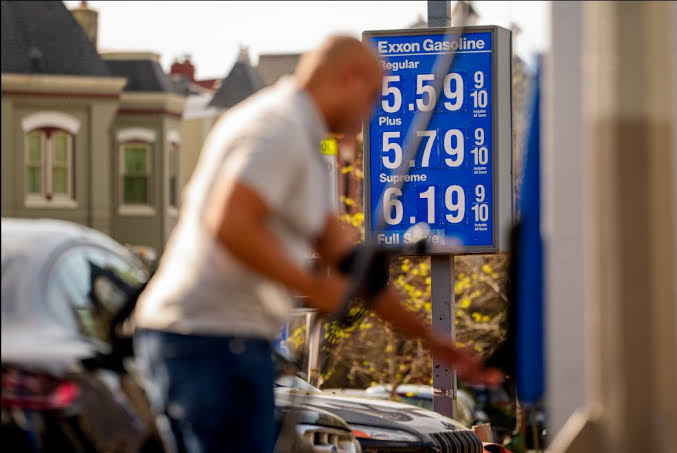
American drivers paid an average of $4.30 for a gallon of gasoline on Thursday — more than a dollar higher than a year ago, the highest pump price in four years, and the most direct daily reminder that the war Donald Trump launched on February 28 is extracting a cost from ordinary Americans that no presidential press conference has managed to make disappear.
The American Automobile Association confirmed the figure, noting that prices had risen 27 cents in a single week as the impasse over the Strait of Hormuz deepened with no resolution in sight. California, home to nearly 40 million people, crossed $6 per gallon. Oil is trading above $100 a barrel. “There is no indication of when the Strait of Hormuz will reopen,” AAA said plainly in its Thursday report.
Trump’s response to the numbers was the same argument he has been making since the war began — that the pain is temporary and the prize is worth it. “And you know what? We’re not going to have a nuclear weapon in the hands of Iran,” he told reporters. “The gas will go down. As soon as the war is over, it’ll drop like a rock.”
Read also: UAE Departure Dents OPEC+ Clout, Group Holds Together
The problem with that argument is that the war produced a ceasefire on April 8, and gas prices have continued climbing since. Oil markets do not respond to the absence of active bombing the way Trump’s framing implies. Supply disruption persists as long as the Strait of Hormuz remains effectively closed, and the strait remains closed because the US naval blockade of Iranian ports and Iran’s own interdiction of commercial shipping have created a mutual siege that neither side is currently willing to lift first.
Tehran’s position is that direct talks will not happen until the blockade ends. Washington’s position is that the blockade will not end until a deal is reached. The two conditions cancel each other out, and the price of gasoline rises in the gap between them.
Trump has dispatched envoys to Pakistan to negotiate with Iranian officials, but Tehran has not committed to attending. He said Thursday that Iran was “dying to make a deal” and called the naval blockade “incredible.” Iranian President Masoud Pezeshkian used different language. “The world has witnessed Iran’s tolerance and conciliation. What is being done under the guise of a naval blockade is an extension of military operations against a nation paying the price for its resistance and independence,” he wrote on social media. “Continuation of this oppressive approach is intolerable.” The statement suggests that whatever patience Tehran has been maintaining is beginning to wear thin — though whether that translates into concessions at a negotiating table or escalation on the water is the question the region is living inside.
Read more: Iran Military Operations Cost U.S. $25bn & Counting
Trump’s approval ratings are at record lows, according to recent polls, with the fuel price spike a consistent driver of public dissatisfaction alongside broader anxiety about the war’s duration and cost. The administration has spent two months framing elevated gas prices as a temporary sacrifice for a strategic objective — the permanent removal of Iran’s nuclear capability. That argument requires the objective to be credibly achieved and the sacrifice to be credibly temporary. On both counts, the evidence available to ordinary Americans at the pump on Thursday was not especially reassuring.
Iran denies seeking a nuclear weapon. The US insists otherwise. The strait stays closed. The price of a gallon keeps climbing. And Trump says it will drop like a rock when it’s over, without specifying when that will be.