
The Pentagon signed AI deployment agreements with seven of the world’s most powerful technology companies on Friday, formally launching what the Defense Department described as its transformation into an “AI-first fighting force” — and drawing a sharp line between the companies that accepted its terms and the one that refused.
SpaceX, OpenAI, Google, Nvidia, Microsoft, Amazon Web Services and the startup Reflection AI all agreed to contracts allowing the US military to deploy their technology for “any lawful use.” The agreements will integrate their systems into the Pentagon’s most sensitive classified network environments — designated Impact Levels 6 and 7 — for applications spanning intelligence analysis, drone warfare, situational awareness and warfighter decision-making across all domains of conflict.
“These agreements accelerate the transformation toward establishing the United States military as an AI-first fighting force and will strengthen our warfighters’ ability to maintain decision superiority across all domains of warfare,” the Pentagon said in a statement.
Read also: Iran Military Operations Cost U.S. $25bn & Counting
Anthropic was not among them.
The maker of the Claude AI model had refused to accept the “any lawful use” standard in its Defense Department contract, objecting that the language was insufficiently specific to prevent its technology from being used for domestic mass surveillance or fully autonomous lethal weapons systems. The dispute escalated sharply last month when the Pentagon, in an unprecedented move, designated Anthropic a supply-chain risk — the first time an American company had ever received that label — and barred its contractors from using Anthropic products. Anthropic sued in response. The technology remains embedded in classified networks where, by all accounts, it is proving difficult to extricate.
Defense Department officials told the press they believe that signing with Anthropic’s seven competitors could pressure the holdout company back to the negotiating table. The strategy carries its own complications. Anthropic’s most recent model, a cybersecurity-focused system called Mythos, has alarmed government officials and financial sector analysts over its demonstrated ability to identify vulnerabilities in well-tested software — a capability that makes it simultaneously a tool the military wants access to and a product whose terms the military cannot currently dictate.
The seven companies that did sign agreed to integration into classified environments without specified limitations on application. How each firm’s technology will be deployed in practice was not disclosed. The Defense Department has requested $54 billion for autonomous weapons development alone, with tens of billions more budgeted across AI-related programs covering intelligence, classified networks and drone warfare.
Read also: NATO Criticized Over Iran As Trump Revives Greenland Claim
Reflection AI, the least publicly known of the seven signatories, is a two-year-old startup that has not yet released a publicly available model. Its stated goal is to build open-source AI as a competitive counter to Chinese firms including DeepSeek.
The Wall Street Journal reported in March that Reflection is seeking a $25 billion valuation and has received funding from Nvidia as well as 1789 Capital, the venture fund where Donald Trump Jr. is a partner.
The agreements carry broader concerns that have not been resolved by their announcement. Critics have raised questions about public spending at the scale the Pentagon is projecting, global cybersecurity implications of integrating commercial AI into the most sensitive military networks, and the potential for technology deployed under a “any lawful use” standard to migrate toward domestic surveillance applications that its developers never intended.
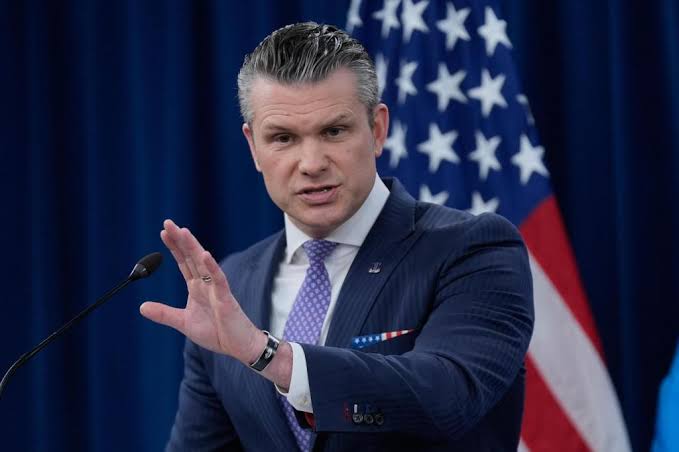
Pete Hegseth, who unveiled the Pentagon’s AI acceleration strategy in January with a mandate to “unleash experimentation” and “eliminate bureaucratic barriers,” has framed the Friday agreements as exactly the kind of decisive action that strategy required.
The companies that signed have accepted the frame. Anthropic has not, and its refusal — combined with the capabilities of the model it released into a market it can no longer easily control — has made the Pentagon’s effort to isolate it considerably more complicated than a supply-chain risk designation was designed to achieve.