
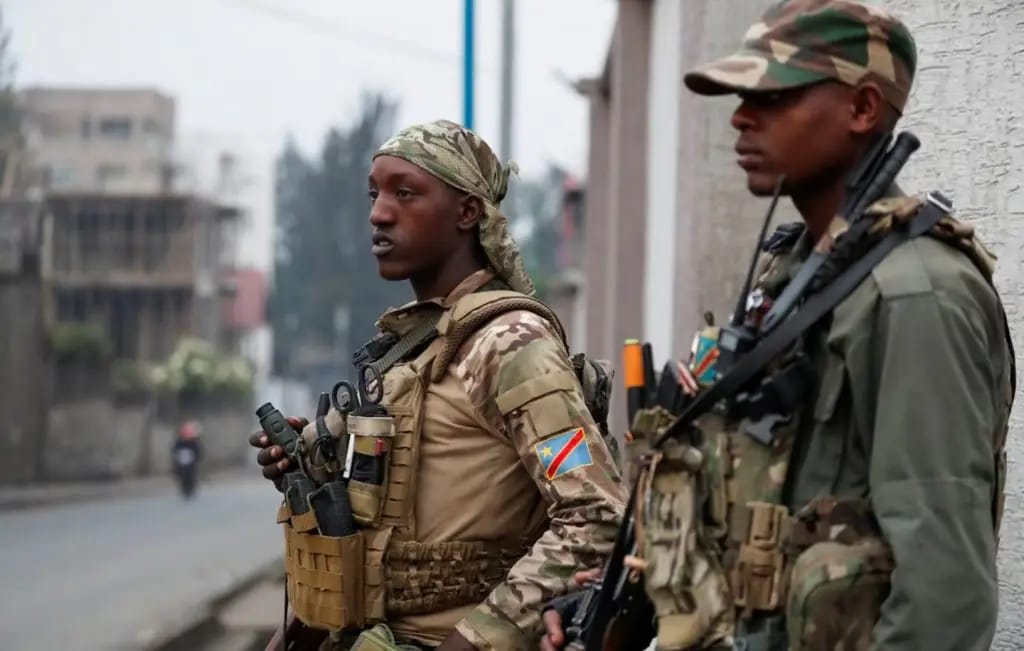
Amnesty International has documented what it describes as a systematic campaign of war crimes and crimes against humanity by the Allied Democratic Forces in eastern Democratic Republic of Congo, publishing a report Monday that catalogues killings, abductions, forced marriage, sexual slavery, child recruitment and torture carried out against civilian populations with deliberate brutality.
The report, titled “I’d Never Seen So Many Bodies,” draws on interviews with 71 people — survivors, humanitarian workers and police officers — conducted in North Kivu province, where the ADF has been waging a years-long insurgency against the Congolese government while pledging allegiance to ISIS since 2019.
“Civilians in the eastern DRC have suffered extensive brutality at the hands of ADF fighters. They have been killed, abducted and tortured in a dehumanising campaign of abuse,” said Agnès Callamard, Amnesty’s secretary general. “These abuses constitute war crimes which the world must not continue to ignore.”
Read also: IMF & World Bank Move To Restore Broken Venezuela Ties
Among the incidents documented is a September 2025 attack on Ntoyo village in which ADF fighters allegedly disguised themselves as mourners attending a wake, then used hammers, machetes, guns and axes to kill more than 60 people. Two months later, at least 17 civilians were killed in nearby Byambwe village when fighters attacked a church-run hospital, setting four wards ablaze. A survivor told Amnesty the fighters “shot anything that moved” inside the medical facility.
The report documents 46 cases of abduction involving victims held for ransom, subjected to torture, forced into sexual slavery or killed. Some were made to carry heavy loads through the bush for days with minimal food and subjected to beatings throughout. Women and girls were forced into marriages with fighters, with Amnesty speaking to five women and two girls who described being given to fighters as an incentive for continued combat. Victims were threatened with death if they refused conversion to Islam, and several were forced to watch the killings of others who resisted.
“They taught us how to kill with weapons and with blades,” one woman who escaped after two years in captivity told Amnesty. “In the bush, you had to do what you were told. You cannot be weak.”
The ADF operates primarily near the Ugandan border and has been in conflict with Congo’s national army and the UN peacekeeping mission MONUSCO for years. Its violence has intensified in recent months as international and Congolese government attention has been absorbed by the separate rebellion of the Rwanda-backed M23 movement, which has seized large areas of eastern Congo and worsened the humanitarian catastrophe facing civilians in the region.
Read also: IMF & World Bank Move To Restore Broken Venezuela Ties
Witnesses told Amnesty that government security forces frequently arrived late to the scenes of ADF attacks or did not come at all — a pattern of delayed response that has allowed the group to operate with effective impunity in areas nominally under government control.
Amnesty called on Kinshasa to take significantly stronger action to protect civilians, work with the UN and local communities to build early warning systems, and invest in peace and reintegration programs for survivors. Callamard warned that continuing to treat the ADF as a secondary security concern would further undermine both security and human rights across the country.