
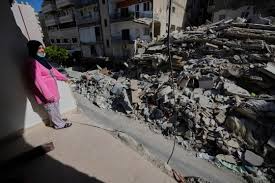
Air strikes attributed to Israel have resulted in civilian casualties in southern Lebanon, underscoring the continued fragility of the security environment along the Israel-Lebanon frontier and the persistent risk of escalation despite intermittent ceasefire understandings.
Emergency responders in the coastal city of Tyre recovered two bodies following a strike that targeted a vehicle in proximity to Al-Siraj High School. The incident, confirmed by Lebanese civil defence teams, adds to a pattern of localized but consequential attacks that have defined the operational landscape in southern Lebanon in recent months. While the identities of the victims have not been publicly detailed, the location of the strike—near an educational facility—raises renewed concerns about the exposure of civilian infrastructure to military operations.
Parallel reporting from Lebanon’s state-run National News Agency indicates that a separate Israeli air raid struck a residential structure in the town of Khirbet Selm, situated adjacent to a municipal building. The targeting of a house in close proximity to local administrative infrastructure reflects the blurred lines that increasingly characterize conflict zones where civilian and governance spaces overlap with areas of suspected militant activity.
These developments must be understood within the broader context of ongoing hostilities between Israel and the Iran-backed Lebanese armed group Hezbollah. Since the outbreak of heightened tensions across the region—exacerbated by the wider conflict dynamics involving Gaza and regional proxy actors—southern Lebanon has become an active theatre marked by intermittent exchanges of fire, targeted strikes, and strategic signaling.
Read Also: How Omotosho Buried Justice In Kanu’s Case—Part 7
Israel has consistently framed its military operations in Lebanon as part of a forward defence doctrine, aimed at neutralizing perceived threats before they materialize within its own borders. This approach, which emphasizes pre-emptive action and the maintenance of buffer zones beyond Israeli territory, has long informed its security posture in both Lebanon and Gaza. In practical terms, it has translated into a willingness to conduct strikes not only along immediate border areas but also deeper into Lebanese territory when intelligence assessments justify such actions.
For Lebanon, however, the consequences are layered and complex. The country is already navigating a severe economic crisis, institutional fragility, and political paralysis. The recurrence of air strikes on its southern territory compounds these challenges, placing additional strain on already limited state capacity and increasing the vulnerability of civilian populations. In towns such as Tyre and Khirbet Selm, the proximity of daily life to conflict zones is not incidental—it is structural, shaped by geography, demography, and the entrenched presence of non-state armed actors.
The targeting of vehicles and residential properties, as reported in the latest incidents, also reflects the evolving nature of military engagement in the region. Precision strikes, often informed by real-time intelligence, are designed to minimize broader collateral damage while achieving specific tactical objectives. Yet, even with such targeting, the risk to civilians remains significant, particularly in densely populated or mixed-use areas.
From a regional security perspective, these strikes contribute to a cycle of calibrated escalation. Each incident carries the potential to trigger retaliatory action, whether through direct responses from Hezbollah or through indirect channels that expand the theatre of confrontation. This dynamic has been evident in recent months, with exchanges of fire occasionally extending beyond immediate border zones and involving a broader array of actors.
Internationally, the situation continues to draw concern, though responses have largely been limited to calls for restraint. The absence of a sustained diplomatic framework capable of addressing the underlying drivers of the conflict has left the region susceptible to periodic flare-ups. In this environment, localized incidents—such as the strikes in Tyre and Khirbet Selm—take on disproportionate significance, serving as both symptoms and catalysts of a wider instability.
For policymakers, the implications are twofold. First, there is the immediate humanitarian dimension, which requires attention to civilian protection, emergency response capacity, and the safeguarding of critical infrastructure. Second, there is the strategic dimension, which involves assessing how continued low-intensity conflict along the Israel-Lebanon border intersects with broader regional dynamics, including the role of external actors and the evolving balance of power.
The Lebanese state’s ability to respond remains constrained. While official channels, including the National News Agency, provide documentation of incidents, the country’s fragmented political landscape limits the scope for coordinated action. This, in turn, reinforces the influence of non-state actors and complicates efforts to establish a unified national security strategy.
Read Also: Oil Prices Fall, Stocks Rise On Iran Deal Reports Today
For Israel, the continuation of such operations reflects a calculated risk. The objective is to deter adversaries and disrupt potential threatswithout crossing thresholds that would precipitate a full-scale conflict. However, the margin for error in such calculations is narrow. Civilian casualties, particularly in visible or sensitive locations, can alter the political and diplomatic calculus, both domestically and internationally.
The incidents in Tyre and Khirbet Selm thus illustrate more than isolated acts of violence. They are indicative of a persistent structural tension that defines the Israel-Lebanon interface—a tension shaped by unresolved political disputes, entrenched military doctrines, and the absence of durable conflict resolution mechanisms.
As the region continues to navigate a period of heightened uncertainty, the recurrence of such strikes underscores the need for renewed engagement at both regional and international levels. Without substantive efforts to address the underlying drivers of conflict, the pattern observed in southern Lebanon is likely to persist, with civilian populations bearing the immediate consequences and broader stability remaining elusive.