
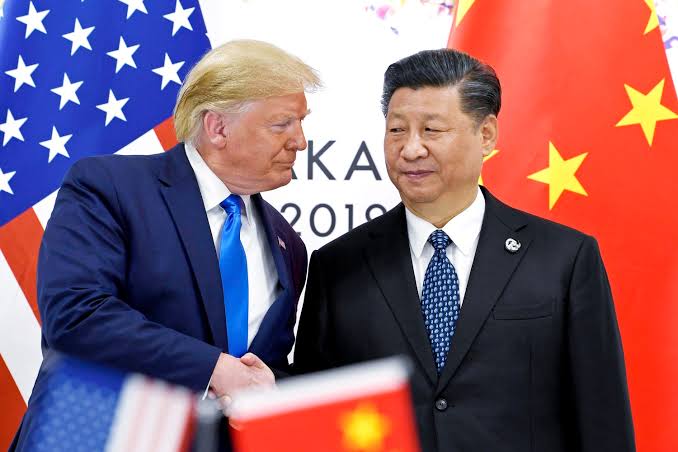
Taiwan’s top intelligence official said Thursday that China would likely attempt diplomatic maneuvering on the Taiwan issue during Donald Trump’s summit with Xi Jinping next week — but that Washington had repeatedly reassured Taipei through both public and private channels that its Taiwan policy remained unchanged.
National Security Bureau Director-General Tsai Ming-yen made the assessment while speaking to reporters at parliament in Taipei, describing his reading of what Beijing would attempt during the May 14-15 summit and what the overall US-China dynamic was likely to produce. “As for the Taiwan issue, I believe the Chinese communists may attempt some manoeuvring during the talks,” Tsai said. “However, on this point, the United States has continuously reaffirmed through both public and private channels that its Taiwan policy has not changed.”
The reassurance matters because the anxiety it is addressing is real. Trump has spent his political career approaching alliances as transactional arrangements subject to renegotiation, and the Beijing summit arrives at a moment when he needs deliverables — trade concessions, purchasing commitments for American aircraft and agricultural goods, and relief from the economic pressures the Iran war has been generating domestically.
The question Taipei is watching is whether Taiwan’s security could become a bargaining chip in those negotiations, quietly reshaped in exchange for Chinese economic concessions that Trump could present to American voters ahead of November midterms.
Read also: America Ready To Hit China With Visa Penalties Over Migration
Tsai’s characterization of the summit’s likely scope was measured and deliberately limited. The key focus between Trump and Xi, he said, would be management of existing tensions rather than fundamental resolution of the issues driving them. “Not fundamental problem-solving,” was his precise framing — a distinction that suggests Taiwan’s intelligence community expects the meeting to produce surface-level agreements rather than structural shifts in the bilateral relationship.
Secretary of State Marco Rubio addressed the Taiwan dimension earlier this week, saying both countries understood it was in neither of their interests to see any “destabilizing events” occur with regard to the island. Taiwan is likely to come up in the Trump-Xi conversations, Rubio said, without suggesting that American policy was under review.
The framing from Washington and from Taipei’s intelligence assessment align: Taiwan will be discussed, China will push, and the US position — publicly, at least — will hold.
Tsai’s broader assessment of where the US-China relationship is heading was notably cautious. The two countries face numerous contentious issues that cannot be fundamentally resolved in the short term, he said, projecting an overall dynamic he described as “fragile stability” — a phrase that captures both the absence of open conflict and the absence of durable resolution. The stability is real but conditional, dependent on neither side miscalculating or overreaching in ways that collapse the managed tension into something less manageable.
For Taiwan, the stakes of the Beijing summit are structural rather than immediate. The island’s government has no seat at the table and no formal diplomatic relationship with either party conducting the conversation. Its security depends on American commitment embodied in the Taiwan Relations Act, which legally obligates Washington to provide Taiwan with the means to defend itself, and on the deterrent value of ambiguity about how the United States would respond to a Chinese military move against the island. Any softening of that ambiguity — even rhetorical, even implicit — would register in Beijing as a signal worth testing.
Read also: Two US Service Members Reported Missing In Morocco
China has spent months escalating pressure on Taiwan through means short of military force. The airspace denial campaign that blocked President Lai Ching-te’s flight to Eswatini last month demonstrated Beijing’s willingness to use third-country leverage to isolate Taiwan diplomatically. The constitutional amendments that removed reunification language in favor of a two-state framework reflect a hardening of China’s posture toward the island even as it maintains public insistence on eventual unification.
The Beijing summit will not resolve any of this. Tsai said as much. What it might do, depending on what is said and what is left unsaid in the conversations between Trump and Xi, is adjust the parameters within which the fragile stability he described either holds or begins to crack. Taipei will be watching every statement, every communiqué and every carefully worded omission for evidence of which direction those parameters moved.