
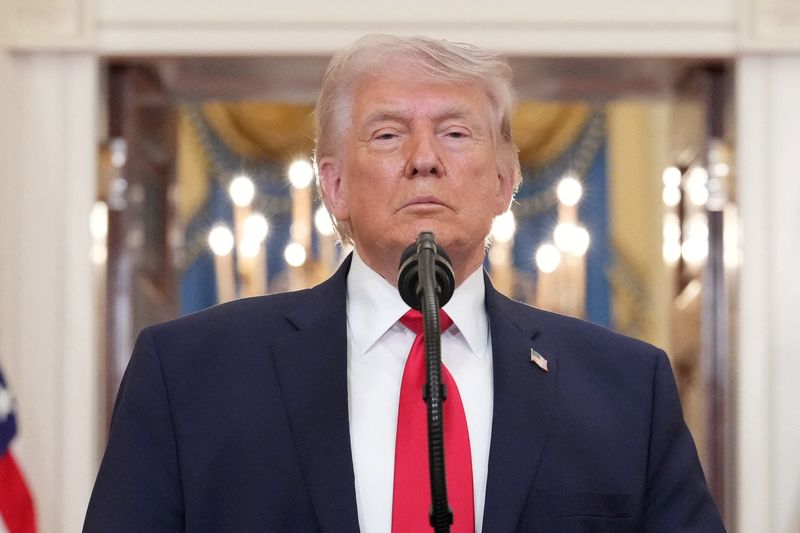
Oil prices surged in Asian trade Monday after Donald Trump declared Iran’s response to his peace proposal “totally unacceptable,” slamming the door on the latest round of ceasefire diplomacy and sending Brent crude up nearly five percent toward the $100-a-barrel threshold while markets absorbed the likelihood of a prolonged Hormuz disruption with no resolution in sight.
Brent North Sea crude rose 4.75 percent to $99.95 a barrel by early Asian trading, while West Texas Intermediate climbed 4.16 percent to $105.50 a barrel — a sharp move that reflected the market’s reading of Trump’s rejection as a meaningful setback rather than routine negotiating noise. The Strait of Hormuz, through which roughly a fifth of the world’s oil normally flows and which has been effectively closed for more than two months, will stay that way longer than traders had been pricing, and Monday’s numbers said so plainly.
“I have just read the response from Iran’s so-called ‘Representatives.’ I don’t like it — TOTALLY UNACCEPTABLE!” Trump posted, in the capitalized social media language that has become the primary channel for war updates from the American side. The rejection came as Trump prepares to fly to China this week for a summit with President Xi Jinping that Beijing confirmed on Monday would run Wednesday through Friday — a visit where the Iran war and its global economic consequences will sit alongside trade as the defining agenda items whether or not either government wants them there.
Iranian President Masoud Pezeshkian had set the tone from Tehran even before Trump’s rejection landed. “We will never bow down to the enemy, and if there is talk of dialogue or negotiation, it does not mean surrender or retreat,” he wrote on X on Sunday — language that positioned Iran’s counter-proposal not as a concession but as a continuation of resistance, making the gap between the two sides’ public postures as wide as it has been at any point in the negotiations.
Read also: Oil Prices Fall, Stocks Rise On Iran Deal Reports Today
Lloyd Chan, an analyst at Japanese bank MUFG, said Trump’s swift rejection had illuminated exactly how far apart the two sides remain. “President Trump’s swift rejection of these counter-demands underscores the wide gulf between both sides, pointing to a risk of prolonged uncertainty rather than rapid de-escalation,” Chan said. “For oil markets, this suggests a persistent geopolitical risk premium as Hormuz disruptions drag on.” The phrase “geopolitical risk premium” has become the market’s standard terminology for what is, in practical terms, the cost that global energy consumers are paying every day the strait stays closed.
Equity markets in Asia were mixed in a way that suggested investors were weighing multiple signals simultaneously rather than reacting to a single dominant theme. Tokyo’s Nikkei fell 0.36 percent to 62,486.84. The Hang Seng in Hong Kong dropped 0.34 percent to 26,303.16. Shanghai’s Composite moved in the opposite direction, rising 0.89 percent. Seoul’s KOSPI was the standout performer, jumping four percent on the back of technology sector strength — a move driven by factors largely independent of the Iran war dynamic.
Nintendo provided the session’s most dramatic individual stock story, with shares in Tokyo plunging almost 10 percent after the Japanese gaming company warned Friday of lower profits this year and announced it would raise the price of its Switch 2 console. The news landed at an already difficult moment for consumer electronics companies navigating supply chain pressures and softening discretionary spending across major markets.
Read also: Japan PM Warns Oil Crisis Hits Asia-Pacific ‘Enormously’
US Treasury Secretary Scott Bessent was making his own Asia tour ahead of the Trump-Xi summit, stopping in Japan and South Korea before heading to China. In Japan, Bessent is scheduled to meet Prime Minister Sanae Takaichi on Tuesday, with Tokyo’s recent reported market interventions to support the yen likely to feature in those discussions — the dollar-yen rate moved to 157.14 on Monday from 156.76 on Friday, a direction that reflects ongoing pressure on the Japanese currency. In Seoul, Bessent met with Chinese Vice Premier He Lifeng in what amounted to a preparatory conversation ahead of the Beijing summit. “Economic security is national security,” Bessent posted on X, a formulation that covers a great deal of ground without specifying which part of it his meetings were actually addressing.
The Trump-Xi summit arrives against a backdrop of cautious bilateral management. The two countries imposed retaliatory tariffs on each other’s exports a year ago before agreeing to a year-long trade truce at their October meeting in South Korea. That truce has held its frame while tensions on technology, Taiwan, and now the Iran war’s economic spillovers have continued accumulating underneath it.
What emerges from Beijing this week — on trade, on the strait, on the global economic disruption both governments are living inside — will be read by oil markets, currency traders and governments from Lagos to Tokyo as a signal about whether the world’s two largest economies are managing their rivalry or accelerating it.