
A federal judge in New York has sharply curtailed Immigration and Customs Enforcement’s authority to detain immigrants at three Manhattan immigration courts, ruling Monday that the agency has been operating without any legitimate legal basis for the practice — after federal prosecutors admitted they fed the court false information to get the original ruling in ICE’s favor.
U.S. District Judge Kevin Castel, appointed to the bench by George W. Bush, had initially authorized the courthouse arrests last year. That authorization collapsed in March when government attorneys appeared before him to acknowledge they had made a “material mistaken statement of fact” — the policy memo ICE had cited as legal cover for the detentions had never applied to immigration courts at all. Only other courthouse settings fell under its scope.
Castel issued a 15-page order reversing himself.
ICE arrests at 201 Varick Street, 290 Broadway, and 26 Federal Plaza — the three Manhattan immigration courts at the center of the litigation — are now permitted only in tightly defined circumstances: where someone poses a threat to national security or public safety, presents an imminent risk of violence, or is about to destroy evidence in a criminal case. Every other detention ICE has been conducting at those locations, judge found, lacked the internal authorization the agency had claimed all along.
The government attributed the original error to “agency attorney error.” Castel was not satisfied to leave it there.
“Here, defendants’ concession that the 2025 ICE courthouse arrest policies never applied to immigration courts warrants reexamination of the prior ruling, both to correct a clear error and prevent a manifest injustice,” he wrote.
Read also: Weinstein’s Third New York Rape Trial Collapses In Mistrial
The case was brought by two immigration nonprofit organizations — African Communities Together and The Door — who argued from the outset that staging arrests at immigration courthouses dismantled the basic logic of a court-based immigration system. People required by law to appear at hearings were instead being seized the moment they complied. Mandatory appearances, the groups argued in their 2025 lawsuit, had been converted into traps.
New York Civil Liberties Union attorney Amy Belsher, representing the plaintiffs, put a human cost to the months between the original ruling and Monday’s reversal.
In March, when the government’s concession became public, she told the court that the erroneous guidance had enabled a wave of detentions that the court would likely have blocked had it known the truth — detentions that scattered people to detention facilities often hundreds of miles from their families and attorneys.
Castel agreed the balance of interests had shifted decisively. While he acknowledged the government’s legitimate stake in enforcing immigration law, he found that ICE’s authority to make civil arrests at locations other than immigration courts left the agency with ample tools. Stripping enforcement power from courthouses themselves did not leave the agency defenseless — it simply required it to operate where its legal footing was solid.
The Department of Homeland Security, which oversees ICE, pushed back without conceding ground.
“It is commonsense to take illegal aliens into custody following the completion of their removal proceedings,” a DHS spokesperson said in a statement. “Nothing prohibits arresting a lawbreaker where you find them.” The agency expressed confidence it would ultimately prevail.
Read also: Iran War: Symptom Of Political Failure, Mamdani Claims
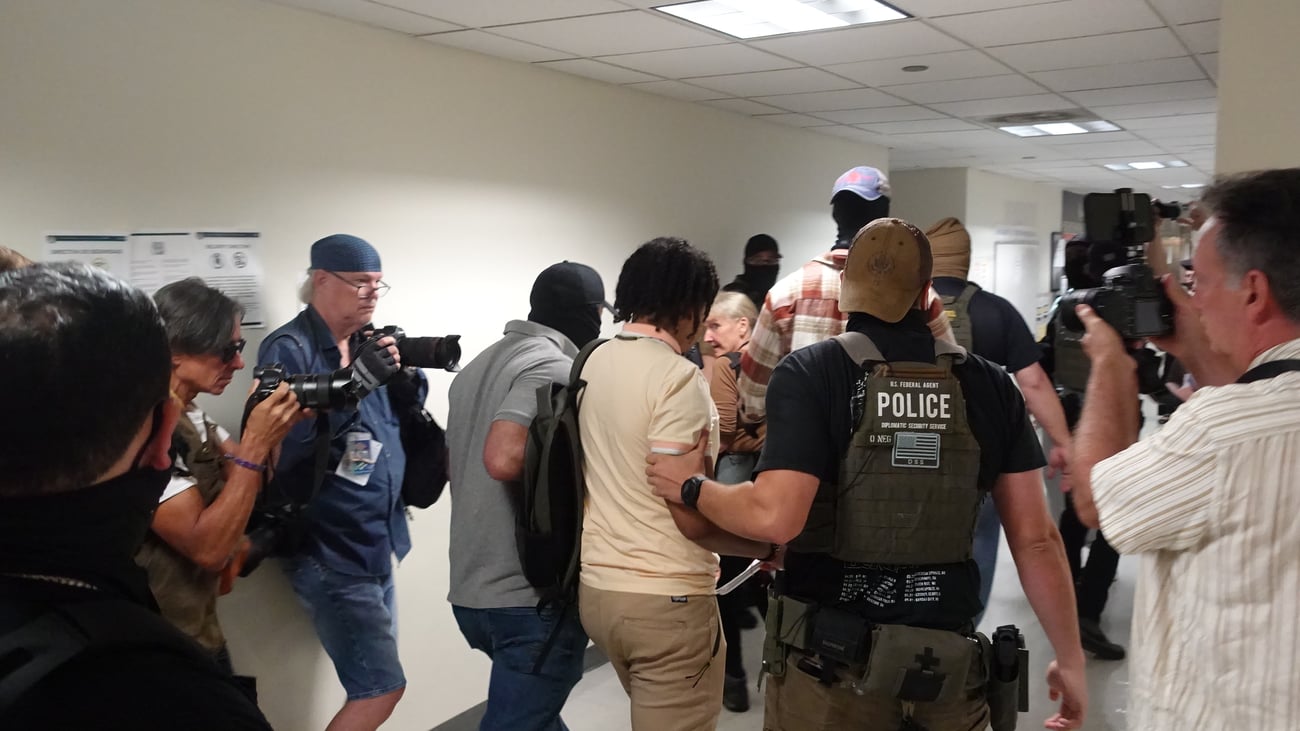
Monday’s ruling lands against a backdrop that has already drawn sustained public attention. Courthouse arrests under the Trump administration’s immigration enforcement campaign have generated a steady stream of confrontations, many of them captured on video. At 26 Federal Plaza — the city’s largest immigration court, which also houses a short-term ICE detention facility — the encounters have been particularly visible.
Former New York City Comptroller Brad Lander was arrested there last summer while attempting to escort an immigrant through a crowd of ICE agents following a hearing. In a separate incident at the same building, agents shoved and injured a photojournalist on the twelfth floor during an arrest.
Those scenes, and the legal fight that ran alongside them, now come down to a single documented fact: the policy the government told a federal judge authorized all of it never meant what the government said it did.
Castel built his original decision on that representation. When it collapsed, so did the arrests.