
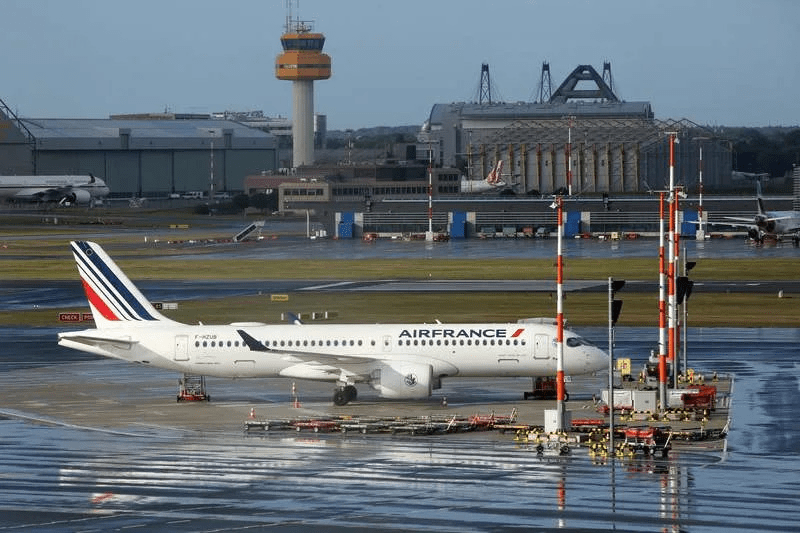
A landmark ruling by the Paris Appeals Court has reopened one of Europe’s most consequential aviation liability cases, after Air France and Airbus were found guilty of corporate manslaughter over the 2009 crash of Flight AF447 — a disaster that claimed 228 lives and reshaped global aviation safety standards.
The decision overturns an earlier 2023 ruling that cleared both companies of criminal responsibility and reintroduces legal scrutiny around the operational, technical, and institutional failures linked to one of the deadliest accidents in modern commercial aviation history.
Flight AF447, an Airbus A330 travelling from Rio de Janeiro to Paris, disappeared from radar screens on 1 June 2009 while crossing the Atlantic during severe weather conditions. The aircraft ultimately stalled and plunged into the ocean from an altitude of approximately 38,000 feet, killing all 216 passengers and 12 crew members on board.
The ruling carries significance beyond the immediate criminal findings. It reflects a broader evolution in how courts, regulators, and the aviation industry increasingly interpret corporate accountability in high-risk transport systems where technological complexity intersects with operational decision-making.
While the financial penalties imposed — €225,000 against each company — are relatively limited by the standards of multinational aerospace and airline operations, the reputational and regulatory implications are considerably more substantial.
For global aviation stakeholders, the verdict reinforces a growing judicial willingness to hold corporations directly accountable for systemic failures involving aircraft safety, pilot training, risk management, and technical oversight.
Read also: Nigeria, 116 Others Left Without US Ambassadors — Report
The AF447 disaster has long occupied a central place in aviation safety analysis because it exposed vulnerabilities within both aircraft automation systems and human response mechanisms under extreme operational stress.
Investigators eventually determined that ice crystals obstructed the aircraft’s pitot tubes — sensors responsible for measuring airspeed — leading to inconsistent speed readings and the disconnection of the aircraft’s autopilot system. The flight crew subsequently struggled to correctly identify and recover from an aerodynamic stall during severe turbulence.
The case became internationally influential because it highlighted the risks associated with overreliance on cockpit automation and the challenges pilots face when automated systems unexpectedly disengage at high altitude.
Industry-wide reforms followed the crash, including expanded pilot training on manual aircraft recovery procedures, redesigns of pitot tube technology, and broader reviews of human-machine interaction inside modern aircraft cockpits.
However, the legal dispute surrounding responsibility continued for more than a decade.
Prosecutors argued during appeal proceedings that both Air France and Airbus failed to act adequately despite earlier warning signs involving airspeed sensor malfunctions on similar aircraft. During closing arguments, prosecutors reportedly characterised the companies’ conduct as “unacceptable,” accusing them of relying on weak and inconsistent defences throughout proceedings.
The appeal court ultimately agreed that corporate negligence contributed sufficiently to the chain of events to justify criminal liability.
For Airbus, the ruling arrives at a time when global aerospace manufacturers are already operating under heightened regulatory and reputational scrutiny. Aircraft certification procedures, safety transparency, and engineering accountability have become increasingly sensitive issues across the aviation sector following multiple high-profile incidents involving commercial aircraft manufacturers over the past decade.
Although Airbus remains one of the world’s dominant aerospace producers, the AF447 judgment could strengthen calls for stricter oversight regarding how manufacturers communicate operational risks, technical anomalies, and safety advisories to airline operators.
For Air France, the ruling presents additional reputational challenges in an industry where consumer trust, operational reliability, and safety perception remain foundational commercial assets.
While air travel remains statistically among the safest forms of transportation globally, major aviation accidents continue to shape public confidence and regulatory policy long after the incidents themselves.
The case also highlights the growing complexity of determining liability in technologically advanced transport systems where failures rarely stem from a single isolated error. Modern aviation accidents are increasingly understood as the result of interconnected systemic weaknesses involving design assumptions, training procedures, maintenance decisions, operational protocols, and crisis management structures.
The recovery operation following the crash itself became one of the most difficult and expensive aviation search missions ever undertaken.
The aircraft vanished over a remote section of the Atlantic Ocean more than 700 miles from the South American coastline, complicating both body recovery and forensic investigation efforts. French authorities led the crash investigation while Brazilian forces coordinated recovery operations at sea.
In the weeks following the disaster, search teams recovered only a limited number of bodies, many still secured in their seats. The aircraft’s black box flight recorders were not located until 2011 after extensive deep-sea operations covering roughly 10,000 square kilometres of ocean floor.
The prolonged recovery effort intensified the emotional trauma experienced by victims’ families, many of whom waited years for definitive answers regarding the fate of their relatives.
Read also: AU Ineffective, Needs Radical Fix — Kenya President
Among the passengers were citizens from multiple countries, including France, Brazil, and Germany, reflecting the international dimension of the tragedy and the global attention the case attracted.
Some relatives have criticised the financial penalties imposed by the court as symbolically insufficient given the scale of the disaster. Yet legal analysts note that the ruling’s long-term significance lies less in the fines themselves and more in the judicial precedent surrounding corporate criminal accountability in aviation disasters.
Both Airbus and Air France are widely expected to pursue further appeals, meaning the legal process may continue for some time.
Nevertheless, the ruling marks a major moment in aviation jurisprudence, signalling that courts may increasingly evaluate not only immediate technical failures, but also broader institutional decision-making frameworks when assessing responsibility for catastrophic transport accidents.
For the aviation industry, the AF447 case remains a defining reminder that technological sophistication alone cannot eliminate operational risk. Instead, resilience depends on the continuous alignment of engineering integrity, pilot preparedness, regulatory oversight, and corporate transparency within systems where the margin for error remains exceptionally narrow.