
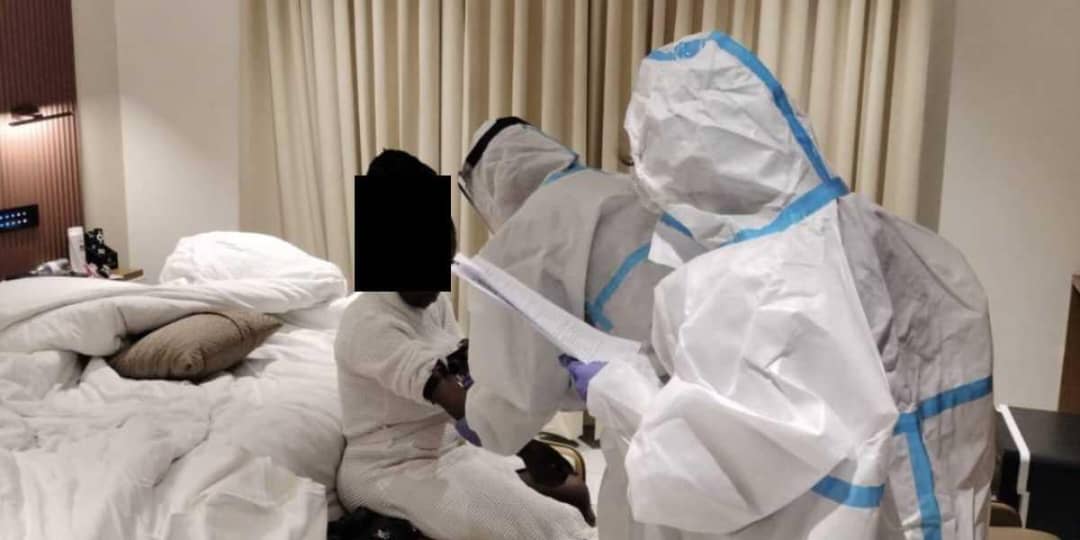
A 28-year-old Ugandan woman held in isolation at a Bengaluru hospital after being flagged as a suspected Ebola carrier has tested negative for the virus, India’s health ministry confirmed Wednesday — sparing the country what would have been its first confirmed case of the hemorrhagic fever in more than a decade.
The result did not settle whether she would be released.
The woman arrived in Bengaluru, India’s technology hub in the south, after traveling from Ahmedabad, where she had stopped on her journey from Uganda. She was quarantined as a precaution rather than for active symptoms — the hospital’s medical superintendent, Dr. Anil Kumar Banagar, said she showed none — though the ministry noted she had experienced mild body ache.
Read also: Collapsed Union Talks Put Samsung On Course For Major Strike
India has been on edge, and with reason. The Bundibugyo strain driving the current outbreak has produced more than 900 suspected cases and over 220 deaths in the Democratic Republic of Congo, which is bearing the heaviest toll, with transmission concentrated in Ituri, North Kivu and South Kivu provinces. Uganda has reported seven confirmed cases, including one death, several linked to travel from DRC. The outbreak is now touching other continents: two suspected cases were reported in Italy on May 25, after two individuals traveling from Uganda to Milan’s Lombardy region developed symptoms consistent with hemorrhagic fever and were hospitalized in isolation.
Read also: Wellness Retreats Focus On Sleep Tracking And Longevity
The Bundibugyo strain carries an estimated fatality rate of between 25 and 50 percent. There is no approved vaccine and no approved treatment specifically targeting it — a fact that separates this outbreak from previous Ebola emergencies where the licensed Ervebo vaccine provided a meaningful containment tool. Ervebo was designed for the Zaire strain, and while animal studies suggest it may carry partial effectiveness against Bundibugyo, experts have raised concerns about deploying a vaccine built for a different virus.
The WHO declared the outbreak a public health emergency of international concern on May 17, its highest level of alarm — the same designation applied during COVID-19 and the 2014 West Africa Ebola crisis.
The Bengaluru case landed inside a country already recalibrating its exposure to that risk. Health Minister Jagat Prakash Nadda convened a preparedness review the day before the test result came back. Indian authorities have rolled out screening and surveillance at airports and other entry points, issued public advisories, and directed citizens to avoid non-essential travel to Congo, Uganda and South Sudan.
The outbreak’s shadow has already disrupted diplomacy. The India-Africa Forum Summit, scheduled this week in New Delhi, was postponed because of public health concerns — a cancellation that carried its own signal about how seriously the government is treating the threat, even before a single case has been confirmed on Indian soil. It still has not been.