
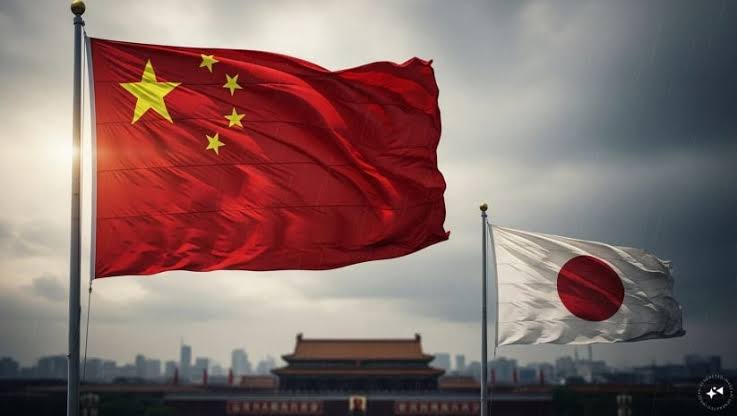
Japan will hand the Philippines a fleet of warships and military aircraft, the two governments confirmed Sunday, sealing a transfer that pulls Tokyo deeper into the contest with China over the waters of the western Pacific.
The deal took shape on the sidelines of Asia’s premier defense gathering, where Japan’s defense minister spent the weekend rejecting Beijing’s charge that his country has slid back toward militarism.
Under the agreement, Japan aims to deliver Abukuma-class destroyers and TC-90 aircraft to Manila during its 2027 fiscal year, according to a Philippine statement issued after Defense Minister Shinjiro Koizumi met his counterpart Gilberto Teodoro. The vessels are being retired from Japanese service, and the Philippines has wanted them for some time — Manila sent a team to inspect the ships in 2025.
The hardware is only part of it.
The two nations have been knitting their militaries closer together in the shadow of China’s naval expansion, agreeing to open talks on intelligence sharing and to begin negotiations over a maritime boundary — a move Beijing has denounced as an illegal breach of the sweeping territorial claims it presses across the region.
Read also: Russia Accuses US Of Blocking UN Attendance With Visa Refusal
All of this unfolds under a government in Tokyo that has stopped apologizing for its ambitions.
Since taking office, Prime Minister Sanae Takaichi has accelerated Japan’s turn toward a more assertive defense posture, shedding more of the pacifist identity the country has carried since 1945 — and doing so with Washington’s blessing. Beijing has answered with repeated condemnations, accusing Tokyo of a reckless “new militarism” it says threatens to unsettle the region.
Koizumi met that accusation head-on at the Shangri-La Dialogue in Singapore. Nothing, he said, could be further from the truth. He drew the contrast in stark terms: one country in the region commands a vast nuclear arsenal and a fleet of strategic bombers, while Japan holds neither — and yet it is Japan that wears the label. He never named China. He did not need to.
China is believed to hold several hundred nuclear warheads and has driven a rapid military buildup in recent years.
Read also: Washington State Chemical Tank Rupture Leaves One Dead
The friction between the two powers has simmered since November, when Takaichi suggested Japan might intervene militarily should China move to seize Taiwan, the self-governing island Beijing claims as its own. Koizumi sharpened the point in Singapore, describing China’s expansion as proceeding without sufficient transparency and calling its military activity a serious concern for Tokyo. Japan, he said, would keep building its own capabilities — in artificial intelligence, uncrewed systems, cyber and space defense — and would do so openly.
He returned, again, to history. Japan’s record as a peace-loving nation has been valued across the region and beyond, he said, and false claims would not shake what he called a simple fact.
The forum itself underscored the divide, though not by Koizumi’s design. The Shangri-La Dialogue draws security officials and experts from roughly 45 countries, and while Japan and its American ally arrived in force, China sent a thinned-out delegation for the second straight year, leaving its defense minister, Dong Jun, at home.
Koizumi let a note of regret show. He said he was saddened that no meeting between the two sides had been possible this time — a small admission of distance, spoken at a summit built to close exactly that kind of gap.