
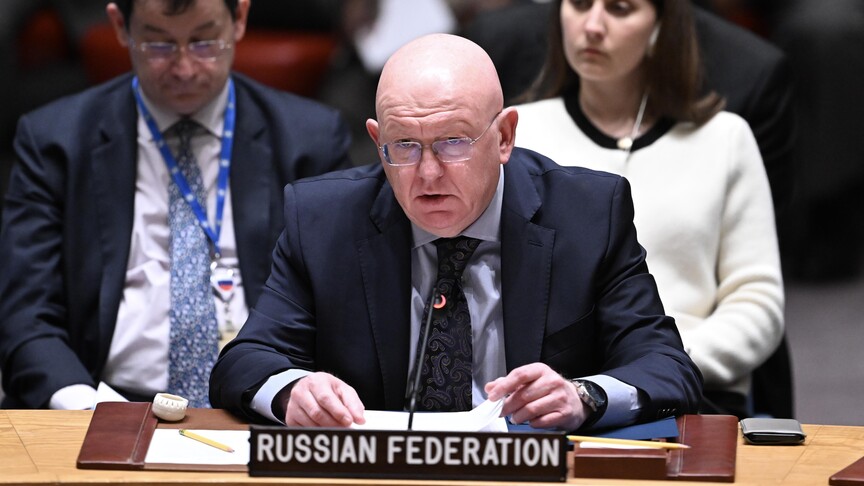
The United States denied entry visas to a senior Russian diplomat and apparently blocked Iran’s foreign minister from traveling to New York for a U.N. Security Council meeting focused on the very international legal order Washington’s detractors say it is eroding — a collision of optics and geopolitics that detonated inside the chamber before the session even began.
Russia’s U.N. Ambassador Vassily Nebenzia confirmed at Tuesday’s meeting that Deputy Foreign Minister Alexander Alimov, who holds the U.N. portfolio in Moscow’s foreign ministry, was refused a visa despite repeated Russian requests to the American side. Iran’s Foreign Minister Abbas Araqchi also failed to appear. Iranian state media had reported days earlier that his trip was called off due to what Tehran’s foreign ministry spokesman described as issues with U.S. visa procedures, though a U.S. State Department official said Wednesday that Washington had not prevented the minister from traveling.
The meeting was chaired by Chinese Foreign Minister Wang Yi, whose country holds the Security Council’s rotating presidency this month. It was Wang who had personally invited Alimov.
Read also: Russia’s Putin Follows Trump To Beijing For Xi Talks
Nebenzia did not soften his language. He called the visa denial an egregious act of disrespect toward China’s presidency — particularly given that the session’s stated purpose was upholding the U.N. charter and reinforcing multilateral cooperation. Under the U.N. Headquarters Agreement, he argued, the United States is obligated to grant access to U.N. facilities in New York to all member state officials without exception. The State Department and the U.S. mission to the United Nations did not respond to questions about either case.
U.N. spokesperson Farhan Haq told reporters Tuesday that the host country is expected to issue visas to all officials needing to participate in U.N. activities, adding that he did not know why Araqchi was absent or why his scheduled meeting with Secretary-General António Guterres had been canceled.
The visa controversy was not the only fault line running through the session.
Guterres told the council that the world is now contending with the highest number of simultaneous conflicts since the United Nations was established in 1945, facing what he called new and uncharted risks to peace and security. Wang struck an almost literary note in his opening, warning that the global order resembled a vast ship sailing into dangerous waters, and called for a reinvigoration of the charter’s founding principles.
Read also: Xi Courts World Confidence With Putin Visit After Trump Talks
Nebenzia used his floor time to go further, accusing Western-led nations of applying double standards to preserve their dominance while pursuing policies that he said were dismantling the post-World War Two settlement. He named German and Japanese remilitarization specifically, describing it as a dangerous attempt to rewrite the outcomes of the Second World War. Countries defeated in that conflict, he said, were now seeking pretexts to reverse its results — a trend he said warranted the attention of the entire international community.
The session unfolded against a backdrop of active hostilities. Iran declared Tuesday that the United States had violated the terms of a ceasefire between the two countries after American forces conducted what Washington described as defensive strikes in southern Iran. On Wednesday, the White House flatly rejected as a fabrication an Iranian state television report claiming Tehran and Washington had reached a framework deal under which Iran would restore Strait of Hormuz shipping to pre-war levels within a month in exchange for a U.S. military withdrawal from Iran’s vicinity. Wang told reporters he hoped all parties would honor the ceasefire and find a way to meet each other halfway.
The Security Council discussion was set to continue Thursday, following a U.N. holiday on Wednesday.
What the session made plain, even before a word of formal debate was spoken, is the condition of the institution hosting it. A meeting convened in defense of international law opened with two invited participants unable to enter the country where international law is supposed to be upheld — the empty chairs making the argument that no speech inside the chamber quite could.