
JURISDICTIONAL NOTICE
STATUS: U.S. First Amendment Protected.
Any attempt by the Nigerian State or its proxies to suppress, threaten, hack, intimidate, or interfere with this publication will be documented, preserved as evidence, and reported to the FBI, U.S. Department of Justice, and relevant federal authorities.
♦♦♦♦♦♦♦♦♦♦♦♦♦♦♦♦♦♦♦♦♦♦♦♦♦♦♦♦♦♦♦♦♦♦♦♦♦♦♦♦♦♦♦♦♦♦♦♦♦♦♦♦
A forensic dissection of Flora Shaw’s colonial label, Decree No. 24, and the militarized elite cartel that turned Nigeria into a republic no president can redeem without restructuring.
The Restructuring Verdict: Renegotiate or Fracture
Every series that investigates Nigeria honestly arrives at the same door. The country can keep changing presidents, parties, slogans, committees, policies, ministers, currency notes, and national plans. None of those changes will save a state whose founding disorder remains protected by law. Nigeria’s crisis has passed the stage where cosmetic reform can pretend to be national rescue. The evidence is now cumulative: imposed naming, imperial merger, incomplete independence, military centralization, Decree No. 24, FAAC dependency, Abuja dominance, police centralization, elite immunity, and citizen exhaustion. The question is no longer whether restructuring is necessary. The question is whether it will be negotiated before collapse begins to negotiate on behalf of everyone.
The Failure of Electoral Salvation
Every four years, the country is invited to confuse replacement with repair. Campaigns lift expectations; candidates promise competence; parties condemn the failures they will soon inherit. The result may change personalities, tones, and spending priorities, but it does not alter the basic distribution of power. A president still sits atop an overburdened center. Governors still wait for revenue streams they did not earn. Communities still beg for security through a chain of command too distant from local danger. Elections can change drivers. They cannot turn a defective vehicle into a functioning state.
This is why democratic energy repeatedly turns into public exhaustion. Citizens vote, hope, defend, regret, and begin again. The ritual continues because elections matter, but elections have been forced to carry a burden they cannot bear. Constitutional design decides what elected officials can realistically do. Where design is defective, even better officials spend their tenure fighting the shape of the office.
Elections are important, but elections inside a defective state cannot perform miracles. They can replace officeholders. They can change tone. They can punish arrogance. They can open space for better policy. They cannot by themselves rewrite the distribution of power, ownership, security, and fiscal responsibility. Nigeria’s political class prefers the election cycle because it renews hope without forcing surrender of central privilege. Campaigns ask citizens to believe in personalities. Restructuring asks citizens to examine the terms of the republic. That is why the ruling class repeatedly returns the public to candidates, coalitions, and slogans while avoiding the deeper question: who owns power in Nigeria, and by what consent?
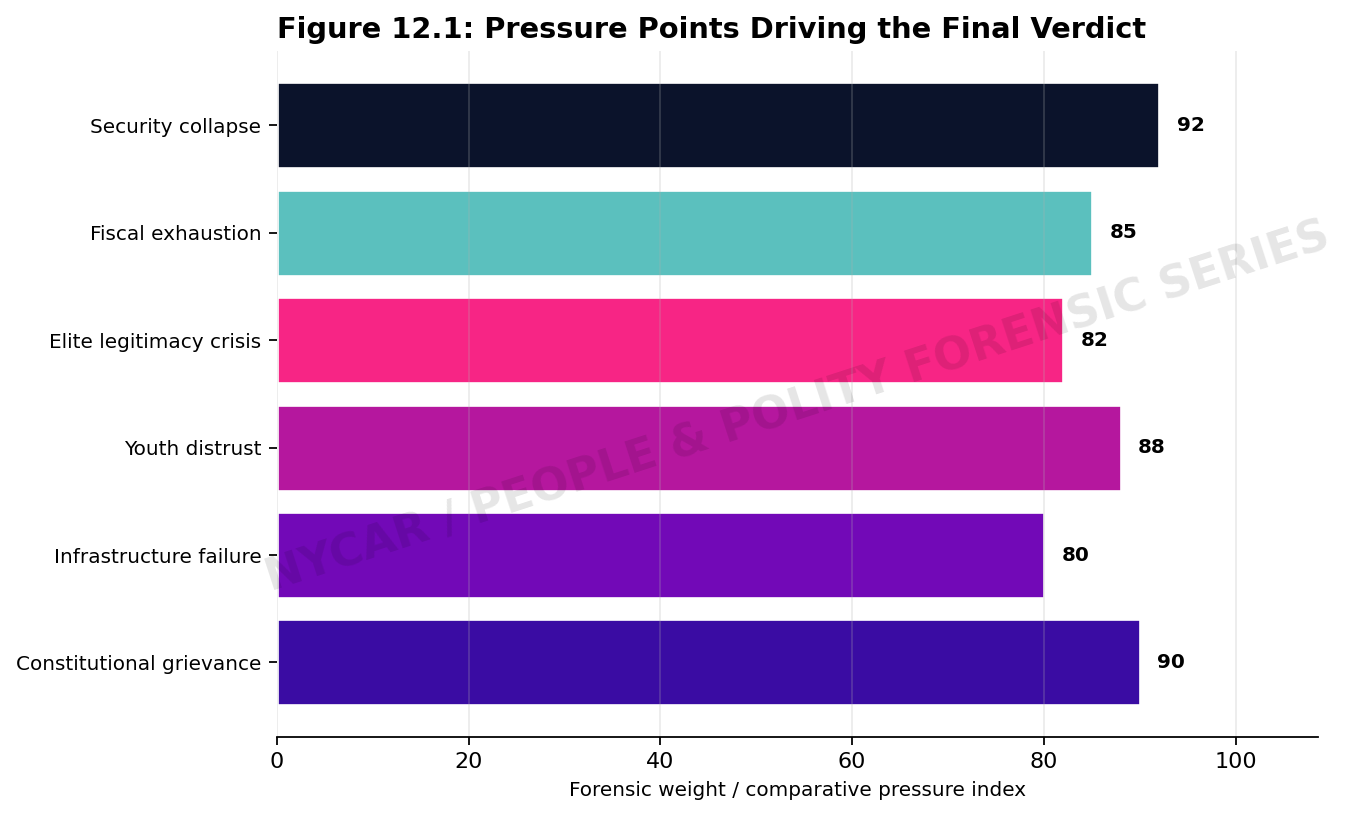
Figure 12.1: Pressure Points Driving the Final Verdict. Forensic argument map; not an official statistical dataset unless explicitly marked.
The Cost of Delay
Delay has become policy. Each administration inherits the same grievances and offers partial remedies: committees, conferences, white papers, constitutional alteration bills, security operations, revenue reviews, social programs, and anti-corruption speeches. Some are useful in narrow ways. None has broken the central chain. Every year of delay makes the eventual settlement harder because public trust thins, insecurity spreads, youth anger deepens, regions lose patience, and the economy bears the weight of an overcentralized state. Countries do not collapse only through dramatic events. They can decay through repeated refusal to repair obvious faults.
Read also: Nigeria: The Slave Name And The Restructuring Verdict — Part 11
Evidence Exhibit 12A
| Claim | Evidence Type | Forensic Meaning | What It Proves |
| Elections cannot cure the state design | Political economy and constitutional record | Leadership turnover leaves power distribution intact | The deeper problem is systemic distribution of authority |
| Delay raises the cost of settlement | Crisis reports and federalism studies | Public trust decays when reform is postponed | Refusal of restructuring risks forced fracture |
| Consent must replace inherited command | Constitutional legitimacy literature | A lawful settlement requires ratification | A republic needs authoring by its people |
Elite Fear of a True Federation
The elite fear restructuring because it would expose performance. A governor with real fiscal power could no longer hide behind Abuja with the same ease. A region with control over development choices would have fewer excuses for failure. A federal politician would lose some control over centralized rent. Party machines built around distribution would weaken. Citizens would gain clearer lines of blame. That is why restructuring threatens not Nigeria’s people, but the political class that profits from confusion. The present order allows power to be claimed at the center, failure to be blamed elsewhere, and money to pass through many hands before accountability finds an address.
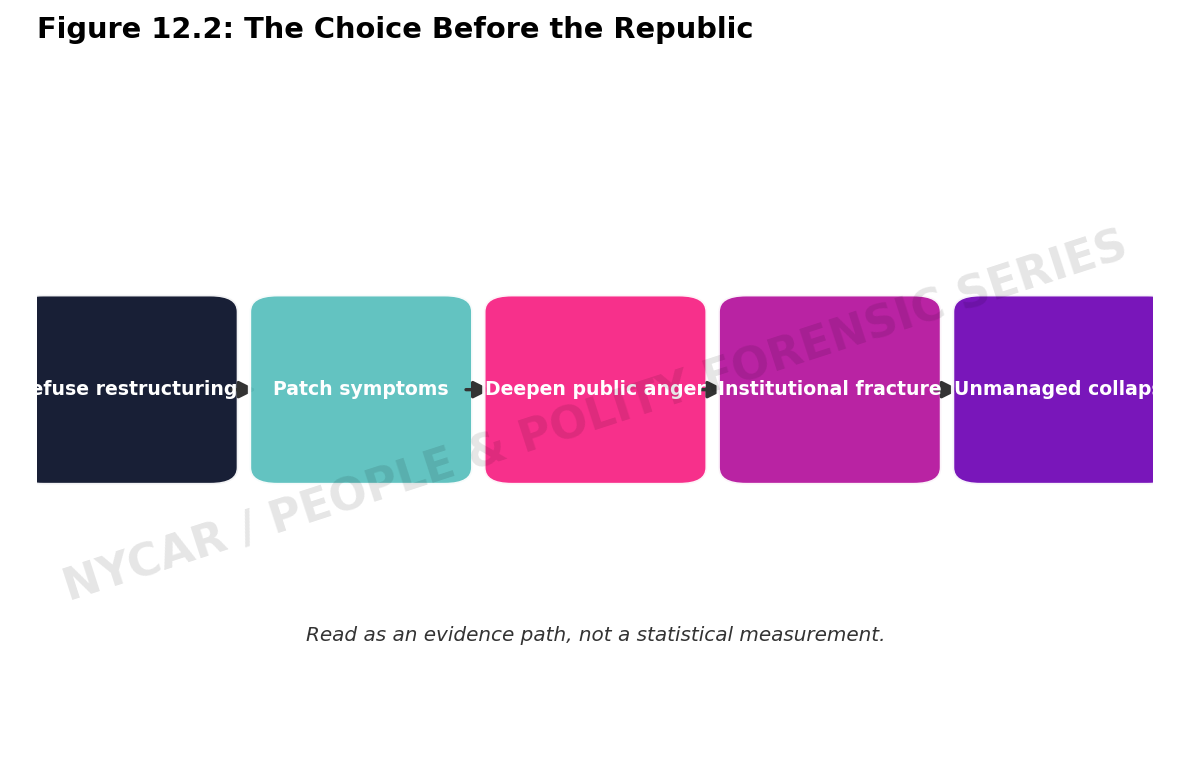
Figure 12.2: The Choice Before the Republic. Forensic argument map; not an official statistical dataset unless explicitly marked.
Negotiated Devolution or Forced Fracture
Fracture does not always arrive with a formal declaration. It can arrive quietly: citizens stop trusting the center; communities create their own security arrangements; regions treat federal law as an obstacle rather than a bond; young people detach emotionally from the flag; public servants loot what they can before the next collapse; separatist language becomes ordinary because national language has lost credibility. A state may remain on the map while its inner loyalty has already drained away.
Negotiated devolution is the civilized alternative. It allows the country to admit that the present order has failed without turning admission into catastrophe. It gives the parts of the country room to breathe, produce, secure themselves, and remain connected through a center that coordinates rather than consumes. The choice is not between unity and reform. The choice is between reform that preserves a viable union and delay that turns bitterness into rupture.
The choice before Nigeria is not unity or restructuring. That is the false choice sold by those who benefit from the center. The real choice is negotiated devolution or forced fracture. Negotiated devolution can preserve a shared country by returning authority to its parts. Forced fracture begins when the parts lose faith that the center can reform. A serious political class would understand this difference. It would stop treating restructuring as a threat and start treating it as the last peaceful instrument capable of keeping Nigeria governable. To refuse reform in the name of unity is to weaken the very unity being defended.
Read also: Nigeria: The Slave Name And The Restructuring Verdict — Part 10
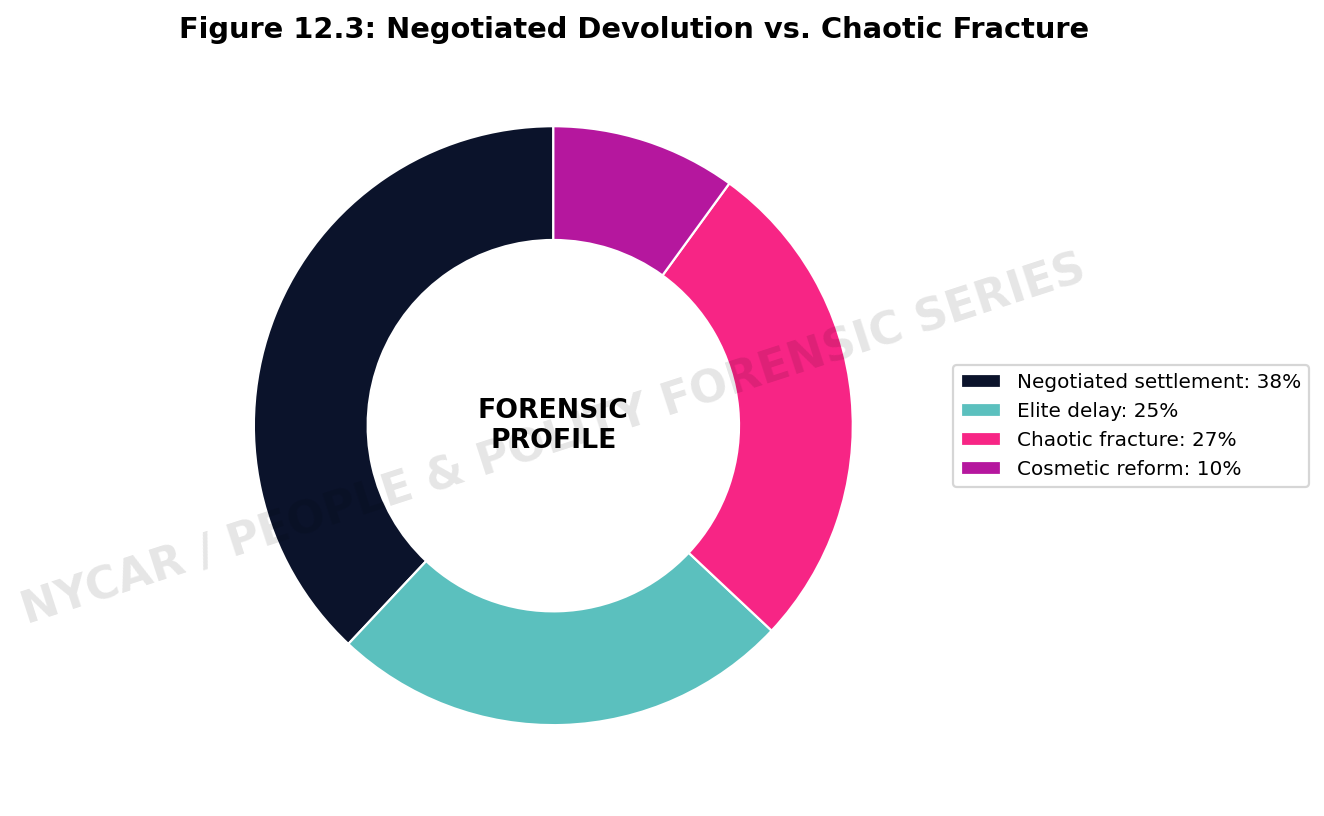
Figure 12.3: Negotiated Devolution vs. Chaotic Fracture. Forensic argument map; not an official statistical dataset unless explicitly marked.
What a Sovereign Renegotiation Requires
A sovereign renegotiation must be open, representative, legally binding, and impossible to bury in another committee archive. Ethnic nationalities, states, regions, civil society, labor, professional bodies, youth representatives, traditional institutions, faith communities, women’s groups, and economic actors must all have a place in the process. The agenda cannot be limited to safe topics. It must confront resource control, policing, fiscal federalism, local government autonomy, judicial structure, state creation, derivation, ports, minerals, land, education, and the powers of the center. The result must go to the people through a credible ratification process. Consent must replace inheritance.
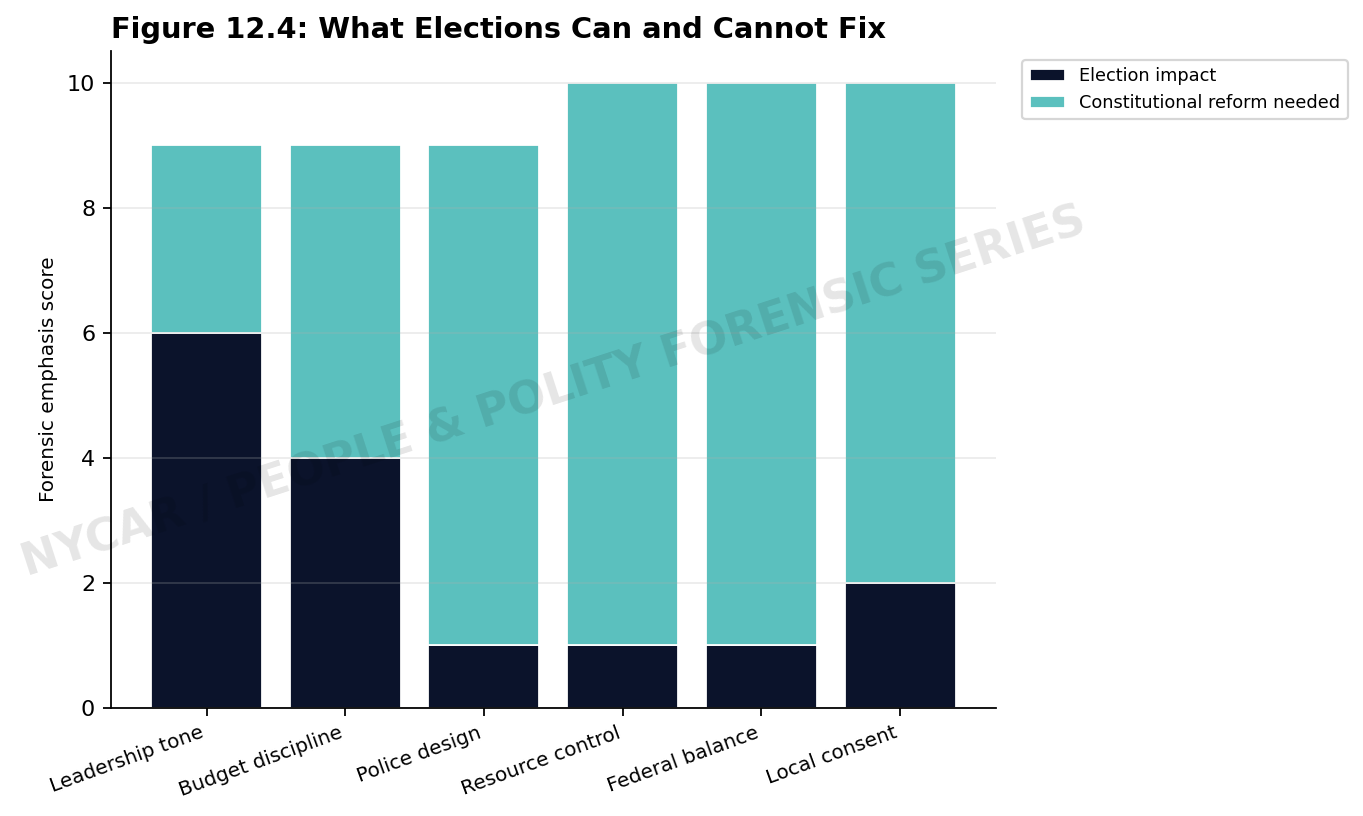
Figure 12.4: What Elections Can and Cannot Fix. Forensic argument map; not an official statistical dataset unless explicitly marked.
The Moral Question
Beyond law and economics lies a moral question: how long can a state demand sacrifice from citizens while refusing to ask whether its design is unjust? Nigerians have endured currency collapse, insecurity, bad roads, failing schools, unemployment, mass migration, elite extravagance, and public services that humiliate the poor. They are then asked to love the country without asking who benefits from its present form. Love of country cannot mean submission to a rigged order. Patriotism without justice becomes coerced endurance. A republic worthy of loyalty must be willing to submit its own foundations to public judgment.
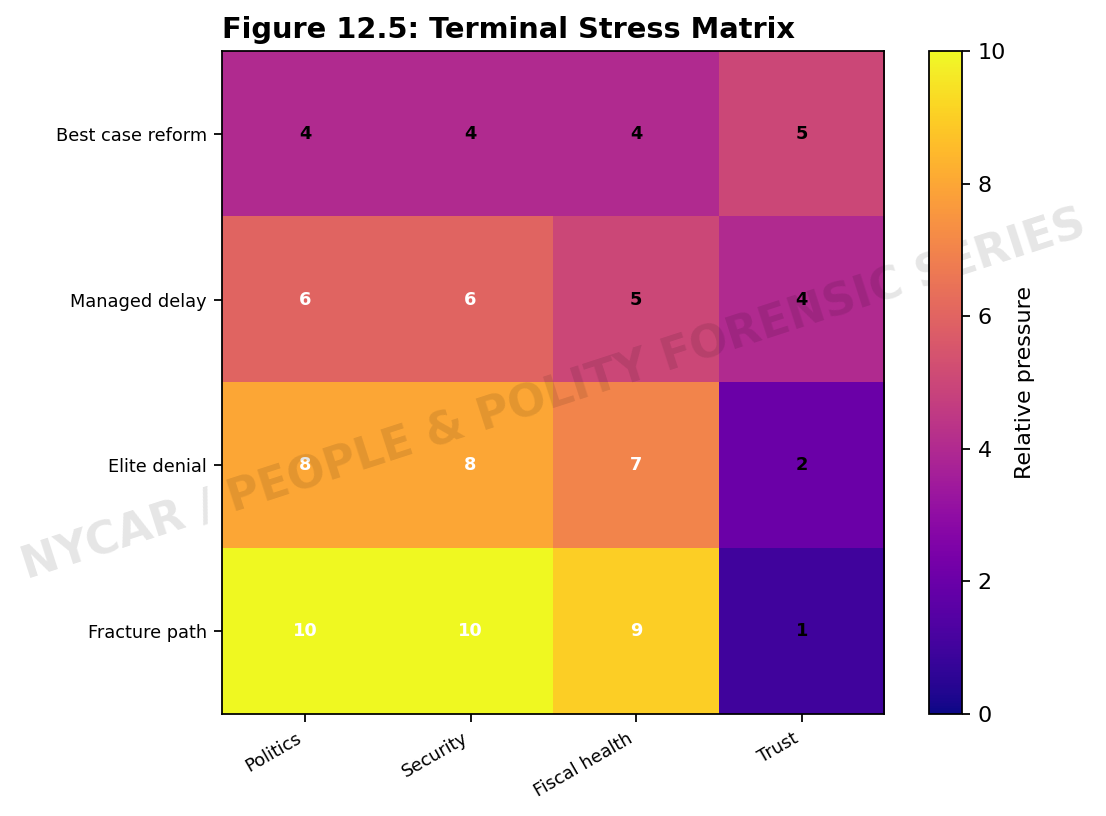
Figure 12.5: Terminal Stress Matrix. Forensic argument map; not an official statistical dataset unless explicitly marked.
Final Finding
Part 12 delivers the verdict forced by the whole record. Nigeria was named without consent, joined without covenant, militarized without remorse, and returned to civilian rule under a constitution whose origin contradicts its opening claim. Its center has grown powerful enough to distribute, but not disciplined enough to develop; strong enough to command, but not close enough to protect. No president can redeem that contradiction by speeches. No election can heal it by ritual. No slogan can hide it forever. The path left is restructuring: negotiated, lawful, deep, and honest. Refuse it, and the slave name will remain attached to a state that consumes its citizens while the elite argue over who gets to manage the ruins.
Evidentiary Sources (APA 7th Edition)
Achebe, C. (1983). The trouble with Nigeria. Fourth Dimension Publishers.
Ake, C. (1996). Democracy and development in Africa. Brookings Institution.
Diamond, L. (1988). Class, ethnicity and democracy in Nigeria: The failure of the First Republic. Syracuse University Press.
Federal Republic of Nigeria. (1999). Constitution of the Federal Republic of Nigeria (Promulgation) Decree No. 24 of 1999. Federal Government Printer.
Federal Republic of Nigeria. (1999). Constitution of the Federal Republic of Nigeria, 1999. Federal Government Printer.
International Crisis Group. (2006). Nigeria’s faltering federal experiment (Africa Report No. 119). International Crisis Group.
Joseph, R. A. (1987). Democracy and prebendal politics in Nigeria: The rise and fall of the Second Republic. Cambridge University Press.
Lewis, P. M. (2007). Growing apart: Oil, politics, and economic change in Indonesia and Nigeria. University of Michigan Press.
Matfess, H. (2016). Institutionalizing instability: The constitutional roots of insecurity in Nigeria’s Fourth Republic. Stability: International Journal of Security & Development, 5(1), Article 13. doi: 10.5334/sta.458
Osaghae, E. E. (1998). Crippled giant: Nigeria since independence. Indiana University Press.
Suberu, R. T. (2001). Federalism and ethnic conflict in Nigeria. United States Institute of Peace Press.
World Bank. (2022). Nigeria public finance review: Fiscal adjustment for better and sustainable results. World Bank.