
Twelve billion dollars in frozen Iranian assets are set to move, in two equal installments of $6 billion each — and Washington has already told Tehran how it expects at least part of that money spent: on American grain.
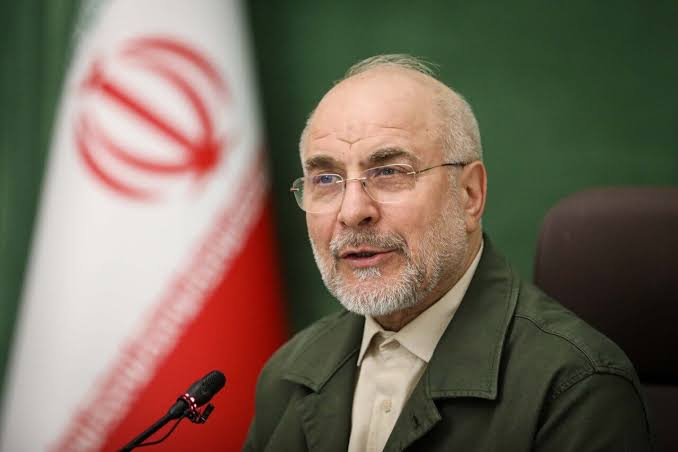
The fund release, confirmed by Iran’s top negotiator Mohammad Bagher Ghalibaf, marks the most concrete financial outcome yet from talks that have spanned oil sanctions, Lebanon’s security architecture and the future of one of the world’s most contested shipping corridors. But the announcement arrived bundled with conditions that reveal how far apart Washington and Tehran remain on what any of this actually means.
President Donald Trump said Iran had agreed to allow international nuclear inspections, framing the arrangement as a verification win. He added that released Iranian funds would go toward purchasing U.S. agricultural products — a condition that, if accurate, would tie sanctions relief directly to American farm exports rather than leaving Tehran free use of its own money.
Ghalibaf did not address that condition directly.
Speaking after his return from negotiations, the Iranian official characterized the trip in markedly more modest terms than Washington’s framing suggested. “In my view, this trip had good achievements, especially regarding discussions on the Strait, Lebanon, the oil waiver issue, and the release of frozen funds, which is one of the steps we are moving forward with,” he said, adding a caveat that undercut any sense of finality: “However, we believe we are still at the beginning of this process and must continue our efforts.”
That note of caution extends to the oil sector, where sanctions remain formally in place. According to Ghalibaf, Washington’s recent move was narrower than a lifting of restrictions — a temporary window, running until August 21, permitting Iran to sell oil and petrochemical products. The distinction matters: a waiver expires. A repealed sanction does not. Ghalibaf was direct about why Tehran needed it regardless: “Therefore, we need waivers so we can sell our oil and conduct banking activities,” he said, confirming the necessary clearances had been secured and corresponding agreements signed.
Read also: US And Israel Strike Iran In Operation Shield Of Judah
No final nuclear agreement has been reached. That single fact underpins everything else in Ghalibaf’s account — the asset release, the oil waivers, the inspection commitments Trump described. All of it operates provisionally, contingent on a broader deal that has not yet materialized.
Lebanon occupied a separate track of the discussions, and here the stated objectives ran directly counter to events on the ground. Ghalibaf said both sides agreed to establish a coordination center designed to manage disputes and prevent a relapse into open conflict. Its stated functions, in his telling, were specific: stopping a return to war, allowing displaced residents to resume normal life, securing Israeli troop withdrawals from occupied areas, and upholding Lebanese sovereignty.
Benjamin Netanyahu offered a starkly different vision the same day.
The Israeli prime minister said his forces would continue operating in southern Lebanon, with explicit plans to dismantle Hezbollah’s infrastructure there. That stands in direct tension with the withdrawal Ghalibaf described as one of the coordination center’s core aims — raising the question of whether the mechanism he outlined has any operational reality on the ground it claims to govern.
Read also: Syria’s Kurds Warn Iran’s Kurds: Don’t Trust Washington
The Strait of Hormuz, meanwhile, has undergone what Ghalibaf described as a permanent shift in how it operates. “Its administration will never return to the way it was before the war,” he said of the waterway, through which roughly a fifth of global oil supply transits. He did not specify what the new administration entails, but said both sides had agreed to communication tools, including a dedicated hotline and a separate dispute-resolution center, intended to manage future incidents before they escalate.
Those mechanisms — for Hormuz, for Lebanon, for sanctions waivers — share a common architecture: structures built to manage friction, not resolve it. Ghalibaf’s own language reinforced that reading. He spoke of steps “moving forward,” of efforts that “must continue,” of a process still at its beginning. Nowhere did he claim resolution.
What exists, for now, is process. The funds will move in tranches. The oil waivers expire in August. The coordination centers are designed to prevent collapse, not declare peace. And in Lebanon, the gap between what Tehran says was agreed and what Israel says it intends to do remains entirely unaddressed by either side.