
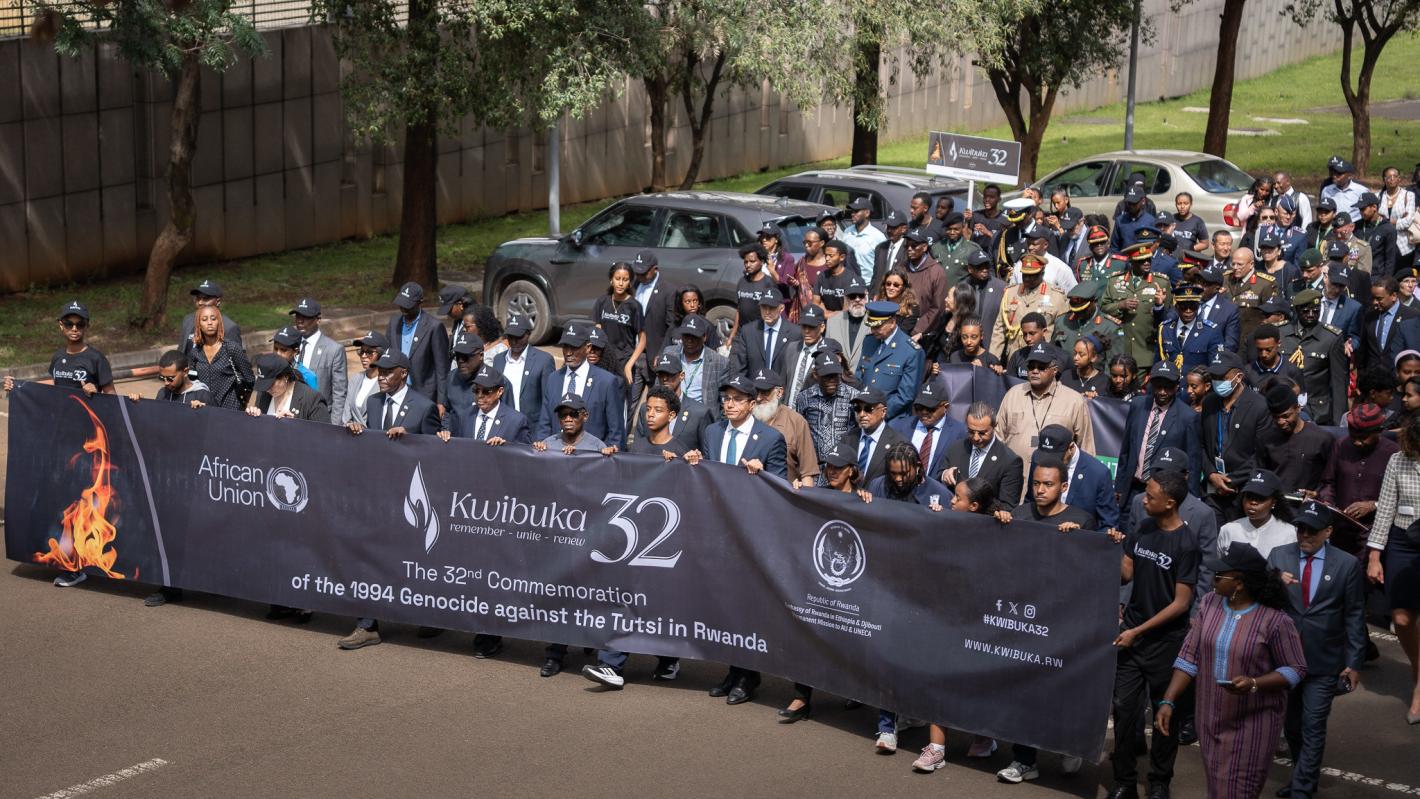
Rwanda’s health ministry has documented a statistic that complicates the government’s carefully built narrative of national recovery: more than half of the country’s genocide survivors are living with a diagnosed mental health disorder, more than three decades after the killing stopped.
The finding surfaced as Rwanda observed Liberation Day on Saturday, the anniversary of the 1994 military victory that ended the genocide against the Tutsi and brought President Paul Kagame’s Rwanda Patriotic Front to power. Roughly 800,000 people were killed in the space of 100 days that year.
Nurse Sabrine Gatesi, 30, sees the gap between commemoration and daily reality up close. She described liberation not as a finished achievement but as an ongoing reckoning with damage that rarely shows on the surface. The trauma of the genocide, she said, remains embedded in people who otherwise appear to have moved on.
Mental health professionals remain scarce nationwide, even as the disorder rate among survivors runs several times higher than the one-in-five figure recorded across the general population.
That gap between image and interior life runs through much of how younger Rwandans are describing this year’s anniversary.
Read also: Top IS Leader Killed In U.S.-Nigeria Operation
Claudette Kamikazi, 29, runs a souvenir shop in Kigali that caters to the tourists now flowing into a country that has spent years rebuilding its image abroad. To visitors, her shop is evidence of a nation moving forward. To her, it sits atop a history she never chose. Kamikazi’s mother survived the genocide; her father was convicted for his role in it and has been serving a life sentence since 1998, when Kamikazi was still a toddler.
She was raised almost entirely by her mother.
Kamikazi described liberation as something she carries every day rather than a date on a calendar — a feeling bound up in her mother’s survival, her own existence, and the imprisonment of the man who fathered her. She now expects him to be released before the end of the year, as Rwanda continues a program of releasing some convicted genocidaires following rehabilitation efforts.
Economic data offers a more conventional measure of the distance Rwanda has traveled. Growth has averaged close to 7 percent annually over the past decade, powered by tourism, mining, technology and agribusiness, and a new international airport under construction outside the capital has generated thousands of construction jobs. Kagame’s government has increasingly framed Liberation Day less as a single military victory and more as a decades-long campaign to push Rwanda into high-income status by 2050.
But that expansion has not closed the gap for the young.
Read also: 93-Year-Old Genocide Accused Kabuga Dies In Custody
Youth unemployment stands at roughly 14 percent, according to the government’s own most recent survey — a figure that falls well short of a campaign pledge from Kagame’s party to generate 200,000 jobs annually, a promise made during the 2024 election that returned him to office with more than 99 percent of the vote. Christopher Teganya, 26, finished a master’s degree and has yet to find work. He credited the liberation struggle with giving Rwanda a genuine start, but argued that commemorating the past carries little weight for people who cannot see a stable future ahead of them.
More than 65 percent of Rwanda’s population is under 30, meaning the burden of proving the recovery real falls disproportionately on a generation that never lived through the genocide itself.
Criticism of Kagame’s government extends beyond economics. Rights organizations have repeatedly flagged restrictions on political opposition, press freedom and civic space in Rwanda, and the prosecution of opposition figure Victoire Ingabire continues to split opinion both domestically and internationally. The government has not significantly altered its approach to dissent even as it markets the country as a model of African stability to foreign investors and tourists.
Officials point instead to reconciliation programs, unity-building initiatives and the country’s refusal to slide back into the ethnic divisions that preceded 1994 as the truer measure of what liberation achieved.
For Kamikazi, none of the government’s framing captures what the day actually means. Liberation, to her, is not a slogan or an anniversary — it is her mother’s survival, her father’s pending release after more than two decades in prison, and the shop she opens every morning that now defines her life more than the history that produced her.