
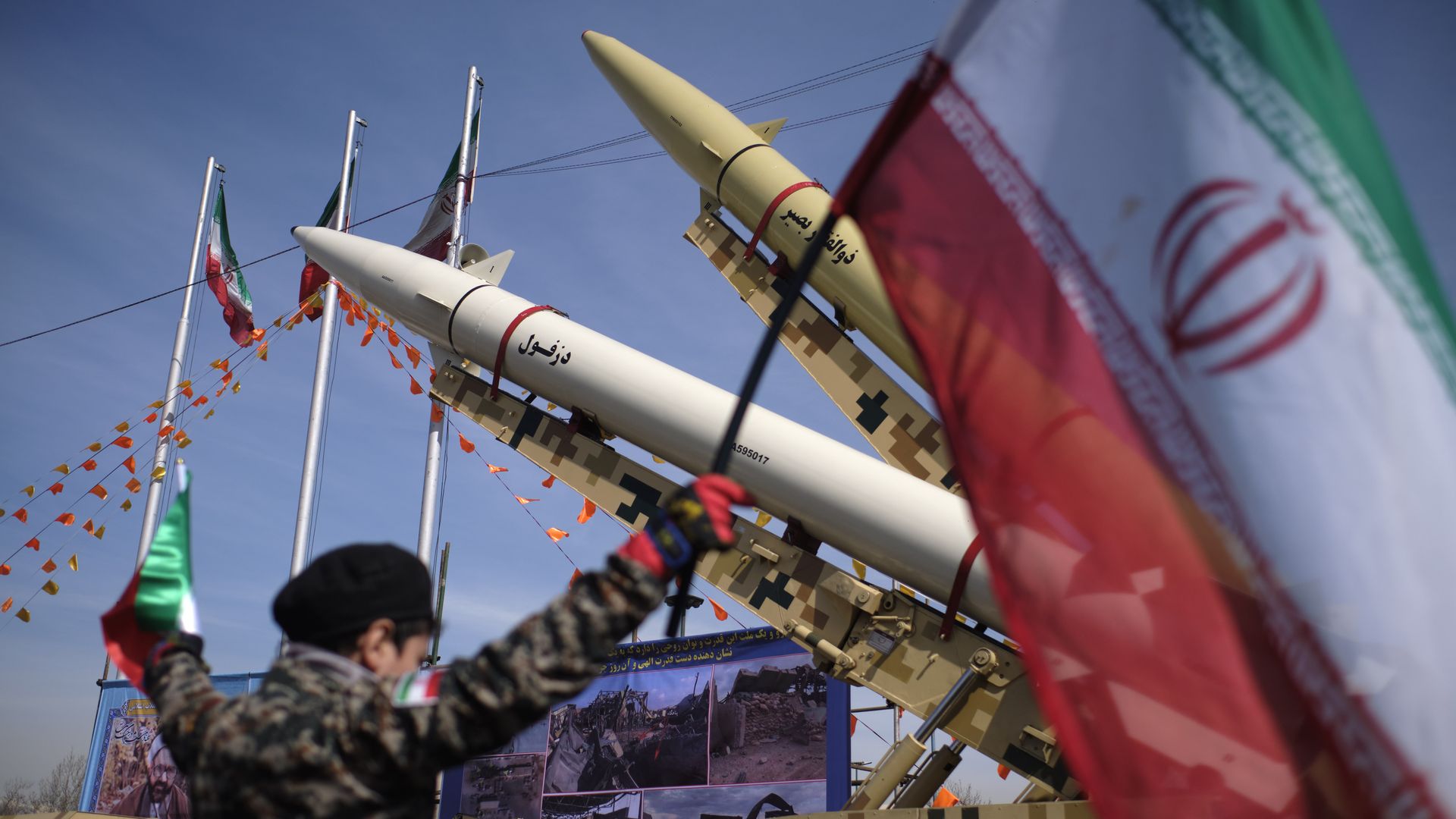
Iranian missiles and drones have damaged roughly 20 United States military installations across eight countries since late February, satellite imagery and battlefield video reviewed by analysts show — a toll far heavier than Washington has been willing to acknowledge.
Among the wreckage sit three of the most valuable air-defense systems the American military fields anywhere.
Three Terminal High Altitude Area Defense batteries — at Al Ruwais and Al Sader in the United Arab Emirates and Muwaffaq Salti in Jordan — were hit during the campaign. The United States operates only eight THAAD systems worldwide. Each costs about $1 billion to build, demands a crew near 100, and fires interceptors priced at $12.7 million per round. Vice-Admiral Mark Mellett, who once led Ireland’s Defence Forces, described the batteries as the spine of a regional shield that cannot be rebuilt quickly or cheaply.
That is the gap at the center of the story.
The White House has insisted for weeks that Iran’s military is all but finished. The physical evidence at American bases tells a different story — one of strikes that landed with growing precision on hardware the Pentagon cannot easily replace. Tehran has aimed at both American installations and shared facilities in retaliation for US-Israeli operations across Iran and Lebanon, and the damage now spans Saudi Arabia, the UAE, Qatar, Kuwait, Iraq, Jordan, Bahrain and Oman. Some analysts put the number of bases struck as high as 28.
Read also: Iran, US Agree To Extend Ceasefire, Awaiting Trump’s Nod
The Pentagon, for its part, says it has hit more than 13,000 targets inside Iran since launching Operation Epic Fury.
Washington has worked to keep the rest of the world from looking too closely. Planet, one of the largest commercial satellite firms, agreed to an indefinite freeze on fresh imagery of Iran and much of the Middle East at US request — a step the company defended by saying it did not want its pictures used to target allied and NATO-partner personnel or civilians. Analysts reconstructed the damage using older Planet images stitched together with imagery from other international providers. A US defense official, citing operational security, declined to address any of it.
At Prince Sultan Airbase in Saudi Arabia, the craters are plain. Smoke-blackened ground and damaged aircraft show in satellite frames, and one analyst identified a wrecked E-3 Sentry surveillance plane — a loss American media reported could run as high as $700 million to replace.
In Kuwait, the strikes reached deep into the support architecture of US operations. Ali Al Salem Airbase took multiple hits that flattened fuel-storage bunkers, hangars and troop quarters, according to imagery analysts at MAIAR. At nearby Camp Arifjan, the defense-intelligence firm Janes traced heavy damage to satellite communications equipment.
Read also: Russia Accuses US Of Blocking UN Attendance With Visa Refusal
The Pentagon’s own May accounting set the cost of Operation Epic Fury at $29 billion, much of it tied to repairing or replacing destroyed equipment. Democrats call that figure low. The same report tallied at least 42 aircraft hit or destroyed since February — F-15 and F-35 fighters among them, alongside 24 MQ-9 Reaper drones and a single A-10.
Against that ledger of billion-dollar systems, Iran has fought cheap.
Tehran has leaned on inexpensive, expendable drones, and its method sharpened as the war went on. Dr. Kelly Grieco of the Stimson Center said Iran’s first volleys were built for volume — saturation waves meant to swamp air defenses through sheer mass. Within days, she said, the strikes narrowed into smaller, targeted salvos aimed at high-value sites where even a near miss did real harm. One MAIAR analyst was blunter, faulting the American military for early-war complacency in leaving aircraft parked within reach of Iranian fire — at Prince Sultan, the base had already been hit before the planes were lost.
Iran’s supreme leader has made the campaign a point of pride. Mojtaba Khamenei declared this week that the region would no longer shelter American bases, telling his audience that the United States “will no longer have a safe place” in the Middle East.
His words landed days before the US-Iran ceasefire frayed again. On Thursday, the Islamic Revolutionary Guard Corps said it struck an American base in response to fresh US strikes on southern Iran.
What worries analysts most is what comes next if the truce collapses. The fighting has burned through US and partner interceptor stocks at a punishing rate, Grieco said, with no fast way to restock. Any renewed Iranian assault, she warned, would meet a defense armed with a fraction of the interceptors it began the war holding.