
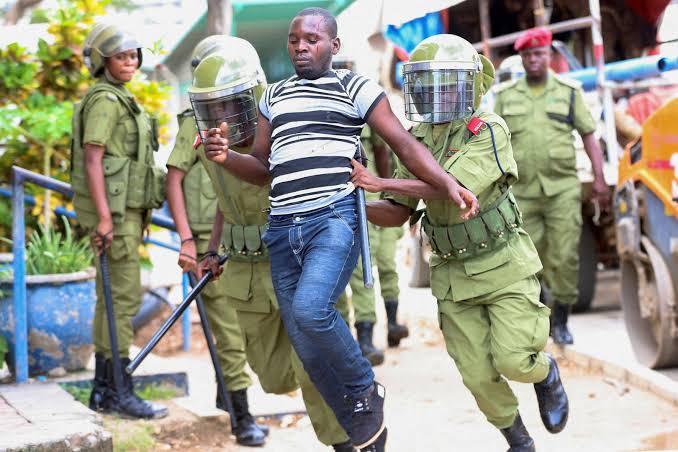
Authorities in Tanzania opened fire on streets in Dar es Salaam during protests following Sunday’s disputed presidential election, with Amnesty International reporting at least two people were killed. Protesters defied curfews and blocked major roads as tension surged across the country.
Members of the public and police clashed Thursday night in the Mbagala, Gongo la Mboto, and Kiluvya neighborhoods of Dar es Salaam—Tanzania’s largest city—where tear gas and the sounds of shots were reported. Amnesty’s regional director for East and Southern Africa, Tigere Chagutah, said the organization had verified the deaths of “one member of the public and one police officer.” He described the killings as “deeply disturbing” and demanded an independent probe into the use of lethal force.
“Authorities must promptly conduct a thorough and independent investigation into the unlawful use of lethal force against protesters, and the perpetrators must be held accountable,” Chagutah said.
Read Also: Tanzania Opposition Arrest Sparks Outcry Before Election
Internet access remained down across the city, and activists reported that hundreds had torched polling stations and chanted in outrage during election day. A protester in a social media video, verified by Al Jazeera, said: “We have been silent for so long… What have we been doing?”
Despite the blackout, protesters used the Zello app to organize possible demonstrations. The U.S. Embassy in Tanzania issued a security alert stating the main road to Darcy’s Julius Nyerere International Airport was blocked.
President Samia Suluhu Hassan’s critics say the election lacked legitimacy after the country’s two leading opposition parties were barred from participating. The National Electoral Commission disqualified CHADEMA in April over its refusal to sign an electoral code of conduct. The commission also blocked ACT-Wazalendo’s candidate, Luhaga Mpina, following a legal objection.
The country has seen mounting reports of arrests, disappearances, and harassment of opposition figures, journalists, and activists. In June, a UN panel described more than 200 disappearances since 2019. In September, Human Rights Watch documented cases of politically motivated violence, calling Tanzania’s October elections “at great risk.” Nomathamsanqa Masiko-Mpaka, HRW’s Africa researcher, warned that “authorities need to stop muzzling dissenting voices and the media.”
President Hassan took office in 2021 following the death of her predecessor, John Magufuli, and initially earned praise for easing restrictions on free expression. But in recent years, repression has intensified.