
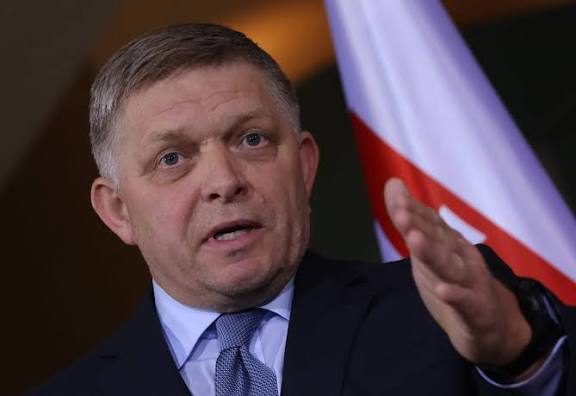
Prime Minister Robert Fico says Slovakia will not join any EU effort to finance Ukraine’s military, arguing that peace cannot be achieved through war.
Slovak Prime Minister Robert Fico has declared that Slovakia will not participate in any European Union program aimed at funding Ukraine’s military operations against Russia, reaffirming his government’s break with the EU’s broader stance on the war.
Speaking at a televised news conference on Sunday October 26, 2025, Fico said he “refuses to allow Slovakia to take part in any financial scheme aimed at helping Ukraine manage the war and military spending.” His comments came days after EU leaders met to discuss new financial support for Kyiv, including a proposed €140 billion ($162 billion) loan backed by frozen Russian assets — a plan that remains under review.
Fico, who returned to power in 2023, halted all state-provided military aid to Ukraine shortly after taking office but has allowed private arms sales to continue. He has consistently argued that the conflict cannot be resolved on the battlefield, calling instead for diplomatic negotiations between Moscow and Kyiv.
“Slovakia will not contribute to prolonging the war,” Fico said. “Our position is clear — peace will not be achieved through weapons.”
Read Also: Hungary: Viktor Orban To Meet Trump Over Russian Oil Sanctions
The statement underscores deep divisions within the European Union over how to sustain support for Ukraine nearly three years into Russia’s full-scale invasion. While countries such as Poland, Germany, and the Baltic states continue to push for stronger military and financial assistance, others — notably Hungary and Slovakia — have voiced increasing skepticism about the strategy.
At their summit last Thursday October 23, 2025, EU leaders pledged to meet Ukraine’s “pressing financial needs” over the next two years but stopped short of approving the plan to use frozen Russian assets to secure the proposed loan package. Ukrainian President Volodymyr Zelensky has urged the bloc to move swiftly, saying the funds would strengthen air defenses, expand the air fleet, and reinforce front-line positions.
Fico has also criticized EU sanctions on Russia, arguing they have hurt European economies more than Moscow’s. Both Slovakia and neighboring Hungary remain heavily dependent on Russian energy supplies, leaving them exposed to new U.S. sanctions targeting Russian oil companies Rosneft and Lukoil, which take effect next month.
Addressing the potential impact of the measures, Fico said Slovak refiner Slovnaft — part of Hungary’s MOL Group — would not be directly affected. Hungarian Prime Minister Viktor Orbán said on Friday October 24, 2025, that Budapest is exploring ways to circumvent the U.S. sanctions to protect its energy sector.