
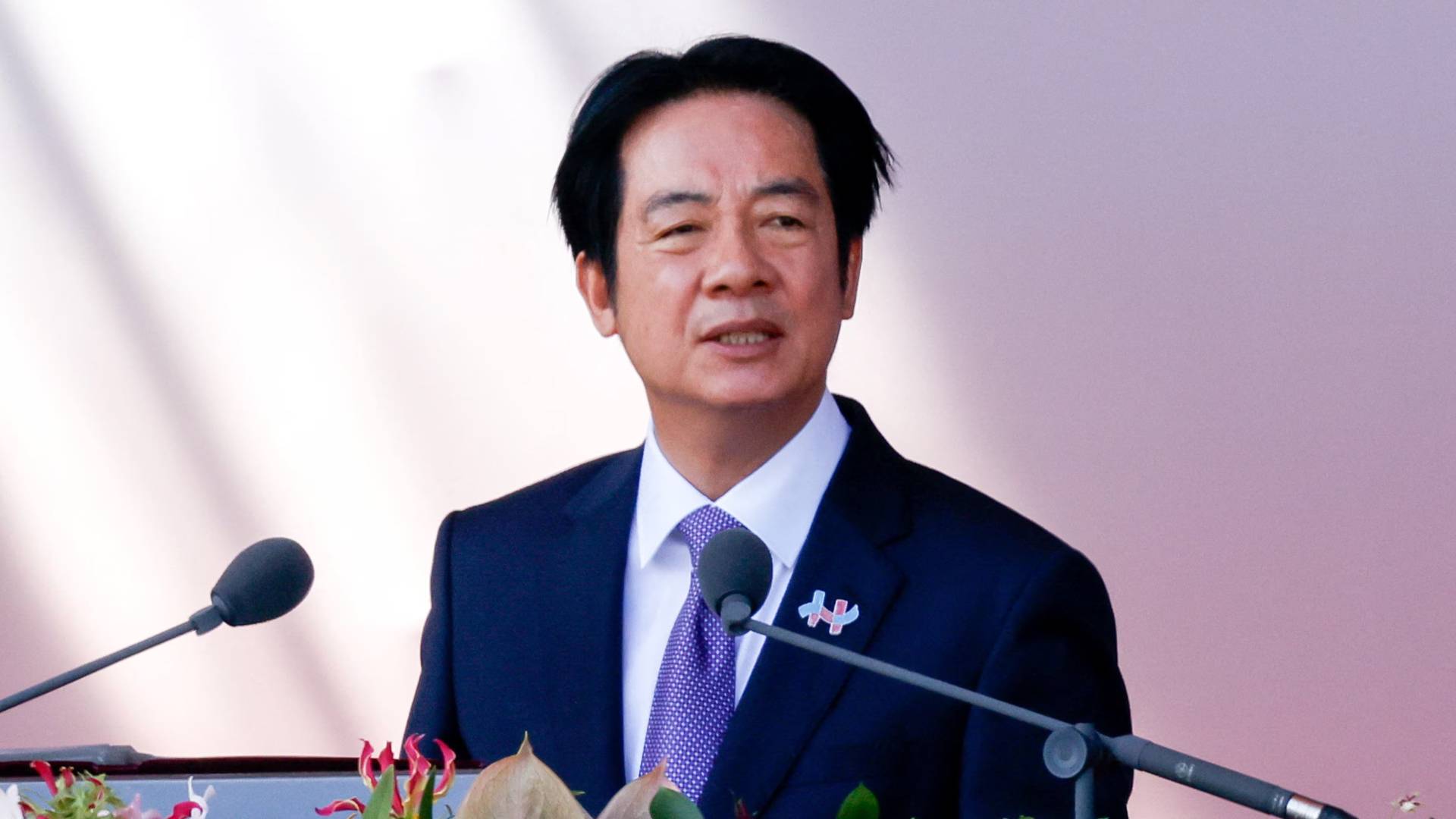
Taiwan’s president, Lai Ching te, set out an ambitious defence plan on Wednesday, saying his government will seek forty billion dollars in additional military spending over the next eight years. The proposal signals a sharper effort by Taipei to raise the cost of any potential attack from Beijing at a time when Chinese military pressure has become a daily fact of life for the island.
At a news conference in Taipei, Lai said the objective is not simply to buy new weapons but to bring the armed forces to a higher level of joint readiness by 2027. That date carries weight in Washington, where some officials have warned that China could see the late 2020s as an opportunity to force unification.
“The ultimate goal is to build defence capabilities that can permanently safeguard Taiwan,” Lai said, following the release of an opinion piece he published in the Washington Post. In that article, he framed the spending plan as part of a long term effort to anchor Taiwan’s security in its own hands.
Beijing maintains that the island is part of its territory and has never renounced the use of force to achieve unification. Taiwan has never been governed by the Chinese Communist Party, and public opinion on the island remains firmly in favour of maintaining its democratic system and de facto autonomy.
Lai’s announcement came against a backdrop of sharpened regional tensions. Tokyo and Beijing have been locked in a diplomatic quarrel for weeks, after Japanese Prime Minister Sanae Takaichi suggested Japan could not stand aside if Taiwan were attacked.
Read also: Chinese Government Warn Students Over Japan, Taiwan Tensions
Washington’s senior representative in Taipei welcomed the spending plan and urged rival political parties to work together on measures that strengthen the island’s defences. The United States approved a three hundred and thirty million dollar package of spare parts and components earlier this month, marking Washington’s first arms sale to Taipei since Donald Trump returned to office.
Lai said the new funds would cover additional American weapons purchases and support Taiwan’s push toward more asymmetrical capabilities, the kind of measures designed to complicate any military calculus in Beijing. He stressed that the proposal was not connected to ongoing trade discussions with the United States, describing it instead as a signal of resolve. “We aim to bolster deterrence by inserting greater costs and uncertainties into Beijing’s decision making on the use of force,” he wrote.
Taiwan has already proposed a defence budget of roughly thirty billion dollars for next year, about 3.3 percent of GDP. Lai’s Democratic Progressive Party has spoken of pushing annual spending above three percent in the near term and to five percent by the end of the decade, a target encouraged by US officials.
The new eight year package exceeds an earlier figure disclosed to AFP by a senior DPP lawmaker. Lai said part of the push will involve speeding up work on the T Dome, a layered air defence network intended to give Taiwan a more resilient shield against missile threats. In his Washington Post piece, he cast it as a step toward “an unassailable Taiwan, safeguarded by innovation and technology”.
The politics may prove harder than the planning. The opposition Kuomintang, which favours a more conciliatory approach to China, holds enough seats in parliament to set limits on spending with the backing of the Taiwan People’s Party. The KMT’s recently elected chair, Cheng Li wun, has already criticised Lai’s defence ambitions, arguing that Taiwan “doesn’t have that much money”.