
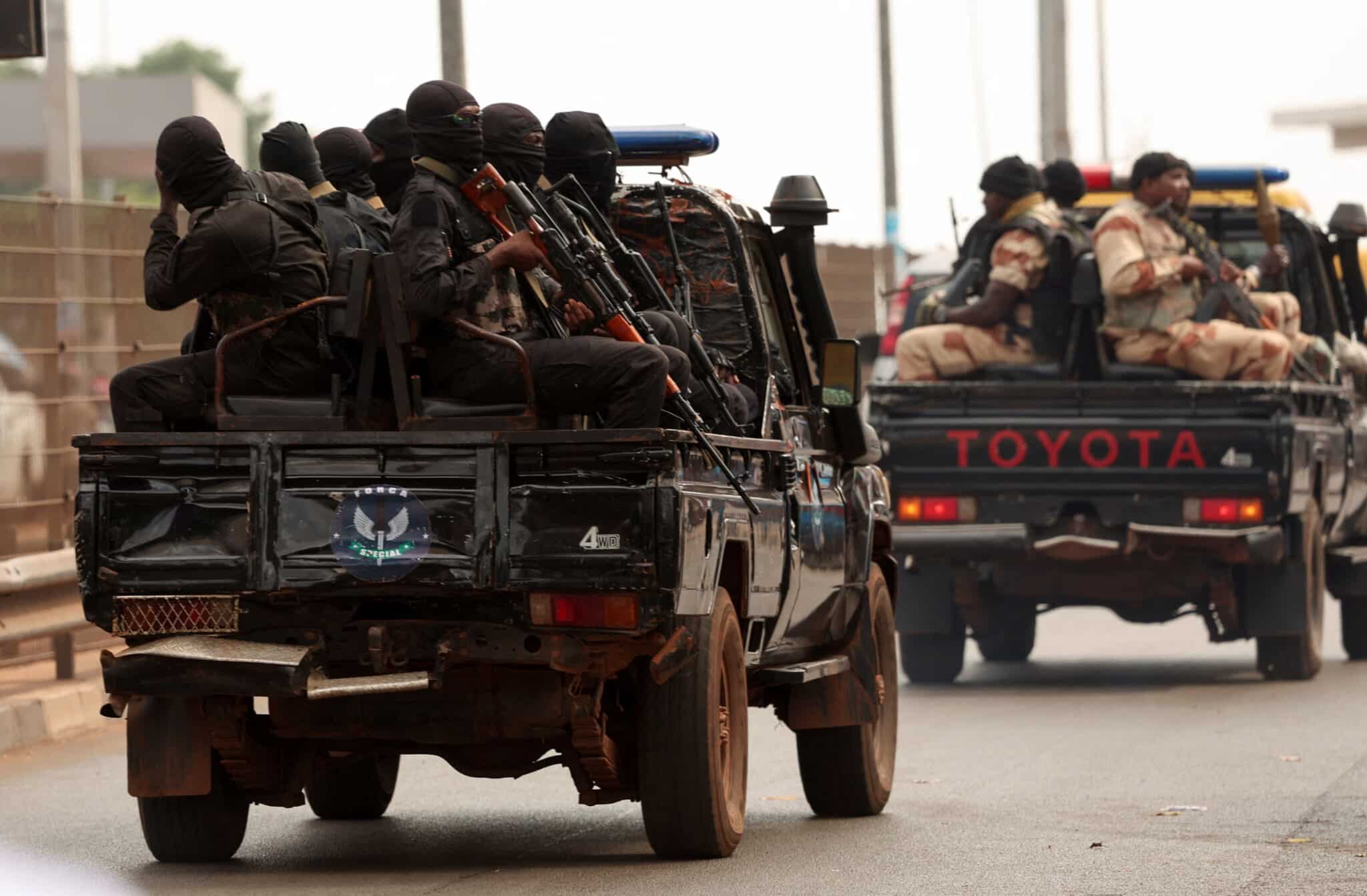
Guinea-Bissau’s military authorities have imposed a sweeping ban on protests, strikes and any activity deemed a threat to public order just hours before a high-level ECOWAS delegation was due to arrive in Bissau for mediation talks. The restrictions were announced late Sunday as regional pressure mounted on the junta to reverse last week’s takeover and restore constitutional rule.
The order also instructed ministries, state secretariats and other public offices to reopen immediately, signalling an attempt by the military rulers to project control ahead of regional negotiations. The move followed weekend demonstrations, where hundreds of mostly young protesters demanded the release of detained opposition figures and the publication of disputed presidential election results.
Presidents from Togo, Cape Verde and Senegal, as well as the head of the ECOWAS Commission, were expected in Bissau on Monday. Their mission is to push the military leadership to reinstate constitutional order and release the election results that triggered the political showdown, according to regional officials.
ECOWAS has warned that sanctions could be imposed on individuals or groups found responsible for disrupting Guinea-Bissau’s electoral process or democratic institutions. The bloc has taken similar steps in recent years in response to coups in Mali, Burkina Faso and Niger, citing a broader pattern of instability across West Africa.
The interim head of state appointed by the military, Major-General Horta Inta-a, defended the takeover as necessary to counter what he called a plot by “narcotraffickers” to “capture Guinean democracy.” He pledged to oversee a one-year transition beginning immediately.
Read Also: Guinea Bissau Coup Condemned By Senegal’s Ousmane Sonko
Guinea-Bissau has faced repeated political crises and military interventions since independence. The country remains a key transit point for cocaine moving from Latin America to Europe, a factor that has contributed to chronic instability, according to reporting from Reuters and the United Nations Office on Drugs and Crime.
As ECOWAS begins negotiations, regional leaders are expected to press for a swift restoration of civilian rule, though it remains unclear how far the military authorities are willing to compromise.