
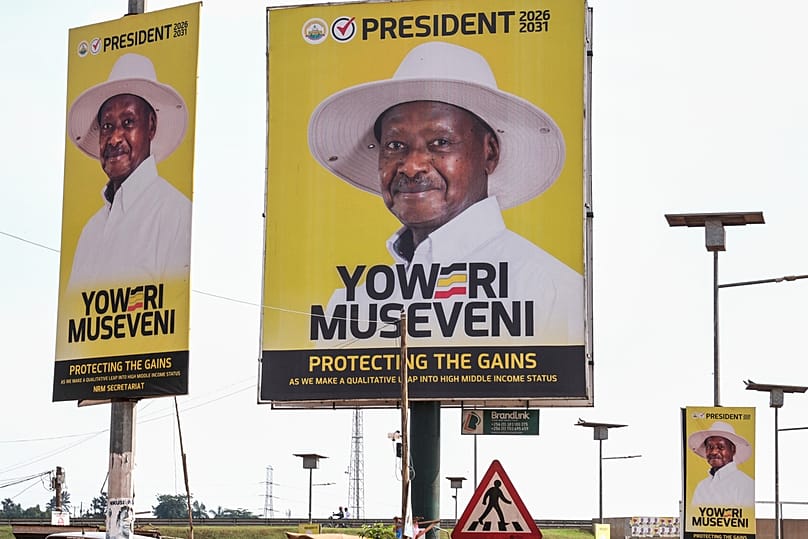
Uganda partially restored internet access late Saturday, hours after election authorities declared President Yoweri Museveni the winner of a closely watched vote that extends his rule to nearly five decades.
Users across the country reported regaining connectivity around 11 p.m. local time, though access to social media platforms remained blocked. Several internet service providers notified customers that the restoration followed an order from the national regulator.
The move came two days after authorities imposed a nationwide internet shutdown ahead of Thursday’s presidential election, a step that drew criticism from opposition figures and election observers.
David Birungi, a spokesperson for Airtel Uganda, confirmed that the company had restored internet services following instructions from regulators.
“We have restored internet so that businesses that rely on internet can resume work,” Birungi told Reuters, adding that the Uganda Communications Commission had directed providers to keep social media platforms offline.
The state run regulator said earlier that the shutdown was intended to curb what it described as misinformation, disinformation, and risks of electoral fraud during the voting period. Opposition leaders rejected that explanation, arguing the restrictions were aimed at tightening control over the electoral process.
The Uganda Communications Commission did not respond to a request for comment late Saturday.
Uganda’s electoral commission announced that Museveni secured 71.6 percent of the vote in Thursday’s poll. His main challenger, opposition leader and musician Bobi Wine, was credited with 24 percent.
Wine, who ran against Museveni for the second time, rejected the results and alleged widespread fraud. He has not recognised the outcome of the election.
Following the announcement, small opposition protests were reported in parts of the country late Saturday, according to a Reuters witness and police sources.
A joint election observation mission from the African Union and other regional bodies criticised both the internet shutdown and the role of the military during the vote.
Read Also: Uganda Restricts Starlink Imports Ahead Of January Election
“The internet shut down implemented two days before the elections limited access to information, freedom of association, and curtailed economic activities,” the observers said in a report released Saturday. The group added that the restrictions also fueled suspicion and mistrust in the electoral process.
The report noted that the heavy presence of security forces during the campaign and voting period raised concerns about the overall environment in which the election was held.
Museveni, 81, has been in power since 1986 and is Africa’s third longest serving head of state. His latest victory means he will remain in office until at least 2031, by which point his rule will span nearly half a century.
He is widely believed to be positioning his son, Muhoozi Kainerugaba, the current head of the military, as a potential successor. Kainerugaba has publicly expressed interest in the presidency, though no formal transition plans have been announced.