
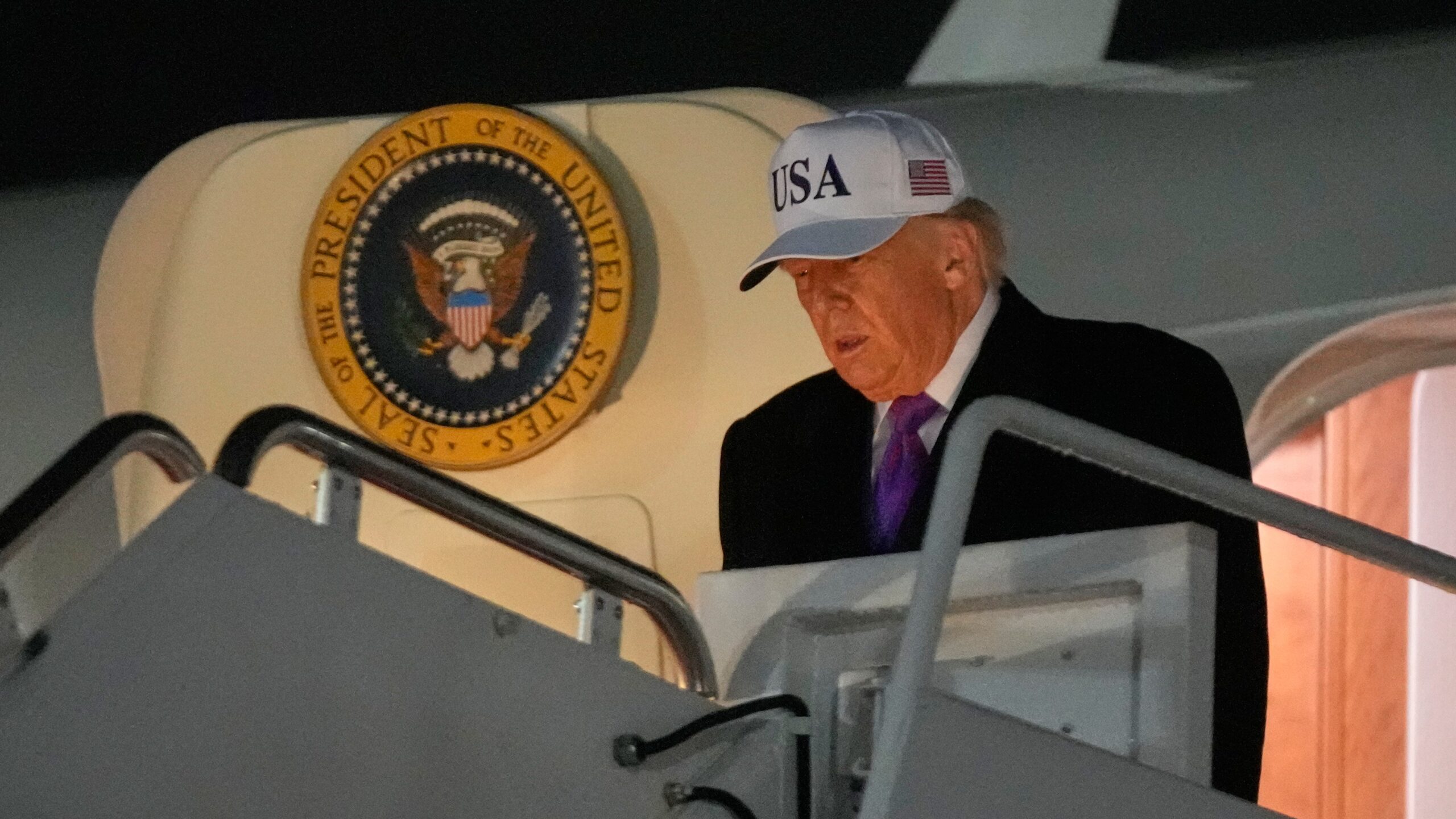
A renewed promise to open government archives on unidentified aerial phenomena has reinserted one of America’s most enduring mysteries into formal political discourse. President Donald J. Trump has stated that, in response to what he described as “tremendous interest,” he will direct the Secretary of War and other relevant departments and agencies to begin identifying and releasing government files related to alien and extraterrestrial life, unidentified aerial phenomena (UAP), and unidentified flying objects (UFOs).
The declaration situates a long-marginalized subject within the framework of executive authority. For decades, questions surrounding unexplained aerial sightings have existed at the intersection of national security, scientific inquiry, and public speculation. What distinguishes this moment is the explicit framing of disclosure as an administrative priority emanating from the presidency.
The reference to the “Secretary of War” carries historical resonance. The United States replaced the War Department with the Department of Defense in 1947, following the National Security Act, which reorganized military and intelligence structures in the early Cold War period. Whether rhetorical or deliberate, the terminology evokes an era when secrecy and classified research became institutional norms amid geopolitical rivalry.
The issue of UAP—an updated term intended to reduce the stigma associated with “UFO”—has steadily migrated from fringe debate to congressional oversight. In recent years, bipartisan lawmakers have pressed defense and intelligence agencies for greater transparency regarding unexplained aerial incidents reported by military personnel. Declassified Pentagon reports have acknowledged encounters that remain unexplained, while emphasizing the absence of confirmed extraterrestrial origin.
Read Also: Bill Gates Pulls Out Of India AI Summit Amid Epstein Scandal
President Trump’s statement suggests an expansion of that transparency effort. By directing agencies to identify and release files, the administration signals a potential review of classified archives that may include military radar data, intelligence assessments, and internal memoranda accumulated over decades.
Historically, U.S. government engagement with unidentified aerial phenomena has oscillated between public inquiry and guarded secrecy. Projects such as the Air Force’s Project Blue Book, active between 1952 and 1969, catalogued thousands of sightings. While the majority were attributed to natural or human-made causes, a residual percentage remained unexplained. The closure of Blue Book did not end military interest in aerial anomalies; it merely shifted the locus of investigation into less publicly visible structures.
In contemporary terms, UAP investigations are typically situated within defense and intelligence channels concerned with airspace security. The emergence of advanced drone technology, hypersonic systems, and strategic competition with major powers has heightened scrutiny of unknown objects operating in restricted zones. For policymakers, the central question is not extraterrestrial life but potential adversarial capability.
Trump’s framing, however, directly references “alien and extraterrestrial life” alongside UAP and UFOs. That language elevates the conversation beyond airspace integrity into the realm of existential inquiry. It also responds to a cultural climate in which public trust in institutions has eroded, and transparency is often presented as a corrective mechanism.
The political calculus is complex. Calls for disclosure resonate with segments of the electorate skeptical of bureaucratic opacity. At the same time, intelligence agencies traditionally guard classified material to protect sources, methods, and strategic advantage. Any systematic release of files would require careful review to avoid compromising operational security.
International implications are also relevant. The United States is not alone in documenting unexplained aerial incidents. Governments in Europe, Latin America, and parts of Asia have maintained varying degrees of openness regarding such phenomena. A comprehensive U.S. disclosure could encourage reciprocal transparency—or, alternatively, prompt strategic caution among rival powers wary of revealing technological capabilities.
From a governance perspective, the directive underscores the expanding scope of presidential authority in shaping public access to information. Executive orders and administrative instructions can accelerate declassification processes, but they remain subject to statutory constraints. The balance between national security and public disclosure is mediated by classification laws, archival procedures, and interagency review.
There is also a scientific dimension. Astronomers and astrophysicists have long searched for extraterrestrial life through projects such as the SETI initiative, which relies on radio signal analysis rather than military sightings. Conflating scientific exploration with defense-based UAP investigations risks obscuring methodological distinctions. The scientific community typically demands reproducible evidence and peer-reviewed data, whereas intelligence assessments may operate on probabilistic analysis under conditions of uncertainty.
Public discourse around UFOs has evolved significantly over the past decade. Once relegated to late-night talk shows and speculative documentaries, the topic has entered congressional hearings and mainstream journalism. Testimony from former military personnel describing unexplained encounters has contributed to a perception shift. Even so, official reports have consistently refrained from attributing such incidents to extraterrestrial origin.
Trump’s announcement may therefore be interpreted less as a confirmation of alien life and more as an institutional acknowledgment of sustained public curiosity. The promise of file releases can serve as a political signal of openness without predetermining substantive conclusions.
The reference to “other relevant Departments and Agencies” broadens the scope beyond defense. Intelligence services, space agencies, and archival bodies could all be implicated in a comprehensive review. Coordination across these entities would be essential to ensure that disclosures are coherent rather than fragmentary.
Critically, disclosure processes often generate as many questions as they resolve. Declassified documents can reveal redactions, ambiguous language, or inconclusive findings. Managing expectations will be central to the administration’s credibility. If the public anticipates definitive proof of extraterrestrial contact, the likely outcome—technical reports and bureaucratic correspondence—may appear anticlimactic.
Yet the symbolic significance should not be understated. Government acknowledgment of sustained interest in unidentified aerial phenomena reflects a broader recalibration of how institutions engage with contested subjects. Transparency, even partial, can recalibrate trust dynamics between state and citizen.
For global audiences, including those in Africa where debates about technological sovereignty and information access are intensifying, the episode offers a case study in democratic accountability. How states handle classified information speaks to institutional maturity and respect for public inquiry.
Read Also: Mexican Man Allegedly Used False ID To Get US Passport
Whether the directive results in substantive revelations remains uncertain. The process of identifying, reviewing, and releasing decades of material is inherently complex. What is clear is that the presidency has placed the issue back within formal governance structures.
In the architecture of modern politics, symbolism and substance often coexist uneasily. Trump’s statement occupies that intersection. It gestures toward disclosure while navigating the constraints of national security.
Ultimately, the significance of this initiative will depend not on rhetorical emphasis but on the scope, clarity, and integrity of the materials released. Transparency, if pursued rigorously, has the capacity to demystify long-standing questions. If approached selectively, it risks reinforcing skepticism.
For now, the commitment marks another chapter in the evolving relationship between secrecy, science, and democratic oversight—an arena where curiosity meets statecraft, and where the boundaries of the known continue to test institutional resolve.