
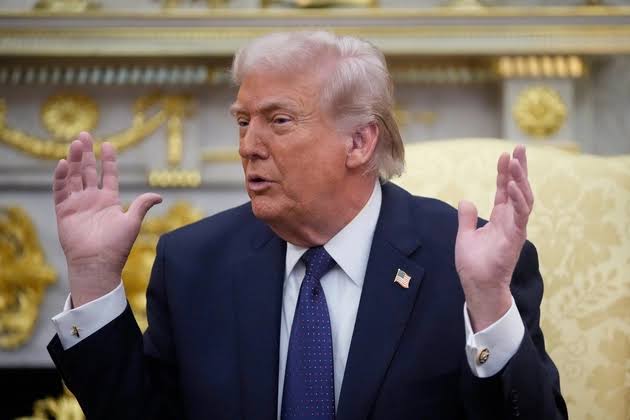
President Donald Trump convened twelve conservative Latin American and Caribbean leaders at Trump National Doral Miami on Saturday for the Shield of the Americas summit, the most concentrated gathering of US-aligned governments in the Western Hemisphere in more than a decade.
It is the clearest articulation yet of what the administration is calling the Donroe Doctrine: a strategy of building a selective coalition of ideologically aligned partners to roll back Chinese infrastructure, trade, and lending influence across the region while the United States simultaneously manages an active war in the Middle East.
The twelve confirmed participants were Argentine President Javier Milei, Bolivian President Rodrigo Paz Pereira, Chilean president-elect José Antonio Kast, who takes office March 11, Costa Rican President Rodrigo Chaves, Dominican Republic President Luis Abinader, Ecuadorian President Daniel Noboa, Salvadoran President Nayib Bukele, Guyanese President Irfaan Ali, Honduran President Nasry Asfura, Panamanian President José Raúl Mulino, Paraguayan President Santiago Peña, and Trinidad and Tobago Prime Minister Kamla Persad-Bissessar.
Participating governments were expected to sign the Doral Charter, a declaration affirming the rights of their peoples to sovereignty and self-determination free from foreign coercion, language designed specifically to address Chinese economic penetration of the region through port concessions, telecommunications infrastructure, satellite tracking stations, and debt-financed development projects, that successive US administrations have described as creating leverage over borrowing governments.
Secretary of State Marco Rubio co-chaired the summit alongside Trump. Former Homeland Security Secretary Kristi Noem, removed from her cabinet post earlier this week amid mounting congressional criticism, was named Trump’s special envoy for the Shield of the Americas initiative.
Conspicuously absent were Brazil’s Luiz Inácio Lula da Silva, Colombia’s Gustavo Petro, and Mexico’s Claudia Sheinbaum, leaders of the region’s three largest economies outside the United States, none of whom were invited. Venezuela’s US-installed interim president Delcy Rodríguez was also not invited, despite Washington’s increasingly warm public characterisation of her administration. Irene Mia, Latin America expert at the International Institute for Strategic Studies, said the summit’s absence of Mexico and Brazil fundamentally limited its practical reach on the issues it claimed to address.
“It’s entirely a negative agenda — all about the threats coming to the region for US security: migration, organised crime. Without Mexico and Brazil, it’s not going to be very successful in tackling those issues,” Mia said.
The summit’s strategic context was defined as much by Beijing as by any Latin American capital. China’s trade with the region hit a record $518 billion in 2024, with Beijing having lent more than $120 billion to governments across the Western Hemisphere since the early 2000s. China’s footprint spans satellite tracking stations in Argentina’s Patagonia, a deep-water port at Chancay in Peru, Huawei telecommunications infrastructure across at least 14 countries, and energy sector investments in Ecuador, Bolivia, and Venezuela.
Read Also: Trump Insists On Hand-Picking Iran’s Next Leadership
CSIS Americas Programme director Ryan Berg wrote that the summit was the first time in Trump’s second term that Washington had brought together Latin American governments in this format, and said discussions were likely to focus on security cooperation, drug trafficking, money laundering, and specifically China’s role in ports, telecommunications, and critical infrastructure.
The administration has already executed the Donroe Doctrine in its most dramatic form. The US military’s capture of Venezuelan President Nicolás Maduro on January 3 was described by senior Trump administration officials as intended partly to counter Chinese ambitions — specifically to end Beijing’s access to Venezuelan oil at concessional prices tied to debt repayment arrangements.
“Beijing’s days of leveraging debt to get cheap oil from Venezuela are over,” one official told Reuters. Panama moved against Hong Kong-based CK Hutchison’s concession to operate ports at both ends of the Panama Canal in the weeks following direct US pressure from Trump. Ecuador’s Noboa announced joint military operations with the United States against drug trafficking networks. Honduras’s Asfura, whose razor-thin electoral victory was boosted by a Trump endorsement, broke diplomatic relations with Taiwan upon taking office.
Read Also: Homeland Security Boss Kristi Noem Gets Trump’s Boot
The strained security environment, with organised crime spreading into countries like Ecuador and Chile that were considered relatively safe until recently, has contributed to the Latin American right wing’s recent string of electoral victories and reduced public pushback against US intervention in the region’s affairs, Mia said. Bukele’s anti-gang crackdown in El Salvador, which has emptied streets of visible gang activity while filling the country’s Terrorism Confinement Centre, a prison holding over 40,000 inmates, with convicts serving multi-decade sentences under emergency security legislation, has become the explicit model that politicians from Ecuador to Chile to Honduras have adopted in their own security platforms.
The administration’s 2026 National Security Strategy explicitly frames the Western Hemisphere as a priority theatre and calls for identifying and working closely with “ideologically trusted partners” as its central regional instrument — a formulation that makes the invitee list for Saturday’s summit a direct expression of classified strategic guidance rather than a diplomatic gesture.
The Donroe Doctrine, named after the combination of President Trump’s name with the Monroe Doctrine of 1823 asserting US primacy in the Western Hemisphere, represents the most aggressive iteration of that 200-year-old principle in the post-Cold War era.
Trump’s ability to project Western Hemisphere leadership on Saturday sits in tension with the uncertainty generated by Operation Epic Fury, now in its ninth day. Oil prices elevated by the Strait of Hormuz closure are a direct economic pressure on every Latin American country represented at Doral, most of which are net energy importers.
The Iran war’s drain on US diplomatic attention, military logistics, and congressional bandwidth has also raised questions among analysts about whether the administration can sustain simultaneous operational ambitions in the Middle East, the Western Hemisphere, and the Pacific approaches to China.