
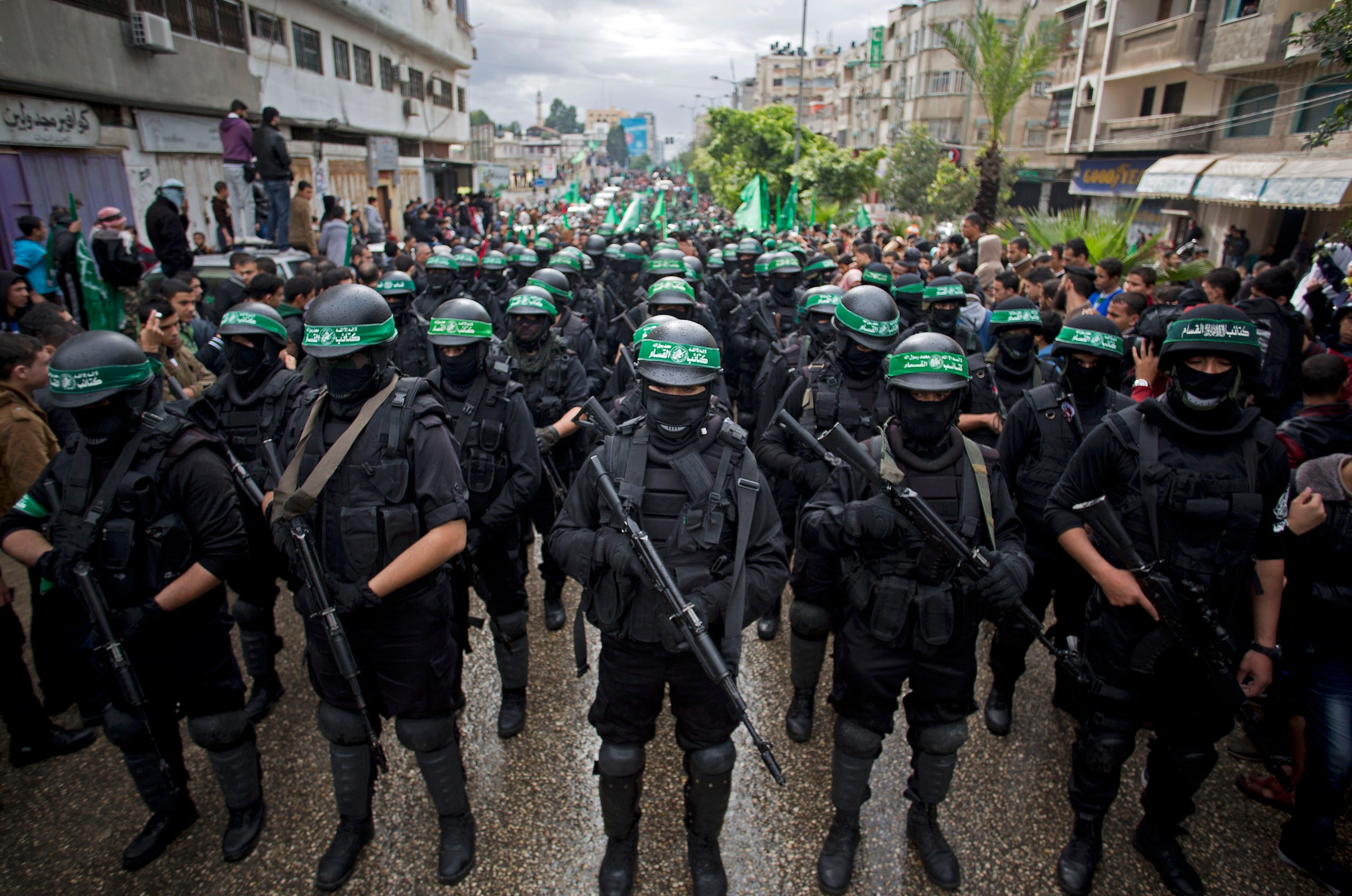
Hamas issued a rare public appeal to its principal patron on Saturday, calling on Iran to cease attacks on neighbouring Gulf states while simultaneously affirming Tehran’s right to defend itself against the United States and Israel, a carefully calibrated statement that Israeli officials and regional analysts attributed in part to explicit pressure from Qatar, which has threatened to withdraw financial support and expel Hamas leadership from Doha if the group did not publicly distance itself from Iran’s Gulf campaign.
“While affirming the right of the Islamic Republic of Iran to respond to this aggression by all available means in accordance with international norms and laws, the movement calls on our brothers in Iran not to harm neighbouring states,” Hamas said in the statement, which was issued from Gaza City. The group said it was “following with deep concern the ongoing war in the region” and called upon “all states and international organisations to work towards halting it immediately.” Iran had not publicly responded to the statement by the time of publication.
Israeli officials said the statement was preceded by explicit Qatari signalling to Hamas: that continued attacks on Gulf states, several of which are critical financial conduits for Palestinian aid and humanitarian support, without any public Hamas objection would result in Qatar halting financial assistance to the group and expelling senior Hamas leaders from the Qatari capital, where much of the movement’s political leadership has been based since 2012.
Qatar has played a central role in mediating between Hamas and Israel throughout the Gaza ceasefire process and serves as the primary financial channel through which international aid reaches Palestinian populations. The threat to withdraw that support amounted to a significant structural pressure point on Hamas’s operational and political capacity.
The statement reflects the profound strain the Iran war has placed on what was formerly known as the “axis of resistance” — the network of Iranian-funded proxy organisations including Hamas, Hezbollah, and the Houthi movement in Yemen, which had coordinated attacks on Israel at various stages of the Gaza conflict.
Arab media reports published in the days before Saturday’s statement described an unusual and largely unacknowledged breakdown in communication between Hamas leadership and Iranian Revolutionary Guard Corps officials responsible for Palestinian affairs. Palestinian sources told the Saudi newspaper Asharq Al-Awsat that contact with senior Quds Force figures who maintain close ties with Hamas had been effectively cut off since the war began on February 28, affecting both Gaza-based and external Hamas leadership. The disruption, attributed partly to the deaths of key IRGC liaison personnel in the opening strikes of the war — has left Hamas leadership in an informational vacuum about Iranian strategic intentions at a moment when those intentions directly affect the group’s Gulf donors.
The financial stakes for Hamas and for Gaza are considerable. Gulf countries, led by Qatar and Saudi Arabia with contributions from Kuwait and the United Arab Emirates, collectively pledged more than $4 billion in financial support to Trump’s Board of Peace initiative in Washington last month, with a significant portion designated for Gaza reconstruction and civilian relief. The continuation of that funding is contingent on Gulf political will, which is in turn directly affected by Iran’s choice to fire missiles and drones at civilian infrastructure across countries whose populations and governments are growing demonstrably less tolerant of being caught in a conflict not of their making.
Qatar and Saudi Arabia each committed $1 billion; Kuwait followed with $1 billion over multiple years; the UAE announced $1.2 billion. All of it flows through the Gulf political establishment that Iran’s missiles have been hitting for fifteen days.
Read Also: Abu Dhabi Complex Housing Embassies Damaged In Strikes
For Iran’s part, the authorities have maintained throughout the conflict that their strikes are directed at American military installations on Gulf soil rather than at the host countries themselves, a distinction that has not gained traction in Riyadh, Abu Dhabi, Doha, or Kuwait City, where the practical experience of intercepting ballistic missiles and extinguishing fires at fuel depots has produced a uniformly hostile public reaction. Iranian President Masoud Pezeshkian offered an apology to Gulf neighbours in a statement last week, pledging that Iran would not strike countries whose territory was not being used as a launchpad for US or Israeli operations. He later walked back that statement under pressure from IRGC hardliners, and Iran’s judiciary chief subsequently accused named Gulf countries of facilitating attacks on Iran by hosting American forces, effectively reversing the conciliatory framing within days of it being offered.
The gap between Hamas’s public statement and Hezbollah’s silence on the same question is itself significant. Hezbollah leader Naim Qassem has said his group is prepared for a “long confrontation” with Israel and has continued operations in southern Lebanon without any comparable call for restraint directed at Iranian attacks on Gulf states.
The two organisations’ divergent postures reflect different levels of exposure to Gulf financial pressure: Hamas depends heavily on Qatari and Gulf-linked funding and political cover; Hezbollah’s principal patronage relationship is with Iran itself.
Read Also: Analysts: US Iran ‘No Quarter’ Stance Violates War Laws
The Gaza ceasefire that Hamas and Israel agreed to in October 2025, brokered with critical involvement from Qatar, Egypt, and the United States, has been under stress since it came into force, with both sides accusing the other of near-daily violations. The Hamas-run health ministry in Gaza said 649 people had been killed in the enclave since the ceasefire came into effect, a figure that encompasses casualties from Israeli enforcement operations, unexploded ordnance, and what Hamas characterised as ceasefire violations by Israeli forces. The second and third phases of the ceasefire agreement, covering hostage releases and a broader political framework, have not been finalised. The Trump administration’s Board of Peace initiative, which had provided the overarching diplomatic architecture for the ceasefire’s later stages, has been effectively dormant since the war on Iran began.
Saturday’s Hamas statement, issued fifteen days into the most significant regional military confrontation since the 2003 invasion of Iraq, is the clearest public signal yet that Iran’s strategy of treating the Gulf’s American bases as legitimate targets regardless of civilian collateral damage is straining even the political relationships Tehran has cultivated across decades of financial, military, and diplomatic investment.
Iran has not publicly commented on the Hamas statement.