
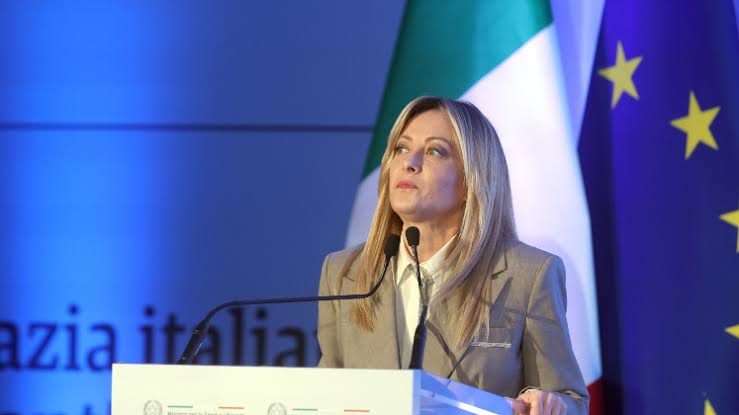
The thing about political invincibility is that it exists entirely in other people’s minds. The moment they stop believing it, it vanishes — not gradually, like morning fog, but all at once, like light leaving a room when someone throws the switch.
Giorgia Meloni learned this on Monday.
Italy’s right-wing prime minister suffered her first significant electoral defeat when 54 percent of voters rejected her proposed overhaul of the country’s judiciary, a result that would have stung at any moment but landed with particular force now — precisely when she seemed most untouchable, most settled in power, most assured of her own trajectory. The turnout alone told a story she might have preferred not to hear: 59 percent of Italians came out to vote, a number that exceeded expectations and transformed what might have been a technocratic referendum on judicial governance into something closer to a national conversation about whether this woman should continue to lead them.
The answer, delivered from Rome to Milan to Naples, was complicated. And in politics, complicated is never good for the person at the top.
In Naples — always Naples, where feelings run hot and politics is theatre performed at maximum volume — about 50 prosecutors and judges gathered to drink champagne and sing Bella Ciao, the old anti-fascist partisan anthem whose lyrics have been deployed at every Italian left-wing celebration since the Second World War. The choice of song was not accidental. Nothing in Italian politics ever is. In Rome, activists and students and trade unionists flowed spontaneously into Piazza del Popolo, voices rising: resign, resign. The numbers against Meloni in the capital’s province reached 57 percent. In Naples, 71.
Read also: Pope Leo XIV Calls For Ban On Aerial Bombardments
She went on social media that evening, as leaders do now when they need to speak to the country without being interrupted. “The Italians have decided and we will respect that decision,” she said, her face arranged in the particular expression of a person absorbing a blow while a camera watches. She admitted to some “bitterness for the lost opportunity” before pivoting quickly to determination, responsibility, continuity. She would go on, as she always had.
But you know how it is. You can say you will go on. The question is where, exactly, you are going.
The referendum had centred on how judges and prosecutors are governed — whether their career paths should be separated, how their oversight bodies should be structured. Meloni’s government framed the fight in terms any Nigerian with a healthy cynicism about institutions would recognise immediately: the system is captured, the people running it have their own agenda, real reform requires real disruption. Justice Minister Carlo Nordio called prosecutors “a parallel mafia.” His chief of staff compared sections of the judiciary to “an execution squad.” Meloni herself, after initially keeping some distance from the campaign before wading in late, warned that without change, Italians would find themselves facing “immigrants, rapists, pedophiles, drug dealers being freed and putting your security at risk.”
The words were calculated to ignite. They ignited something, just not what she intended.
Opposition groups that had spent months unable to find purchase against her suddenly discovered a common language. Elly Schlein, leader of the Democratic Party, told reporters: “We will beat her in the next general election, I’m sure of that.” Former premier Matteo Renzi — a man who knows something about losing referendums, having resigned the premiership after one in 2016 — predicted Meloni would now be a “lame duck,” said even her own people would begin to doubt her. “Let’s see what Meloni will do after this clamorous defeat,” he added, with the particular satisfaction of a man watching someone else fall into a hole he once fell into himself.
Giuseppe Conte, the former premier who leads the populist 5Star Movement, called it “a new spring.” The Greens and Left Alliance leader Angelo Bonelli said the result proved “there is a majority in the country opposed to the government.”
This is the music opposition parties make when they sense an opening — familiar, sometimes overconfident, always louder than the moment strictly requires. Whether it amounts to anything depends on whether they can sustain coordination past the euphoria of Monday night, a task that has historically defeated the Italian left with remarkable regularity.
For Meloni, the defeat complicates ambitions that were already significant. She had been moving toward major electoral reform, including a proposal for a directly elected prime ministership with a fixed term — a restructuring that would have fundamentally altered how Italian governments are formed and unmade. That project requires political capital. She just spent some.
Read more: Europe Rejects Trump’s Hormuz Naval Coalition, Warns On NATO
Her timing was not helped by external conditions she could not control. Her ally Donald Trump is deeply unpopular in Italy. The Iran war has sharpened Italian anxieties about energy costs in ways that no government can easily deflect. These were the waters she was already navigating before Monday added to the current.
The political clock, as one analyst put it, is ticking again.
Whether she calls early elections before economic pressures compound, or attempts to rebuild momentum from within a damaged position — that calculation sits with her now, in the quiet after the champagne and the chanting. Italy’s President Sergio Mattarella holds the formal power to dissolve parliament, and parliamentarians with pensions tied to the legislature’s survival have their own reasons to resist early dissolution.
Power is never as simple as it looks from outside the room. She knows this. She built her career on understanding it.
But so do her opponents. And for the first time in a while, they are beginning to act like they believe it too.