
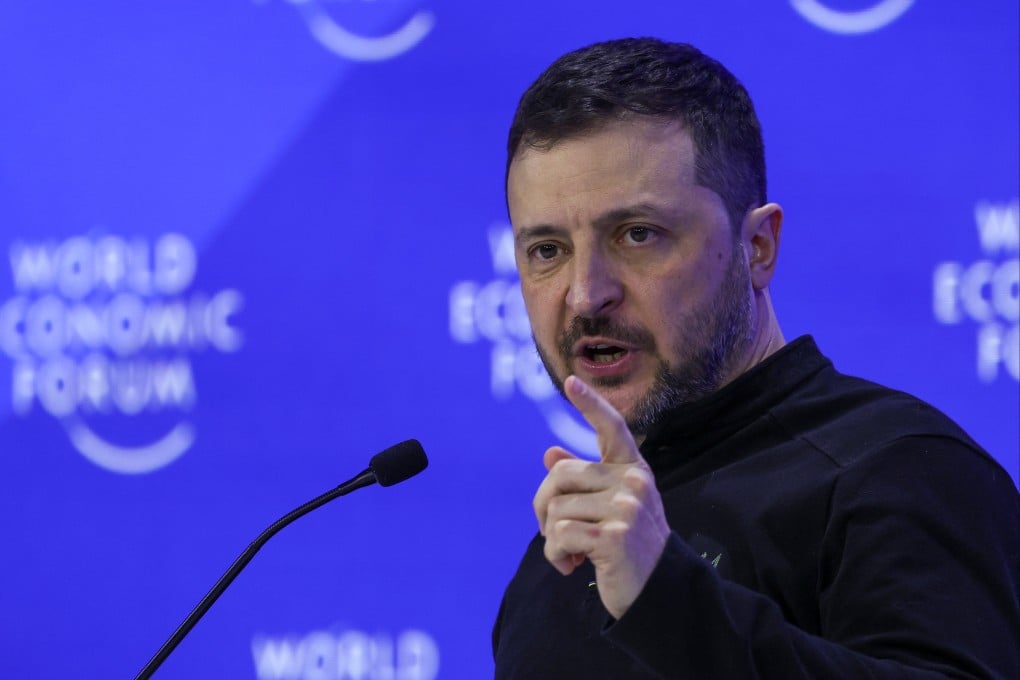
Diplomatic optics surrounding Ukraine peace negotiations have entered a new phase of scrutiny after Volodymyr Zelensky publicly questioned the strategic balance of recent U.S. diplomatic engagement with Moscow, warning that sustained engagement patterns perceived as asymmetric risk undermining confidence in mediation processes.
The Ukrainian president’s remarks follow multiple visits to Moscow by senior U.S. envoys, including Steve Witkoff and Jared Kushner, neither of whom has conducted an official visit to Kyiv despite ongoing ceasefire negotiations intended to end more than four years of war. In remarks delivered during an interview with Ukrainian media, Zelensky characterised the pattern as diplomatically discourteous, describing the absence of equivalent engagement with Kyiv as “disrespectful,” even while acknowledging logistical complexities linked to wartime travel.
The issue extends beyond symbolism. In high-stakes negotiations involving sovereign territory and long-term security architecture, perceptions of diplomatic parity carry material consequences. Ukraine’s leadership views balanced engagement as essential to maintaining negotiating legitimacy, particularly in talks involving Moscow, Washington, and Kyiv as principal actors.
Envoy activity intensified in late 2025, when Witkoff conducted multiple trips to Moscow, holding several meetings with Vladimir Putin. The frequency of these engagements—eight visits in total—has drawn attention among Ukrainian officials who remain cautious about frameworks perceived as prioritising dialogue with Russia without visible engagement with Ukrainian leadership on equal footing.
Kushner, who serves as a senior presidential adviser and maintains close policy alignment with Donald Trump, also participated in Moscow consultations late last year and again in January. While Ukrainian officials initially anticipated a reciprocal visit to Kyiv earlier this year, the trip did not materialise. Regional geopolitical priorities shifted rapidly following the outbreak of hostilities involving Iran, which redirected diplomatic attention and negotiating bandwidth toward Middle Eastern security concerns.
Read Also: Major NYC Storm Could Trigger $100B Insurance Loss — KCC
That shift has altered the diplomatic environment surrounding the Ukraine conflict. The last trilateral summit involving U.S., Russian, and Ukrainian representatives took place in mid-February, shortly before the escalation of hostilities involving Iran and Israel. Since then, U.S. diplomatic energy has been divided across multiple theatres, complicating momentum toward a durable Ukraine ceasefire.
Zelensky acknowledged the geopolitical realities influencing U.S. attention, noting that Washington’s current diplomatic focus includes negotiations involving Iran. Witkoff and Kushner are currently part of a U.S. negotiating delegation travelling to Pakistan for ceasefire discussions related to that conflict. Nevertheless, Kyiv has reiterated the importance of sustained U.S.-Ukraine engagement as a cornerstone of long-term security coordination.
From a strategic standpoint, the perceived imbalance in diplomatic engagement highlights broader structural challenges facing multilateral conflict resolution frameworks. Ukraine remains wary of negotiation models developed primarily through bilateral dialogue between Washington and Moscow. Ukrainian policymakers have consistently advocated for direct representation at every stage of ceasefire design, particularly where territorial sovereignty and post-war governance structures are involved.
Negotiations gained measurable traction in autumn 2025, when reports surfaced indicating that U.S. and Russian officials had been developing a ceasefire framework containing provisions viewed by Kyiv as potentially disadvantageous. Ukraine subsequently pushed for inclusion in the process, leading to a series of formal summits and working sessions intended to reconcile competing positions.
By early 2026, negotiators from both sides had reached limited agreement on certain operational matters. These included preliminary alignment on ceasefire monitoring mechanisms and tentative mapping of front-line positions. However, the most consequential issues remain unresolved, continuing to stall meaningful progress.
Among the central disputes is Ukraine’s demand that Russia return Ukrainian children deported during the conflict—an issue Kyiv has framed as both humanitarian and legal in nature. Moscow, meanwhile, has insisted on structural political changes in Kyiv, including conditions widely interpreted as requiring regime-level adjustments.
The most complex and politically sensitive issue concerns territorial sovereignty in eastern Ukraine, particularly in the Donbas region. Russia continues to demand recognition of control over portions of Ukrainian territory as a condition for ending the war. Kyiv has categorically rejected such proposals, viewing territorial concessions as incompatible with national sovereignty and long-term regional stability.
Senior Ukrainian officials have acknowledged the difficulty of reconciling these positions. Kyrylo Budanov previously described negotiations as an attempt to bridge “two completely polar positions,” emphasising that a sustainable compromise remains elusive. His remarks underscored a broader recognition within Ukrainian leadership that the conflict’s resolution may ultimately depend on strategic recalibration by one or more principal actors.
Operational realities on the battlefield continue to shape diplomatic calculations. Since the launch of Russia’s full-scale invasion in 2022, the conflict has evolved into a prolonged war of attrition across a wide geographic front extending from Luhansk in the northeast to Kherson in the south. Russian forces maintain control over substantial portions of eastern Ukraine, creating entrenched front-line conditions that complicate both military operations and ceasefire verification mechanisms.
Civilian infrastructure remains under sustained pressure. Ukrainian cities face recurring aerial assaults involving large-scale deployments of drones and missile systems. A recent overnight barrage involving more than 700 drones and missiles resulted in at least 18 fatalities, illustrating the ongoing humanitarian and infrastructural risks associated with prolonged conflict.
Ukraine has responded by expanding its long-range strike capabilities, targeting Russian energy infrastructure deep inside Russian territory. These operations have affected critical supply nodes, including ports, storage facilities, and oil terminals. Independent estimates indicate that approximately 20% of Russia’s export capacity was offline in early April due to these attacks, representing a measurable disruption to Russian logistics.
Paradoxically, external geopolitical developments have partially offset Russia’s economic exposure. The ongoing energy crisis triggered by hostilities involving Iran has contributed to elevated global oil prices, providing Russia with increased revenue streams despite declining gross domestic product performance. This dynamic highlights the interconnected nature of global energy markets and conflict economics.
For policymakers and global markets, the broader implications extend beyond bilateral diplomacy. The Ukraine conflict continues to influence commodity pricing, energy supply security, defence spending patterns, and international sanctions architecture. Any perception of diplomatic imbalance risks undermining trust among negotiating parties, potentially prolonging instability across key global supply corridors.
From an institutional perspective, the episode underscores the importance of transparent diplomatic engagement frameworks in complex multilateral negotiations. Balanced engagement is not solely a matter of symbolism; it directly influences negotiating leverage, alliance cohesion, and the credibility of international mediation processes.
Ukraine’s leadership has signalled willingness to maintain cooperative relations with Washington despite current concerns. Zelensky reaffirmed that continued collaboration with the United States remains essential, even as Kyiv presses for greater visibility within diplomatic channels. The emphasis reflects Ukraine’s recognition that sustained Western support—financial, military, and diplomatic—remains critical to its long-term strategic position.
Read Also: India’s Ceramic Industry Bleeds Jobs As Iran War Escalates
Looking ahead, the trajectory of negotiations will likely depend on whether geopolitical priorities shift sufficiently to allow renewed focus on Ukraine peace efforts. The diversion of diplomatic attention toward Middle Eastern security dynamics illustrates how rapidly global crises can reconfigure negotiation timelines and resource allocation.
For investors, policymakers, and strategic planners, the situation reinforces a central lesson of contemporary geopolitics: diplomatic sequencing and engagement parity can influence not only the outcomes of negotiations but also the stability of broader international systems. As the war enters its fifth year, the operational tempo on the battlefield and the diplomatic tempo in negotiation rooms remain tightly interconnected—each shaping the prospects for durable conflict resolution.