
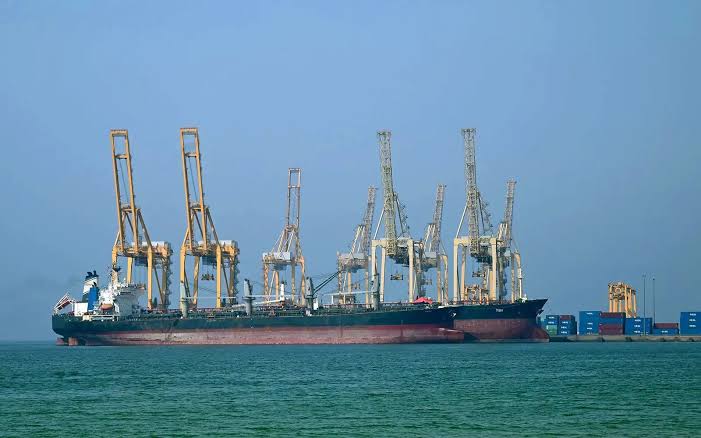
The U.S. Treasury secretary on Monday reversed course and granted a fresh 30-day waiver allowing purchases of sanctioned Russian seaborne oil, contradicting his own public assurances last month that the program was finished. The move drew immediate condemnation from Democratic lawmakers and skepticism from energy analysts who questioned whether it would accomplish much beyond padding Moscow’s revenues.
Bessent, attending a Group of Seven finance ministers meeting in Paris, framed the decision as a lifeline for poorer nations squeezed by the ongoing U.S.-Israeli war with Iran. With the Strait of Hormuz still closed, Gulf oil shipments have become inaccessible for a range of vulnerable economies, and those countries, a source familiar with the decision told Reuters, had specifically requested the extension.
“This general license will help stabilize the physical crude market and ensure oil reaches the most energy-vulnerable countries,” Bessent posted on X, adding that Washington would work with affected nations to issue specific licenses where needed.
Read also: Trump Warns Iran Clock Is Ticking As Peace Talks Stall
The waiver covers Russian crude and petroleum products already loaded onto tankers as of April 17 — meaning it unlocks a fixed pool of stranded supply rather than opening a tap on fresh Russian exports. That distinction has done little to quiet critics.
Senators Jeanne Shaheen of New Hampshire and Elizabeth Warren of Massachusetts wasted no time condemning the decision. Every dollar Moscow earns through the license, they said in a joint statement, goes toward financing Russia’s war in Ukraine. They called it an “indefensible gift” to Vladimir Putin and disputed the administration’s claim that the waivers were helping to bring down gasoline prices for American consumers.
Those doubts are shared in the private sector. Stephanie Connor, a former policy director at the Treasury’s Office of Foreign Assets Control now with the law firm Holland & Knight, said it remained unclear whether the previous waiver had any measurable effect on U.S. pump prices at all. She also noted that British and European sanctions on Russian oil remain firmly in place, limiting how far the American carve-out can actually reach.
Read also: Canada PM Carney Flies To Alberta As Separatist Bid Falters
The Trump administration imposed sanctions on Russian oil giants Rosneft and Lukoil last year as part of a broader campaign to starve Moscow of the energy revenues sustaining its military operations in Ukraine. Treasury first issued a temporary license in March after U.S.-Israeli strikes on Iran sent global oil prices sharply higher, reasoning that releasing stranded Russian barrels could ease the crunch. Monday’s announcement is the second time the waiver has been allowed to lapse before being quietly revived.
Charles Lichfield, deputy director of the Atlantic Council’s GeoEconomics Center, offered a blunt assessment: the extensions are giving Russia a financial cushion at precisely the moment when tightening sanctions might do real damage. Russian economic data is deteriorating, Ukrainian drone and missile strikes have taken a toll on Russian oil infrastructure, and yet Washington keeps softening the pressure.
“Given the information coming out of the Russian economy that looks bad, this might be the time to really hit them with sanctions,” Lichfield said.
Oil markets moved sharply on Monday, with benchmark Brent futures climbing roughly 2.6% to close above $112 per barrel as traders focused on the Strait of Hormuz closure and what it means for global supply. Prices briefly retreated midday after an Iranian news agency reported that Washington was considering temporarily lifting sanctions on Iranian crude during ongoing peace negotiations — a report later denied by a U.S. official, and one Reuters could not independently verify. Trump separately said he had paused a planned strike on Iran to allow diplomacy to proceed.
Standing before reporters in Paris, Bessent used the occasion to press G7 allies and other partners to hold the line on Iran sanctions even as Washington bends its own on Russia.
“We call upon all our G7 and indeed all of our allies and the rest of the world to follow the sanctions regime,” he said, framing tighter enforcement as a way to cut off funding to Tehran and return resources to the Iranian people.
The balancing act — loosening pressure on one adversary while urging partners to tighten it on another — reflects the growing complexity of U.S. energy diplomacy in a region reshaped by war.